
out
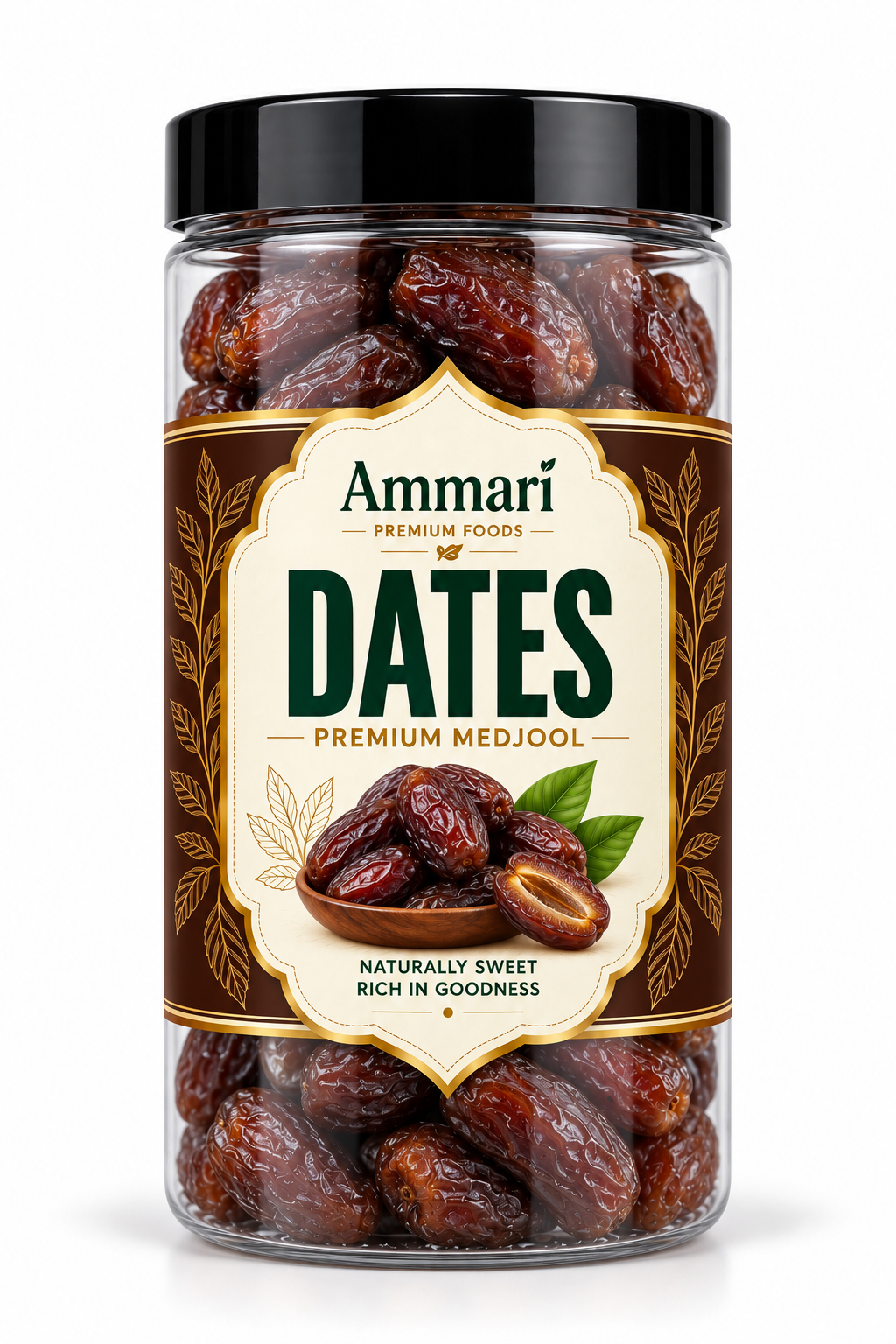
Premium Medjool Dates

Product details
The Medjool is unapologetically the king of dates: jumbo-sized, glossy mahogany on the outside, with a flesh that gives like soft caramel and tastes of honey and brown sugar. Ours arrive plump and unwrinkled, hand-graded for size, packed in a single layer so they reach you intact. One Medjool, halved and stuffed with an almond or a sliver of soft cheese, is a complete moment in itself. They are a cornerstone of iftar, a thoughtful Diwali gift, and the rare healthy treat that needs no apology.
Where We Source
Medjool dates have a remarkable history. They were nearly lost to disease in Morocco in the early 1900s, saved by a small consignment of offshoots sent to California’s Bard Valley, and from there carefully restored to commercial scale. We source from three regions, depending on the season: the Jordan Valley straddling Jordan and the West Bank, the Medina-Qassim belt in Saudi Arabia, and Bard Valley in southern California. Each origin brings a slightly different profile. Jordan Valley fruit is the softest and most caramel-forward, Saudi Medjool tends drier and richer, and Californian fruit is the most uniform in size.
How to Enjoy
- Stuffed: Pit and fill with a roasted almond, walnut, or a small piece of paneer or goat cheese.
- Energy balls: Blend with oats, cocoa and nuts; no added sweetener needed.
- Smoothies and shakes: Two pitted Medjools blended into milk and banana replace any sugar.
- Iftar plate: Serve three with a glass of cold milk or laban to break the fast in the traditional way.
Storage & Freshness
Medjool dates stay perfect at room temperature for up to four weeks in an airtight container. Beyond that, refrigerate to keep the flesh soft and prevent sugar crystals from forming on the skin. In Jaipur summers, we recommend refrigeration from day one. Stored cold, Medjools keep beautifully for six to nine months. If they harden, ten seconds of steam or a few hours back at room temperature returns them to their original texture.
Nutritional Snapshot (per 30g serving, roughly 1.5 dates)
- Calories: ~80 kcal
- Natural sugars: ~20 g (glucose and fructose, no added sugar)
- Fibre: ~2.0 g
- Iron: ~0.3 mg | Potassium: ~200 mg
- Key micronutrients: Magnesium, Vitamin B6, Copper
Frequently Asked
Why are Medjool dates more expensive than other dates?
Medjool trees yield far less fruit per palm than commercial varieties, and the harvest is almost entirely manual. Each cluster is hand-thinned during growth so the remaining fruit reaches its signature jumbo size, and ripe dates are picked individually as they mature. The fruit is also fragile, requiring careful single-layer packing. The cost reflects the lower yield, the labour, and the fact that this is a fresh-style soft date, not a long-shelf-life dry date.
Are these dates sticky because sugar has been added?
No. The natural moisture in a ripe Medjool can sometimes draw glucose and fructose to the surface, which makes the skin look slightly sugary or feel tacky. This is the date’s own sugar, not added syrup or coating. We do not glaze, spray or coat our dates with anything. If you prefer a less sticky finish, a brief refrigeration of the open pack firms the surface within an hour.
Can diabetics eat Medjool dates?
Medjool dates are high in natural sugar but also bring fibre, potassium and magnesium, which moderates the blood-sugar response compared to refined sweets. Many endocrinologists allow one to two dates per day, ideally paired with a protein or fat such as nuts or yoghurt to slow absorption. If you are managing diabetes or pre-diabetes, please confirm portion size with your doctor or dietitian before including dates regularly.
Free delivery on orders over Rs.999. Direct-sourced. Naturally processed.
Shipping and Returns
Shipping cost is based on weight. Just add products to your cart and use the Shipping Calculator to see the shipping price.
We want you to be 100% satisfied with your purchase. Items can be returned or exchanged within 30 days of delivery.
There are no question found.
Quick Comparison
| Premium Medjool Dates remove | Ammari Festive Gift Box remove | Ajwa Dates (Khajoor) remove | Afghan Black Raisins (Munakka) remove | Premium Turkish Dried Figs (Anjeer) remove | Premium Dried Apricots (Khubani) remove | |||||||||||||
|---|---|---|---|---|---|---|---|---|---|---|---|---|---|---|---|---|---|---|
| Name | Premium Medjool Dates remove | Ammari Festive Gift Box remove | Ajwa Dates (Khajoor) remove | Afghan Black Raisins (Munakka) remove | Premium Turkish Dried Figs (Anjeer) remove | Premium Dried Apricots (Khubani) remove | ||||||||||||
| Image | ![]() | ![]() | ![]() | ![]() | ![]() | ![]() | ||||||||||||
| SKU | AMM-DTS-MED-500 | AMM-GFT-FST-001 | AMM-DTS-AJW-500 | AMM-RSN-MUN-500 | AMM-FIG-TUR-500 | AMM-APR-DRD-500 | ||||||||||||
| Rating | ||||||||||||||||||
| Price | Original price was: ₹999.00.₹849.00Current price is: ₹849.00. Save 15% | Original price was: ₹1,999.00.₹1,699.00Current price is: ₹1,699.00. Save 15% | Original price was: ₹1,499.00.₹1,299.00Current price is: ₹1,299.00. Save 13% | Original price was: ₹399.00.₹349.00Current price is: ₹349.00. Save 13% | Original price was: ₹799.00.₹699.00Current price is: ₹699.00. Save 13% | Original price was: ₹699.00.₹599.00Current price is: ₹599.00. Save 14% | ||||||||||||
| Stock |
Out of stock
|
Out of stock
|
Out of stock
|
Out of stock
|
Out of stock
|
Out of stock
| ||||||||||||
| Availability | Out of stock | Out of stock | Out of stock | Out of stock | Out of stock | Out of stock | ||||||||||||
| Add to cart | ||||||||||||||||||
| Description | Size: 200g | Size: 1kg | Size: 200g | Size: 200g | Size: 200g | Size: 200g | ||||||||||||
| Content | The Medjool is unapologetically the king of dates: jumbo-sized, glossy mahogany on the outside, with a flesh that gives like soft caramel and tastes of honey and brown sugar. Ours arrive plump and unwrinkled, hand-graded for size, packed in a single layer so they reach you intact. One Medjool, halved and stuffed with an almond or a sliver of soft cheese, is a complete moment in itself. They are a cornerstone of iftar, a thoughtful Diwali gift, and the rare healthy treat that needs no apology. Where We SourceMedjool dates have a remarkable history. They were nearly lost to disease in Morocco in the early 1900s, saved by a small consignment of offshoots sent to California's Bard Valley, and from there carefully restored to commercial scale. We source from three regions, depending on the season: the Jordan Valley straddling Jordan and the West Bank, the Medina-Qassim belt in Saudi Arabia, and Bard Valley in southern California. Each origin brings a slightly different profile. Jordan Valley fruit is the softest and most caramel-forward, Saudi Medjool tends drier and richer, and Californian fruit is the most uniform in size. How to Enjoy
Storage & FreshnessMedjool dates stay perfect at room temperature for up to four weeks in an airtight container. Beyond that, refrigerate to keep the flesh soft and prevent sugar crystals from forming on the skin. In Jaipur summers, we recommend refrigeration from day one. Stored cold, Medjools keep beautifully for six to nine months. If they harden, ten seconds of steam or a few hours back at room temperature returns them to their original texture. Nutritional Snapshot (per 30g serving, roughly 1.5 dates)
Frequently AskedWhy are Medjool dates more expensive than other dates? Are these dates sticky because sugar has been added? Can diabetics eat Medjool dates? Free delivery on orders over Rs.999. Direct-sourced. Naturally processed. | The Ammari Festive Gift Box is what we send to our own family and closest customers each Diwali. Inside a sturdy kraft hamper, finished with a satin ribbon and an optional handwritten card, sit five of our most-loved varieties in individual reusable pouches. It is a gift designed to feel considered rather than commercial — direct-sourced fruit, restrained packaging, and the kind of presentation that looks at home on a Diwali pooja thali, a corporate desk, or a wedding sagan tray. Inside the Box
Total weight: 1kg. Each variety is sealed in its own food-grade pouch, then nested in shredded kraft inside the outer hamper. Perfect For
Storage & FreshnessEach pouch inside the box is sealed for freshness and stays good for 9 to 12 months unopened. Once the recipient opens a pouch, we recommend transferring the contents to an airtight container and storing in a cool, dry place. Dates and figs benefit from refrigeration in summer. The kraft outer box is dry-storage only — please keep away from direct heat, sunlight, and humidity until gifting. Box Specifications
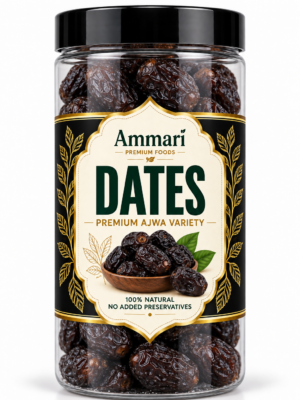
Frequently AskedCan I ship the box directly to a gift recipient? Do you take bulk corporate orders? Can I add a personal message and customise contents? Free delivery on orders over ₹999. Direct-sourced. Naturally processed. | Ajwa is a date held with reverence. Small, almost jet-black, finely wrinkled, and yielding to the touch, it carries a quieter sweetness than the larger Medjool, with notes of raisin, prune and a soft, almost liquorice finish. For Muslim families it is the date of the Prophet, traditionally eaten in odd numbers, often three or seven, at the breaking of fast. For everyone else, it is simply one of the finest dates in the world, and we treat each box with the seriousness it deserves. Where We SourceTrue Ajwa is grown in one place: the volcanic-soil orchards around Madinah in Saudi Arabia. The variety has been cultivated there for centuries and is geographically protected, much in the way Champagne or Darjeeling tea are tied to a single region. Dates labelled Ajwa from any other origin are not authentic. Our supply comes through a long-standing relationship with a Madinah cooperative; each consignment carries Saudi origin documentation. Harvest is in late August and September, and we receive stock carefully air-shipped and cold-chain handled, so the soft, signature texture is preserved from the palm to your kitchen. How to Enjoy
Storage & FreshnessAjwa is a soft, moisture-rich date and is best stored refrigerated in an airtight container, where it keeps its texture and flavour for nine to twelve months. At cool room temperature it holds well for four to six weeks. Avoid warm, sunlit shelves, which dry and harden the fruit. If the dates do firm up, a few hours back at room temperature, or a brief warm-water dip, restores their characteristic soft bite. Nutritional Snapshot (per 30g serving, roughly 4 dates)
Frequently AskedHow do I know these Ajwa are authentic? What is the significance of seven Ajwa in Islamic tradition? Why are Ajwa dates less sweet than Medjool? Free delivery on orders over Rs.999. Direct-sourced. Naturally processed. | Munakka is the elder cousin of the everyday raisin: bigger, darker, deeply sweet, and carrying a single seed in the old way. Our Afghan Munakka has a wrinkled mahogany skin and a soft, jammy interior that tastes of dried plum and dark caramel. Generations of Indian households have kept a small jar of these on the kitchen shelf, soaked overnight in milk or water for children with a winter cough, or stirred into kahwa on cold mornings. Where We SourceTrue Munakka comes from grapes grown in the high, dry plateaus of Afghanistan, primarily around Kandahar and Herat, with a smaller share from the Iranian provinces bordering Khorasan. The vines benefit from cold winters, hot summers and very low humidity, which concentrates the sugars before drying. The grapes are dried slowly in traditional mud-brick kishmish khanas, ventilated rooms with slatted walls that let dry air circulate without direct sun. This shade-drying over several weeks is what gives Munakka its characteristic depth of flavour and chewy texture, very different from quickly sun-dried table raisins. How to Enjoy
Storage & FreshnessKeep Munakka in an airtight container in a cool, dark cupboard. Best consumed within nine to twelve months of packing. Because Munakka has higher residual moisture than seedless raisins, refrigeration is recommended in summer or in humid coastal climates after the pouch is opened. If they stiffen over time, a five-minute soak in warm water restores the original soft texture. Nutritional Snapshot (per 30g serving)
Frequently AskedWhat is the difference between Munakka and Kishmish? Why does Munakka have a seed inside? Is Munakka safe during pregnancy? Free delivery on orders over Rs.999. Direct-sourced. Naturally processed. | There is a reason Turkish figs (Anjeer) are considered the gold standard of dried fruit. Our Smyrna-variety figs come from the Söke region of Aydın province, on Turkey's Aegean coast — a stretch of land regarded as the world's premier fig terroir. Each fig is plump, amber-cream in colour, and finishes with the dense, honeyed sweetness that only sun and sea air can coax out of a fruit. We source them whole, untreated, and unsweetened, the way Aegean farmers have prepared them for centuries. Where We SourceThe Büyük Menderes river valley around Söke and Aydın is one of the few places on earth where the Smyrna fig thrives. Mineral-rich alluvial soil, bright Aegean sunlight, and the cool sea breeze that rolls in each afternoon create a slow, even ripening. Farmers there still let the fruit fall naturally to the ground at peak maturity, then sun-dry it on bamboo trays for several days before hand-grading by size and colour. Our partners deliver only the Lerida and No. 1 grades — the largest, palest, and softest of each season's harvest. How to Enjoy
Storage & FreshnessStore in an airtight container, away from sunlight and humidity. Unopened, the figs stay fresh for 9 to 12 months. Once opened, refrigerate in Jaipur's summer months (April through September) to preserve their soft texture and prevent any sugar bloom on the surface. A light white coating is natural fruit sugar, not spoilage — wipe gently with a clean cloth before serving. Nutritional Snapshot (per 30g serving)
Frequently AskedAre these figs sulphured or sweetened? How do these compare to Indian Anjeer? Can children eat these every day? Free delivery on orders over ₹999. Direct-sourced. Naturally processed. | Good apricots (Khubani) taste of summer mountains — bright, slightly tart, and finishing with deep honeyed sweetness. We source from two of the world's great apricot regions: Malatya in eastern Turkey, and the high Karakoram valleys of Ladakh. Both produce fruit that is naturally golden-orange, soft to the bite, and free of sulphur treatment. The result is a dried apricot that looks darker than the bright orange supermarket variety, but tastes considerably more like the original fruit. Where We SourceMalatya, in the highlands of eastern Anatolia, accounts for nearly half of the world's dried apricot production. Its altitude (around 900 metres), continental climate, and long sunny days produce the soft, plump Hacıhaliloğlu variety we favour. From India, we work with smallholder cooperatives in the Nubra and Sham valleys of Ladakh, where the indigenous Halman and Raktsey Karpo apricots are harvested each August and laid out to dry on stone roofs. Both origins are sun-dried without sulphur dioxide, which is why the fruit is amber-brown rather than fluorescent orange. How to Enjoy
Storage & FreshnessKeep apricots in an airtight container in a cool, dry place; they will stay soft and flavourful for 9 to 12 months. Because they retain natural moisture, we strongly recommend refrigerating the bag during Jaipur's summer (April to September) to prevent any surface stickiness or fermentation. If apricots firm up after long storage, soak briefly in warm water to restore their original texture before using. Nutritional Snapshot (per 30g serving)
Frequently AskedWhy are your apricots dark, not bright orange? Malatya or Ladakh — which is better? Are these the same as Khubani ka Meetha apricots? Free delivery on orders over ₹999. Direct-sourced. Naturally processed. | ||||||||||||
| Weight | 0.5 lbs | 1.0 lbs | 0.5 lbs | 0.5 lbs | 0.5 lbs | 0.5 lbs | ||||||||||||
| Dimensions | N/A | N/A | N/A | N/A | N/A | N/A | ||||||||||||
| Additional information |
|
|
|
|
|
| ||||||||||||
| Sold | 0 | 0 | 0 | 0 | 0 | 0 | ||||||||||||
| Shipping |


Rating & Review
There are no reviews yet.