The Short Answer
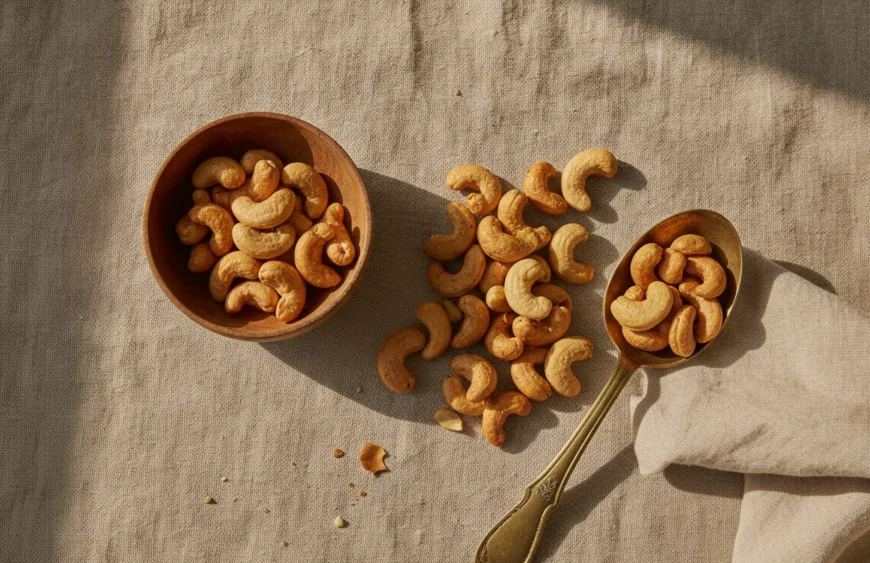
Most healthy adults benefit from 15 to 18 cashews per day (28 to 30 grams). At this serving:
- 157 calories
- 5.1 g plant protein
- 12.4 g healthy fat (mostly monounsaturated oleic acid)
- 8.6 g net carbohydrates
- 83 mg magnesium – over 20% of your daily need
- 1.6 mg zinc + meaningful copper and selenium
India’s ICMR-NIN 2024 dietary guidelines recommend 25 to 30 grams of mixed nuts daily as part of a balanced plate. Cashews fit this range cleanly and bring a different mineral profile than almonds or walnuts – particularly magnesium, zinc, and copper.
For grade context: W240 cashews (240 kernels per pound) are India’s premium whole-kernel grade, with the cleanest fat profile and no splitting. Larger counts like W320 are common in Indian retail but tend to carry more broken kernels and faster moisture pickup.
Recommended daily intake of cashews
The 30-gram benchmark appears across multiple nutrition bodies and clinical studies:
- USDA serving size – 1 oz (28 g), approximately 15 to 18 whole cashew kernels depending on size
- ICMR-NIN 2024 (India) – 25 to 30 g of mixed nuts daily as part of a balanced diet. Cashews alone or combined with almonds fill this recommendation cleanly
- Heart-health research – studies using 28 to 42 g of cashews per day report improvements in LDL-to-HDL ratio and blood pressure in healthy adults over 4 to 12 weeks
For most people in India, 15 to 18 cashews daily is the reference serving. By weight this is roughly one closed fistful of whole kernels. At this portion you get meaningful mineral intake without excessive calorie loading.
One important distinction: the 30 g target applies to unsalted, unroasted cashews. Salted or flavoured varieties add sodium (often 80 to 180 mg per serving) and sometimes hydrogenated fat, which can shift the health profile negatively for people managing blood pressure.
Health benefits of eating cashews daily
At 15 to 18 cashews per day, the documented benefits include:
Heart health. Cashews are approximately 82% unsaturated fat by fat content – primarily oleic acid (the same heart-protective fat in olive oil). Regular cashew intake in clinical trials shows modest LDL cholesterol reduction when cashews replace refined-carb snacks.
Magnesium and bone health. At 83 mg per 30 g serving, cashews are one of the richest nut sources of magnesium. Magnesium supports bone density, muscle function, and insulin sensitivity. Most Indian adults are mildly magnesium-deficient – cashews address this directly.
Blood sugar regulation. Despite their carbohydrate content, cashews have a low glycemic index (22). The fat and protein content slow glucose absorption, making them a better snack choice for blood sugar control than chips or biscuits.
Immunity support. 1.6 mg zinc per serving – zinc activates immune cells and is critical for wound healing. Copper (0.6 mg per serving) supports red blood cell production.
Brain function. Cashews contain tryptophan – a precursor to serotonin – and B6 (0.1 mg per serving), which supports neurotransmitter synthesis. Regular nut intake is consistently associated with lower depression risk in large observational studies.
For a direct comparison with almonds, see our cashew vs almond guide.
Cashews by health goal
Different daily intakes make sense depending on what you’re optimising for:
| Goal | Daily portion | Notes | |—|—|—| | General health | 15–18 cashews (30 g) | Standard benchmark | | Weight loss | 10–12 cashews (20 g) | Pair with fibre (apple, salad) to stay full | | Muscle gain | 18–22 cashews (35–40 g) | Add with a protein source post-workout | | Heart health | 15–18 cashews (30 g) | Unsalted W240; replace a biscuit/tea snack | | Magnesium boost | 18–22 cashews (35 g) | Particularly useful for migraine-prone adults | | Type-2 diabetes | 10–12 cashews (20 g) | With a meal, not as an isolated snack |
Cashews for different age groups
- Children 3 to 5 – 4 to 6 cashews per day; always served soft or lightly roasted. Cashews are a tree-nut allergen – introduce early and watch for reaction.
- Children 6 to 12 – 6 to 10 cashews; cashew paste stirred into milk or smoothies works well for picky eaters.
- Pregnant women – 10 to 15 cashews per day. Magnesium and folate (20 µg per serving) are particularly relevant during pregnancy. Avoid salted varieties.
- Healthy adults – 15 to 18 cashews as the standard reference.
- Adults 60+ – 10 to 15 cashews daily; the soft texture makes cashews one of the easier nuts for older adults to eat without jaw strain.
Best time to eat cashews
Mid-morning or mid-afternoon works best for most people – the fat-protein combination from cashews provides sustained energy and reduces appetite between meals.
- Morning (empty stomach) – acceptable but the fat content can cause mild nausea in some people when eaten before anything else. Pair with a few sips of water.
- Mid-morning snack – ideal. Replaces biscuits, namkeen, or packaged snacks with better nutrition and similar satiety.
- Pre-workout – 10 to 12 cashews 30 to 45 minutes before training provides slow-burn energy. Combine with 1 to 2 dates for faster fuel.
- Evening – fine, but the calorie density means a handful can add up quickly. Portion out 10 to 12 and stop there.
- Avoid late night – high fat content can slow digestion and disturb sleep quality in sensitive individuals.
Risks and side effects
Most adults handle 15 to 18 cashews daily without issue. Specific concerns:
- Tree-nut allergy – cashews are one of the more common tree-nut allergens; shared allergens with pistachios. If tree-nut allergy is diagnosed, avoid entirely.
- High oxalate content – cashews are moderately high in oxalates. People prone to kidney stones (particularly calcium-oxalate type) should limit to 10 to 12 cashews and drink adequate water.
- Salted varieties – commercial roasted-salted cashews often contain 120 to 200 mg sodium per serving. For hypertension management, stick to unsalted.
- Aflatoxin risk in poor-quality batches – cashews from unregulated sources can carry mould contamination. Vacuum-sealed, FSSAI-compliant packs with clear batch dates are safer.
- Calorie creep – cashews are calorie-dense. Eating from an open bag without portioning is one of the most common ways people unknowingly overeat at night.
W240 vs W320: which grade to buy
India’s cashew grading is by count per pound (lb):
| Grade | Kernels per pound | Kernel size | Best for | |—|—|—|—| | W180 | 180 | Jumbo | Gifting, premium desserts | | W240 | 240 | Large | Daily eating, premium snacking | | W320 | 320 | Medium | Cooking, trail mix, value packs | | W450 | 450 | Small | Sweets, kaju katli, barfi |
W240 is the sweet spot for daily consumption – large enough to eat whole, uniform in size, and better grade control. W320 is widely available and cheaper but has more broken kernels and shorter shelf life due to higher surface area.
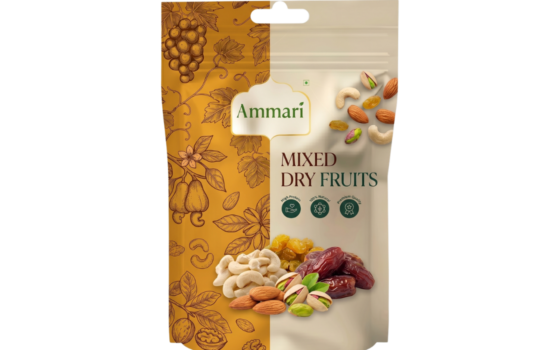
Ammari sources W240 whole cashew kernels – air-sealed in moisture-controlled pouches to preserve freshness.
Sourcing transparency
- Ingredient: Cashew kernels (W240 grade)
- Origin: Goa, Kerala, and Karnataka – India’s primary cashew belts; also select Vietnam and Tanzania sourcing based on season
- Grade: W240 whole kernel; FSSAI compliant
- Packaging: Nitrogen-flushed sealed pouch, 12-month shelf life
Frequently Asked Questions
How many cashews per day is safe?
15 to 18 cashews (28 to 30 g) per day is safe for most healthy adults. This matches the ICMR-NIN recommendation of 25 to 30 g of mixed nuts daily. Eating significantly more – say 50 to 60 cashews – adds excess calories and oxalates, which is worth avoiding.
Can I eat cashews daily without gaining weight?
Yes, if you stick to the 15 to 18 cashew serving. Research shows that regular nut eaters tend to have lower body weight than non-nut eaters, likely because the fat-protein combination reduces appetite and displaces less nutritious snacks. Overeating cashews (from an open bag) is where weight gain typically occurs.
Are cashews better eaten in the morning or evening?
Mid-morning is ideal – the fat-protein combo keeps you full until lunch. Evening is fine in a small portion (10 to 12 cashews). Avoid eating 30 or more cashews late at night; the calorie density and fat content can slow digestion and disrupt sleep.
Should I soak cashews before eating?
Unlike almonds, cashews do not require soaking. The phytic acid content in cashews is lower than in almonds or walnuts, and soaking does not significantly change the nutritional profile. Soaking does soften the texture, which some people prefer, but it also increases moisture and shortens shelf life once soaked.
How many cashews per day for weight loss?
10 to 12 cashews (20 g) per day works well as a weight-loss snack – it provides enough protein and fat to reduce hunger between meals without adding excessive calories. Pair with a piece of fruit or a small cup of yogurt for better satiety than cashews alone.
Are salted cashews as healthy as plain?
Nutritionally similar in fat, protein, and minerals – but salted cashews add 120 to 200 mg sodium per serving. For people managing blood pressure or following a low-sodium diet, unsalted is the better choice. Roasting does not significantly alter the fat quality.
How many cashews should I eat per day for magnesium?
15 to 18 cashews provide approximately 83 mg of magnesium, meeting around 20 to 22% of the daily adult requirement. For people targeting magnesium specifically (for migraine, muscle cramps, or sleep), 20 to 22 cashews daily is a reasonable upper limit before considering other dietary sources.