Dry Fruits Vs Fresh Fruits Nutrition: At a glance
Last updated: 19 May 2026
Drying removes water and concentrates everything left behind. The same 100 g of grapes becomes about 25 g of raisins with similar fibre, four times the sugar density, and almost no vitamin C.
- Calories per 100 g: dried fruits 250 to 360 kcal; fresh fruits 50 to 90 kcal.
- Sugars per 100 g: dried 50 to 75 g; fresh 8 to 16 g. Sugars stay, water leaves.
- Vitamin C: drying destroys 50 to 80 percent. Fresh keeps this; dried does not.
- Fibre and minerals: preserved. Potassium, iron, calcium, magnesium higher per 100 g in dried.
- Right pattern: fresh fruits as 2 to 3 daily servings for hydration and vitamin C; dry fruits as a 25 to 30 g daily snack for fibre, protein, minerals.
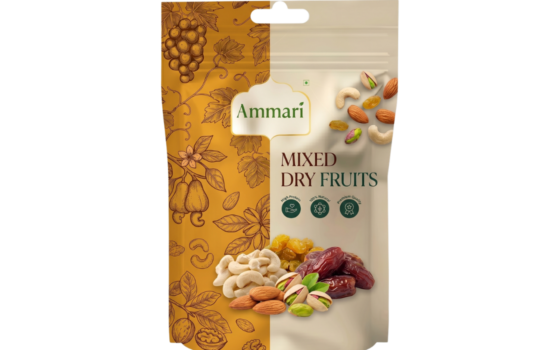
- Ammari stocks almonds, dates, pistachios, walnuts, and raisins packed to order in Jaipur.
For the wider variety landscape, see our complete almonds buying guide.
The drying principle: water leaves, everything else stays
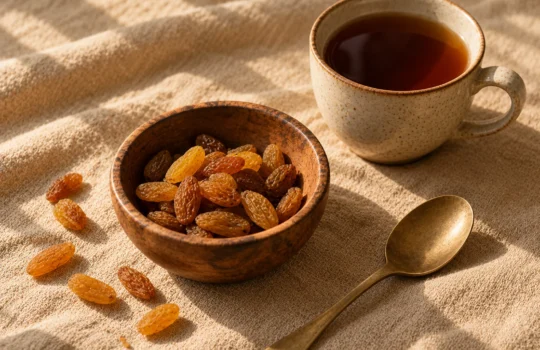
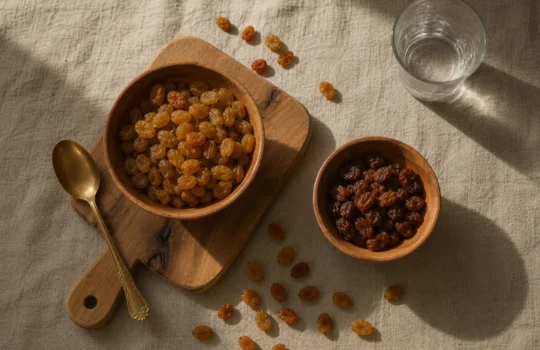
Dry fruits vs fresh fruits nutrition – here is what actually matters when you choose. The single most important fact in this comparison is that drying does not change the nutrients themselves. It removes water. A grape is about 81 percent water; a raisin is about 15 percent water. Everything that was in the grape’s solid matter (fibre, potassium, fructose, glucose, polyphenols, trace minerals) is still there in the raisin, just packed into a quarter of the original weight.
This is why a 100 g raisin pack and a 100 g grape pack look like the same nutrition on paper but eat very differently. The 100 g of grapes might be 70 grapes, easy to eat slowly with the water doing some of the chewing. The 100 g of raisins is roughly 280 raisins, dense, sticky, and concentrated. Both have similar fibre content per piece-equivalent, but the calorie and sugar load per gram of the dried version is roughly four times higher.
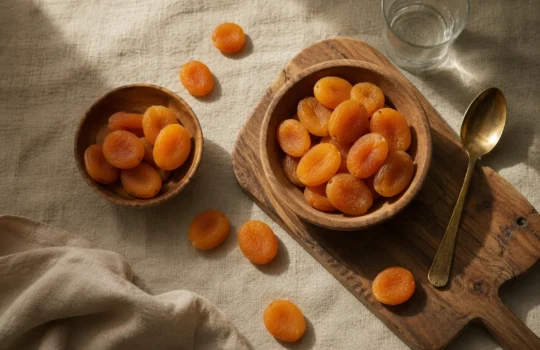
This concentration effect applies to almost every dried fruit. Fresh dates carry around 75 g water per 100 g; dried dates carry 15 to 25 g. Fresh apricots: 86 percent water; dried apricots: 30 to 35 percent. The drying ratios vary by fruit, but the principle holds.
What drying destroys: vitamin C and some heat-sensitive nutrients
The honest exception to “everything stays” is vitamin C. Sun-drying, oven-drying, or industrial dehydration all destroy 50 to 80 percent of the vitamin C content. Some commercial dried fruits add ascorbic acid back as a preservative; check the label.
The full list of nutrients reduced by drying:
- Vitamin C (50 to 80 percent loss; the biggest single drop)
- Folate (15 to 30 percent loss in sun-drying)
- B vitamins, especially thiamine (10 to 20 percent loss)
- Some polyphenols in heat-sensitive fruits like strawberries
The list of nutrients largely preserved in drying:
- Fibre (preserved, becomes more concentrated)
- Minerals (potassium, iron, calcium, magnesium, zinc, all preserved)
- Most polyphenols (gallic acid, ellagic acid, tannins in dates, raisins, prunes)
- Vitamin K, vitamin E
- Sugars (glucose, fructose, and small amounts of sucrose, all preserved)
For Indian diets where vitamin C intake is typically adequate (citrus, amla, guava, leafy greens), the vitamin-C loss in dried fruits is rarely a meaningful issue. The bigger consideration is the sugar density.
Side-by-side nutrition, fresh vs dried
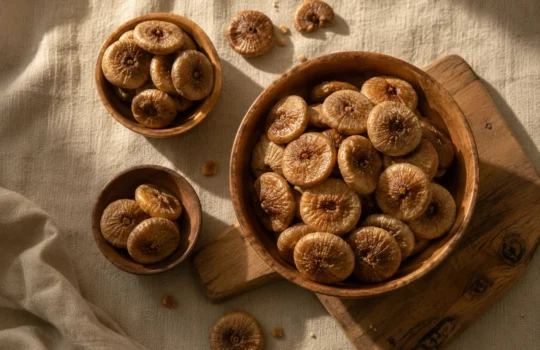
| Fruit (per 100 g) | Fresh form | Dried form | |-|-|-| | Grapes / Raisins (calories) | 67 kcal | 299 kcal | | Grapes / Raisins (sugar) | 16 g | 59 g | | Grapes / Raisins (vit C) | 11 mg | 2 mg | | Apricots / Dried apricots (calories) | 48 kcal | 241 kcal | | Apricots / Dried apricots (sugar) | 9 g | 53 g | | Apricots / Dried apricots (iron) | 0.4 mg | 2.7 mg | | Plums / Prunes (calories) | 46 kcal | 240 kcal | | Plums / Prunes (fibre) | 1.4 g | 7.1 g | | Dates (Medjool fresh vs dried) | varies (often sold semi-dry) | 277 kcal | | Figs / Dried figs (calcium) | 35 mg | 162 mg |
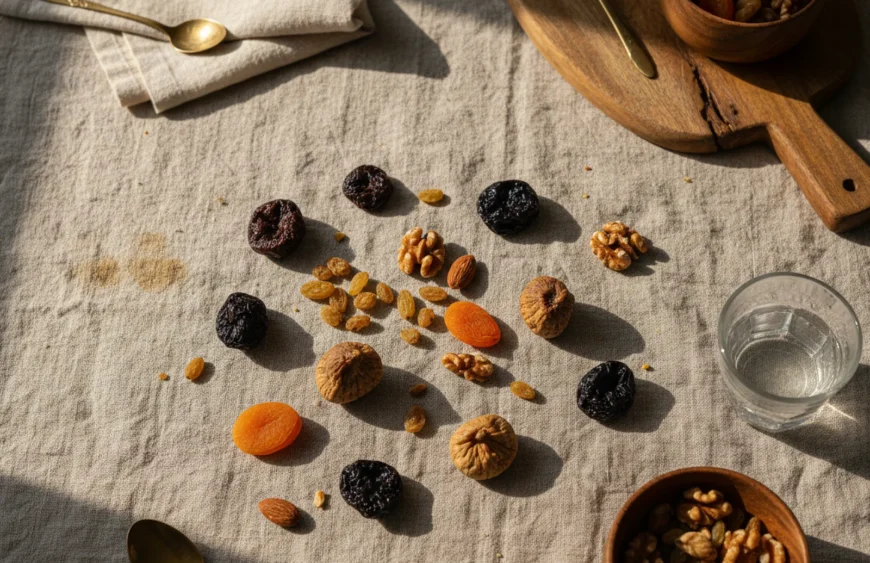
For nuts specifically, the comparison is harder because most “nuts” eaten in India are sold dried and there is no widely-eaten fresh equivalent. Almonds, walnuts, pistachios, and cashews are all sold as dried kernels even when nominally “raw.”
For nut-specific intake guidance, see how many almonds per day and how many walnuts per day.
Where dry fruits win
Dry fruits earn their place in Indian dietary patterns in five specific contexts.
- Daily mineral and protein density. A 25 to 30 g portion of mixed dry fruits (almonds, walnuts, pistachios, raisins) delivers 5 to 7 g of plant protein, 50 to 80 mg of magnesium, 1 to 2 mg of iron, and 200 to 400 mg of potassium. The same nutrition would require 200 to 300 g of fresh fruit volume.
- Shelf stability. Dry fruits keep 6 to 12 months in airtight jars without refrigeration. Fresh fruit spoils in 2 to 14 days depending on the variety. For Indian households without daily fruit-shopping habits, dry fruits offer reliable nutrition between fresh-fruit cycles.
- Cooking and baking. Almonds in halwa, raisins in pulao, walnuts in kheer, dates in laddoo. Indian sweet and savoury cooking depends on dry fruits in ways fresh fruits cannot replace.
- Pregnancy nutrition. Iron, calcium, and gentle natural sugars in dry fruits (dates, dried figs, almonds, walnuts) cover specific pregnancy nutrient gaps efficiently.
- Athletic energy. Dates and raisins are the cleanest natural carb sources for endurance activities, paired with water for absorption.
Where fresh fruits win
Fresh fruits win in four specific contexts that dry fruits cannot match.
- Hydration. Fresh fruits are 70 to 95 percent water. Watermelon, oranges, grapes, apples, papaya all contribute meaningfully to daily fluid intake. Dry fruits contribute almost nothing.
- Vitamin C and folate. Citrus, guava, amla, papaya, kiwi, and strawberries deliver 30 to 200 mg of vitamin C per serving. Dry fruits cannot match this.
- Lower calorie density. A 200 g apple has about 100 kcal; a 200 g pack of dates has about 550 kcal. For weight management, fresh fruit gives more volume per calorie.
- Slower eating pace. The water, fibre matrix, and chewing required of fresh fruits typically lead to lower total intake than the same caloric load of dried fruits.
For everyday Indian diets, both forms cover different nutritional jobs. The pattern that works is fresh fruit at 2 to 3 servings per day (one whole fruit each at breakfast, mid-morning, and an evening snack), plus 25 to 30 g of dry fruits as a separate daily-portion snack. When evaluating dry fruits vs fresh fruits nutrition, the key is verification not branding.
Portion control: where dry fruits trip people up
The biggest practical risk with dry fruits is misjudging portions because the volume is so much smaller than the nutrient (and calorie) load suggests.
A typical “small bowl” of mixed dry fruits at an Indian gathering is around 40 to 50 g. That delivers 200 to 300 kcal and 30 to 40 g of natural sugar. Eating this in the place of a fresh-fruit serving (which would be 100 to 120 kcal and 12 to 18 g sugar) doubles or triples the energy intake without feeling like it.
Practical portion sizes:
- Daily dry-fruit snack: 25 to 30 g (roughly one fist-sized handful), about 150 to 180 kcal
- Pregnancy or active-athlete: scale to 40 to 50 g per day
- Diabetic adults: keep to 20 to 25 g of low-GI options (almonds, walnuts, pistachios, 1 to 2 dates max)
- Children under 10: 15 to 20 g per day, split across breakfast and an evening snack
For a closer look at dry fruits in pregnancy specifically, see best dry fruits for pregnancy.
A practical daily pattern
For an adult Indian household balancing both: morning 5 to 7 soaked almonds plus 2 to 3 walnut halves; breakfast one fresh fruit (apple, banana, papaya, seasonal local); mid-morning or evening one citrus fruit (orange, guava, kiwi) for vitamin C; afternoon 2 to 3 dates with chai in winter; cooking-use raisins or chopped dates in pulao, kheer, and porridge.
This delivers 5 to 7 fruit servings across both forms, around 350 to 450 kcal from fruit, covering vitamin C, fibre, iron, calcium, potassium, magnesium, and plant protein together.
Sourcing transparency
- Dry fruits stocked: Almonds (California, Mamra, Gurbandi), pistachios (Iranian Akbari and Kerman), walnuts (Kashmiri Wonth and Burzul), dates (Medjool, Ajwa, Mabroom, Safawi), raisins (Indian and Iranian).
- Origin verification: all packs traceable to origin growers through verified shippers.
- Storage: vacuum-packed pouches at our Jaipur facility, humidity-controlled.
- Where we ship from: Ammari Foods, Jaipur. Online-only D2C, all-India shipping.
- What we do not stock: fresh fruit. Buy that locally for best freshness.
References & further reading
For independent reference points, the USDA FoodData Central – nutrient database is the standardised dataset we cross-check composition against. Clinical work like the NIN-Hyderabad Dietary Guidelines for Indians helps separate marketing claims from evidence.
Frequently Asked Questions
Are dry fruits healthier than fresh fruits?
Neither is universally healthier. Dry fruits win on fibre, protein, minerals, and plant fat density. Fresh fruits win on hydration, vitamin C, and lower calorie density per gram. They cover different nutritional gaps. The honest pattern is eating both daily, not replacing one with the other.
Do dry fruits have more sugar than fresh fruits?
Yes, per gram. Drying removes water and concentrates everything that was in the fruit, including the natural sugars. A 100 g pack of raisins carries about 59 g of sugar; the equivalent fresh grapes carry about 16 g. The sugars are still natural (glucose and fructose), but the density is roughly four times higher. Portion accordingly.
Are dry fruits good for weight loss?
In small portions, yes. A 25 to 30 g daily handful of mixed dry fruits delivers satiety, fibre, and protein in about 150 to 180 kcal. The risk is eating larger portions casually, which can add 300 to 400 kcal in one sitting without feeling substantial. For weight loss specifically, stick to portion sizes and pair with fresh fruit for volume.
Do dry fruits lose nutrition during drying?
Some. Vitamin C drops 50 to 80 percent. Folate drops 15 to 30 percent. Some heat-sensitive B vitamins drop 10 to 20 percent. Fibre, minerals (potassium, iron, calcium, magnesium), most polyphenols, vitamin E, and vitamin K are preserved. For most adult Indian diets, the vitamin-C loss is the only meaningful one, and fresh citrus or amla easily covers that gap.
Can dry fruits replace fresh fruits entirely?
No. Replacing fresh fruits entirely with dry fruits would mean losing vitamin C, missing daily hydration support, and likely overshooting on calorie intake. The Indian Council of Medical Research recommends 5 servings of fruits and vegetables per day, with fresh fruit ideally making up 2 to 3 of those. Use dry fruits as supplement, not substitute.
Which is better for diabetics, dry or fresh fruits?
Fresh fruit is generally easier to portion-control for diabetics because of the lower sugar density per gram. Low-GI dry fruits like almonds, walnuts, pistachios are safe at 25 to 30 g per day. High-sugar dry fruits like dates, raisins, dried mango, and dried apricots need careful portioning paired with protein. See dates for diabetics for specific guidance.