The Short Answer
Soaking raisins overnight changes how your body processes them. Water rehydrates the fibre, activates natural enzymes, and breaks down some of the tannins and antinutrients that inhibit iron and calcium absorption when raisins are eaten dry.
The most cited benefits of eating soaked raisins first thing in the morning:
- Higher iron bioavailability – soaking reduces tannins that block non-haem iron absorption; relevant for anaemia-prone adults and women with iron deficiency
- Gentler on blood sugar – rehydrated raisins release sugar more slowly than dry raisins; the water content dilutes the glucose load
- Digestive support – natural fibre + enzymes activated by soaking support bowel regularity
- Liver support – a traditional Ayurvedic use; bioflavonoids in the soak water are cited in classical texts as liver-cleansing
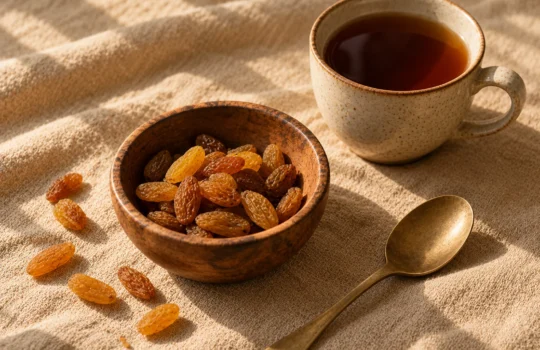
The standard practice: 8 to 10 kishmish or 4 to 5 munakka soaked in 100 ml water overnight; eaten in the morning with the soak water consumed as well.
What soaking actually does to raisins
Raisins are dried grapes – concentrating sugars, fibre, iron, and antioxidants into a denser form. Soaking reverses part of that:
Antinutrient reduction. Raisins contain tannins that bind to iron and calcium, reducing absorption. Soaking leaches a portion of these tannins into the water, improving mineral uptake.
Lower glycemic impact. A dry raisin delivers sugar quickly. A soaked raisin releases it more slowly – behaving more like whole fruit. This is why Ayurvedic practice prefers soaked raisins for people managing blood sugar.
Easier digestion. Water activates natural enzymes in the raisin, reducing bloating. Soaked raisins are also softer – safer for young children and easier for older adults to chew.
7 benefits of eating soaked raisins every morning
1. Improved iron absorption
Iron deficiency anaemia affects roughly 50% of Indian women of reproductive age and a significant share of children. Raisins are one of the better plant sources of non-haem iron – approximately 1.4 mg per 30 g serving. Soaking reduces the tannin content, allowing the gut to absorb more of this iron. Eating soaked raisins with vitamin-C-rich foods (a small amla, lemon water, or orange) amplifies this effect further.
2. Regulated digestion and bowel movement
The dietary fibre in raisins (1.9 g per 30 g serving) swells on soaking, functioning as a gentle bulk-forming laxative. Regular morning consumption of soaked raisins is one of the simplest and gentler dietary interventions for mild constipation – particularly for children and elderly adults who struggle with hard stools.
3. Steady energy without a sugar crash
Soaked raisins release their natural sugars more slowly than dry ones. The fibre slows absorption, giving steady energy rather than a quick spike and crash. A good pre-school or pre-workout option for children and active adults.
4. Blood pressure support
Raisins are rich in potassium – approximately 309 mg per 30 g serving – which counteracts sodium’s blood-pressure-raising effect. The DASH (Dietary Approaches to Stop Hypertension) diet specifically recommends fruit and nut intake for this reason. Daily soaked raisin consumption, in combination with a low-sodium diet, may support mild blood pressure reduction over several weeks.
5. Bone health
Each 30 g serving has 22 mg calcium and boron – a trace mineral that helps the body retain calcium. For vegetarian adults avoiding dairy, raisins are a useful plant-based calcium source alongside sesame and almonds.
6. Skin and antioxidant support
Raisins contain resveratrol and anthocyanins (higher in dark/black raisins) – antioxidants linked to reduced oxidative stress. Some observational studies note improved skin texture with regular consumption. The effect is moderate and works best alongside good hydration.
7. Liver support (Ayurvedic tradition)
Classical Ayurvedic texts recommend soaked raisins on an empty stomach to support the liver’s overnight cycle. Modern science has not confirmed a “liver cleanse” effect, but the natural sugars do replenish liver glycogen after overnight fasting – a real and useful benefit.
Kishmish vs Munakka: which to soak?
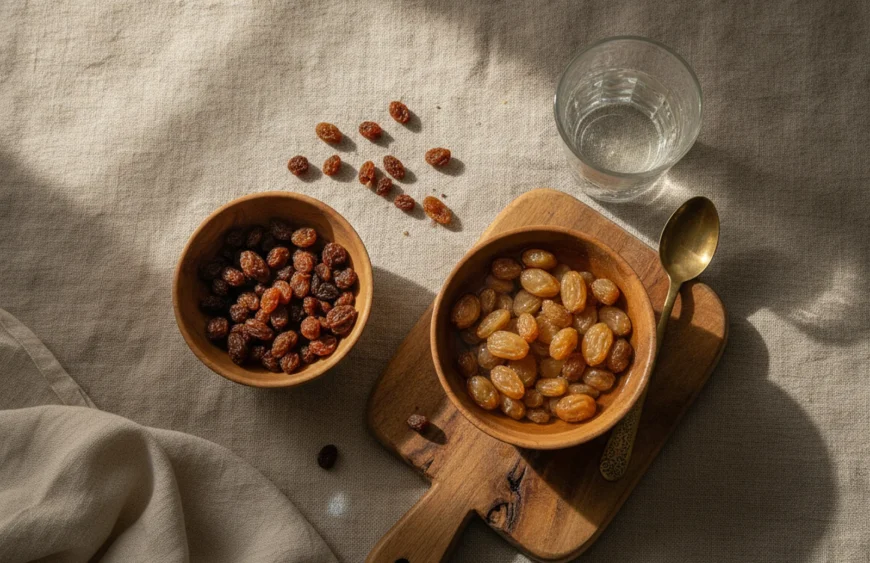
| Feature | Kishmish (green/golden raisins) | Munakka (large black raisins) | |—|—|—| | Size | Small, 1 to 1.5 cm | Large, 2 to 3 cm | | Taste | Sweet, mild | Rich, slightly tangy | | Iron content | ~1.4 mg per 30 g | Slightly higher | | Ayurvedic use | Daily snack, energy | Medicinal – winter, anaemia, dry cough | | Soaking portion | 8 to 10 raisins | 4 to 5 raisins | | Best for | Children, daily use, mixing | Adults with specific health goals |
For general daily use, kishmish is more practical – available in every grocery store, milder in taste, and easier to incorporate into a child’s morning routine. Munakka is the Ayurvedic choice for therapeutic use – anemia support, winter immunity, and dry cough – and is typically sold in Ayurvedic stores or premium dry fruit shops.
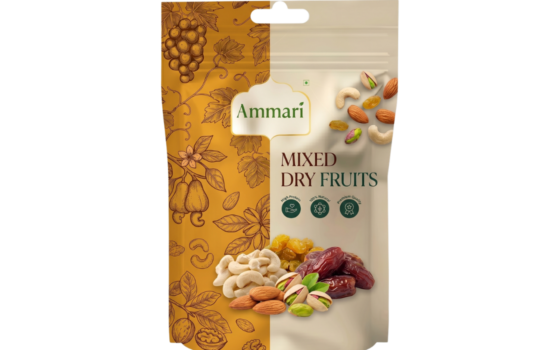
Ammari sources both varieties – green raisins (kishmish) as the everyday option and black raisins for seasonal and functional use.
How to soak raisins correctly
- Take 8 to 10 kishmish (or 4 to 5 munakka) – roughly 20 to 25 g
- Rinse once under running water
- Place in a small glass or bowl with 80 to 100 ml of clean drinking water
- Cover and leave overnight (8 to 10 hours) at room temperature
- In the morning, eat the raisins on an empty stomach
- Drink the soak water as well – it contains the leached minerals and bioflavonoids
Temperature matters: Use room-temperature water, not hot water. Hot water can degrade heat-sensitive antioxidants and make the raisins overly soft and mushy.
When to eat: Ideally before your morning tea or breakfast – the empty stomach maximises mineral absorption. Wait 20 to 30 minutes before drinking tea or coffee, as tannins in tea can partially counteract the iron benefit.
Soaked raisins vs dry raisins: key differences
| Factor | Soaked raisins | Dry raisins | |—|—|—| | Tannin content | Lower (leached into water) | Higher | | Iron absorption | Better | Moderate | | Glycemic response | Slower sugar release | Faster | | Digestibility | Easier | Can cause bloating | | Texture | Soft, plump | Chewy, dense | | Calorie density | Same (water adds no calories) | Same | | Antioxidant retention | Most retained | Fully retained (dry storage better) |
The calorie and sugar content is identical – soaking does not reduce the sugar. It changes how quickly that sugar is absorbed, not how much is there.
Who should be cautious
Soaked raisins are safe for most people at 8 to 10 per day, but a few groups should watch:
- Diabetics – soaking helps, but raisins are still a high-sugar food. Limit to 4 to 5 soaked kishmish and monitor blood glucose response. Consult your dietitian.
- IBS (irritable bowel syndrome) – raisins are moderately high in FODMAPs (fermentable sugars). Soaking reduces this slightly, but large portions can still trigger bloating or loose stools.
- Dental concerns – raisins are sticky and high in sugar; rinse your mouth after eating, even soaked ones, to prevent enamel erosion.
- Overweight adults counting calories – raisins are calorie-dense (approximately 85 kcal per 25 g). 8 to 10 soaked raisins is a small caloric addition; more than that daily adds up quickly.
Sourcing transparency
- Ingredient: Raisins (kishmish / black raisins)
- Varieties available: Green kishmish (Afghanistan, Iran origin); Black raisins (Indian origin)
- Packaging: Moisture-sealed resealable pouch; no added sugar or preservatives
- Shelf life: 12 months sealed; store cool and dry after opening
Frequently Asked Questions
How many soaked raisins should I eat per day?
8 to 10 green kishmish or 4 to 5 large munakka per day is the standard recommendation. This provides around 20 to 25 g – within the daily nut-and-dry-fruit intake suggested by ICMR-NIN dietary guidelines. More than 15 to 20 raisins daily adds significant natural sugar intake and is not generally recommended.
Should I drink the raisin soak water?
Yes. The soak water contains leached minerals, bioflavonoids, and some of the tannins that were removed from the raisins. Drinking it on an empty stomach is part of the traditional Ayurvedic practice and adds to the mineral benefit. It has a mild, slightly sweet-tannic taste.
Can diabetics eat soaked raisins?
In small amounts – 4 to 5 soaked kishmish – and with a meal rather than on an empty stomach. Soaking does slow the sugar release, but raisins are still a concentrated sugar food. Monitor your blood glucose response after eating soaked raisins. Larger portions are not suitable for Type-2 diabetics without dietitian guidance.
What is the best time to eat soaked raisins?
First thing in the morning on an empty stomach, followed by the soak water. Wait 20 to 30 minutes before tea or breakfast. Morning consumption maximises iron absorption and the gentle energy boost carries through the early part of the day.
Can children eat soaked raisins?
Yes, from about 18 months onward – soaked raisins are soft and safe. For children under 3, always mash or chop soaked raisins to avoid choking. 4 to 5 soaked raisins is enough for young children; 8 to 10 for school-age children. Rinse their teeth afterward.
Is it better to soak raisins in milk or water?
Water is the standard and recommended medium – it dissolves tannins and provides a clean mineral-rich soak. Soaking in warm milk is a traditional preparation for certain Ayurvedic formulations (particularly munakka in milk for dry cough), but water soaking is more widely applicable and produces better antinutrient reduction.
Do soaked raisins help with constipation?
Yes, reliably for mild constipation. The fibre swells with water, creating gentle bulk that stimulates bowel movement. Eating 8 to 10 soaked raisins in the morning on an empty stomach, followed by a glass of water, is one of the simplest dietary interventions for irregular bowel movement.