The Short Answer
Dried apricots pack the nutrients of fresh apricots into a smaller serving. At 30 g (6 to 8 halves) you get 72 calories, 1 g protein, 2.2 g fiber, 0.8 mg iron, and a good dose of beta-carotene. The body turns beta-carotene into vitamin A, which supports eyes and skin.
India’s ICMR-NIN 2024 guidelines place dried fruit in the same moderate-portion group as nuts. Drying concentrates natural sugar along with the nutrients, so a small daily handful is the right amount, not an open-ended snack.
Here’s a detail most buyers miss. Most dried apricots sold in India are sulfured. Sulfur dioxide keeps the bright orange colour and extends shelf life. Unsulfured apricots are darker and firmer, with a shorter shelf life but no additive. Both are safe for most people. The difference mainly matters for sulfite-sensitive buyers.
What are dried apricots
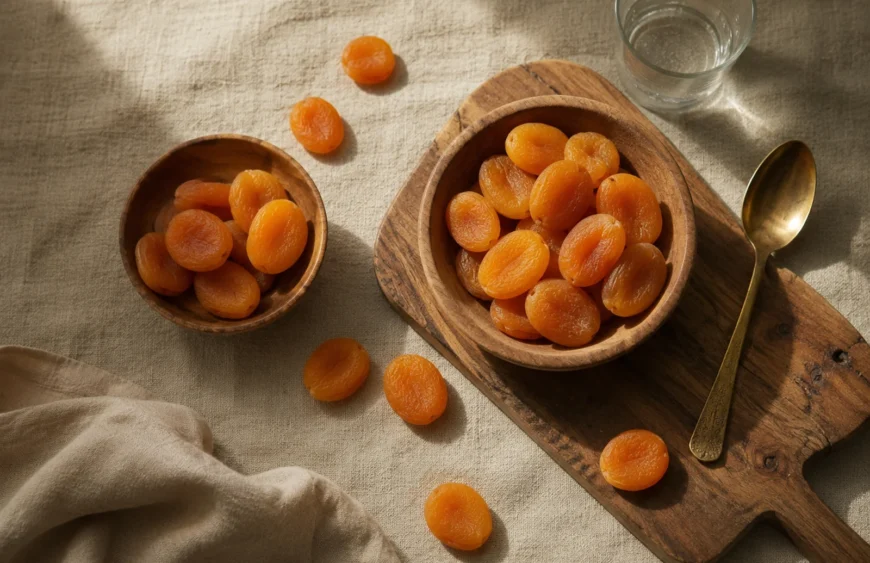
Dried apricots are fresh apricots with most of the water removed. Drying happens in the sun or in a machine. It packs the fruit’s sugar, fiber, and minerals into a smaller, shelf-stable form.
In North India, dried apricots go by one name: khubani. This word covers both fresh and dried apricots, so labels often add “dried” or “sukhi khubani” for clarity.
Two drying methods exist, and they give two different-looking products:
- Sulfured apricots – treated with sulfur dioxide before drying. This keeps the bright orange-gold colour and roughly doubles shelf life. Most Indian retail packs use this method.
- Unsulfured apricots – dried without the additive. The result is darker and more brown than orange, with a firmer bite and a shorter shelf life once opened. Some buyers prefer the shorter ingredient list, though the two are close in nutrition.
Neither method changes the mineral content much. The real differences are colour, shelf life, and fit for people with sulfite sensitivity – a known trigger for some asthma sufferers.
How dried apricots support the body
Iron and energy. At 0.8 mg per 30 g serving, dried apricots are an easy plant-based iron source. This helps vegetarians manage mild iron gaps, a common issue in Indian diets. Eat them with a vitamin-C food – citrus, amla, tomato – and the body absorbs more of that iron.
Eye health. Dried apricots are rich in beta-carotene, the orange plant pigment the body turns into vitamin A. Vitamin A helps the retina adjust to low light and protects the eye’s surface. Among common dry fruits, apricots are one of the few with real vitamin A content. Most nuts have none.
Digestion. At 2.2 g fiber per 30 g serving, dried apricots support regular digestion. The fiber mix adds bulk to stool and feeds good gut bacteria. This is why dried apricots are a traditional home remedy for mild constipation.
Bone and muscle support. Dried apricots provide potassium – about 349 mg per 30 g – plus small amounts of calcium and magnesium. Potassium balances sodium in the diet and supports normal muscle and nerve function. That matters in a diet built around pickles, papad, and packaged snacks.
Skin health. The same beta-carotene that helps the eyes also supports skin. It acts as an antioxidant, helping protect skin cells from daily sun and pollution exposure. Think of this as a supporting role, not a substitute for sunscreen.
Dried apricots nutrition at a glance
| Nutrient | Per 30 g (6-8 halves) | Per 100 g | |—|—|—| | Calories | 72 kcal | 241 kcal | | Protein | 1.0 g | 3.4 g | | Total fat | 0.15 g | 0.5 g | | Carbohydrates | 19 g | 62.6 g | | Fiber | 2.2 g | 7.3 g | | Iron | 0.8 mg | 2.7 mg | | Potassium | 349 mg | 1162 mg |
Source: USDA FoodData Central.
Sulfured vs unsulfured: which to choose
| | Sulfured | Unsulfured | |—|—|—| | Colour | Bright orange-gold | Darker, brownish | | Shelf life (sealed) | 12 months | 6-8 months | | Texture | Softer, plumper | Firmer, chewier | | Additive | Sulfur dioxide (E220) | None | | Best for | Everyday snacking, gifting | Sulfite-sensitive buyers |
Sulfur dioxide is an approved food preservative under FSSAI rules. It’s safe for most people at normal serving sizes. A small group of sulfite-sensitive people, including some with asthma, may notice mild reactions. If that’s you, check the pack or choose unsulfured stock.
Who benefits most
- Vegetarians managing iron intake – a plant-based iron source that pairs well with vitamin-C foods
- People with mild constipation – fiber supports regular digestion
- Anyone wanting more vitamin A from food – one of the few dry fruits with real beta-carotene
- Festive and gifting use – the bright colour and soft bite make sulfured apricots popular in mithai boxes and hampers
Side effects to watch
- Sulfite sensitivity – a small share of people, some with asthma, react to sulfur dioxide in sulfured apricots. Unsulfured is the safer pick here.
- Sugar concentration – drying packs in sugar. Stick to 6-8 halves rather than eating from an open pack.
- Oxalates – moderate levels. People prone to kidney stones should eat in moderation and drink enough water.
- Choking risk for young children – cut into smaller pieces for children under 4.
Sourcing transparency
- Ingredient: Dried apricots (khubani)
- Packaging: Sealed pouch, no added sugar
- Shelf life: 12 months sealed; refrigerate after opening for best texture
- Product: Premium Dried Apricots (Khubani)
Frequently Asked Questions
What are the main benefits of dried apricots?
Iron for energy, fiber for digestion, and beta-carotene for eye and skin health. At 6 to 8 halves (30 g) per day, dried apricots also give you potassium and a little calcium – a well-rounded pick among dry fruits.
How many dried apricots should I eat per day?
6 to 8 halves (about 30 g) is a sensible daily amount for most adults. This gives you real iron and fiber without too much natural sugar. If you’re watching blood sugar closely, stay at the lower end of this range.
Are sulfured dried apricots safe to eat?
Yes, for most people. Sulfur dioxide is an FSSAI-approved preservative used to keep the colour and extend shelf life. A small group of sulfite-sensitive people, including some with asthma, may prefer unsulfured apricots instead.
Are dried apricots good for constipation?
Yes. At 2.2 g fiber per 30 g serving, dried apricots are a traditional food for regular digestion. Drink enough water alongside them, since fiber needs water to do its job well.
Can dried apricots help with iron deficiency?
They can help. Dried apricots give you plant-based iron, which the body absorbs less easily than iron from meat. Eat them with a vitamin-C food – citrus fruit or amla work well – and absorption improves.
What is the difference between khubani and dried apricots?
Khubani is the Hindi and Urdu name for apricots in India. It covers both fresh and dried fruit. “Dried apricots” and “sukhi khubani” both mean the dried product, which is what’s usually sold as a dry fruit.
Do dried apricots need to be soaked before eating?
No, you can eat them straight from the pack. Some people soak dried apricots in warm water for 15 to 20 minutes to soften them for cooking, such as in stuffed mithai or stewed fruit. That’s a texture choice, not a nutrition requirement.
Sources & references