TL;DR
- Pistachios are nutrient-dense, so the numbers per 100g look high even though a normal snack portion is much smaller.
- A 100g serving is useful for reference, but the real-world decision is usually made at the 30g or 1 oz level.
- They give you protein, fiber and mostly unsaturated fats, which makes them one of the more balanced nuts for regular snacking.
- Measuring the portion once makes the nutrition label easier to use and keeps snacking under control.
- If you want pistachios to fit a healthy routine, think in servings, not in open packets.
- The best way to read a pistachio label is to compare the 100g table with the 30g portion you would actually eat.
Pistachios nutrition 100g India is useful because it gives a complete picture of the nut before you buy it. A 100g serving shows the full density of calories, fat, protein and fiber, but most people do not eat that much at once. In daily life, pistachios are usually eaten as a small measured handful.
That is why the 100g figure should be treated as a reference point, not a suggested snack size. The real value of this post is helping you translate the label into something practical, whether you are packing a lunchbox, setting out a tea-time snack or comparing pistachios with other dry fruits.
Pistachios sit in a useful middle ground: they are richer than fruit or yogurt, but they are still easier to portion than many processed snacks. When the portion is measured, they work well for people who want crunch, flavor and a more satisfying snack without turning eating into guesswork.
What 100g actually means
A 100g serving is large enough to make the calorie and fat numbers look significant. That is normal. Most nuts are energy dense, and pistachios are no exception. The point is not that pistachios are “heavy” in the bad sense; the point is that they contain a lot of nutrition in a relatively small volume.
In practical terms, 100g is more than a casual snack. It is closer to a batch amount, a shared-bowl amount or the total quantity you might use to portion snacks across several days. For everyday eating, 30g is usually the better working number.
Nutrition per 100g
| Nutrient | Per 100g | What it means |
|---|---|---|
| Calories | ~560 kcal | Energy dense, so portion size matters |
| Protein | ~20 g | Good for a plant-based snack |
| Total fat | ~45 g | Mostly unsaturated fats |
| Fiber | ~10 g | Helps with satiety and digestion |
| Carbohydrate | ~28 g | Lower than many packaged snacks |
| Potassium | ~1,000 mg | Useful for overall mineral balance |
| Vitamin B6 | ~1.7 mg | Supports normal metabolism |
| Magnesium | ~120 mg | A useful mineral for a balanced diet |
For the everyday intake version, read How Many Pistachios Per Day. For the portion-size version, read How Many Pistachios in 1 Oz.
How 100g compares with 30g and 1 oz
| Serving | Why it matters | Practical use |
|---|---|---|
| 100g | Full nutrition reference | Useful for product comparison and batch planning |
| 30g | Common snack portion | Best for daily eating and portion control |
| 1 oz / 28g | Label-friendly serving | Best for measuring a single snack bowl |
This is why the title pistachios nutrition 100g India is helpful, but the real decision usually happens at 30g. The 100g number tells you the density. The 30g number tells you what actually fits into a normal snack routine.
Why pistachios feel more filling than their size suggests
- Protein: gives the snack more staying power than a plain carb-based bite.
- Fiber: slows the eating pace and supports satiety.
- Healthy fats: mostly unsaturated, which makes them nutritionally valuable.
- Slow eating format: shell-on pistachios naturally reduce fast overconsumption.
When you eat pistachios slowly, the effect is stronger than the raw nutrition table suggests. A bowl that looks small can feel satisfying because the shelling process, crunch and saltiness create a more deliberate eating pattern.
How to use pistachios in a real routine
The easiest way to make pistachios work is to portion them once. Put a measured amount in a small bowl, tin or jar instead of eating from the full packet. That keeps the numbers in the nutrition table connected to real life.
They can be used in several ways: as a tea-time snack, in breakfast bowls, over yogurt, or mixed into a small trail mix. The trick is to treat them as a measured ingredient, not as a free-flow snack.
What to check when buying pistachios
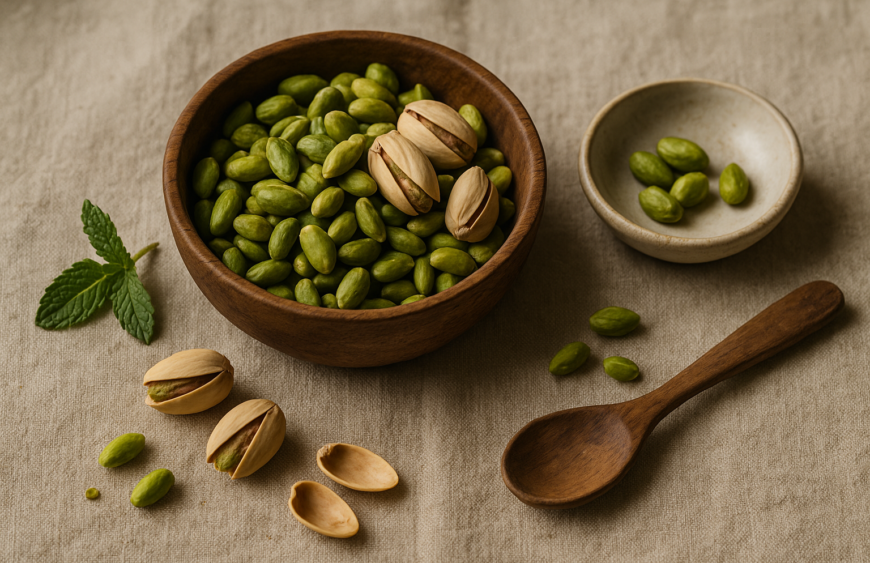
If you are comparing packs, look for freshness, shell condition and salt level. Fresh pistachios should have a clean nut aroma and a crisp bite. Very stale nuts lose both flavor and texture, which makes them easier to overeat because they no longer taste as satisfying.
If you want a more deliberate snack, shell-on pistachios usually slow the eating pace. If you need them for recipes or mixing into other foods, shelled pistachios are more practical.
For the buying angle, see Pistachio Price Per Kg in India. For the product itself, see Roasted & Salted Pistachios.
How pistachios compare with other nuts
Compared with many other nuts, pistachios are a strong all-round snack because they balance protein, fiber and flavor. They are not the lightest snack on the shelf, but they are also not meant to be. Their value comes from being nutrient-dense and satisfying in a small amount.
That is why pistachios often appear in healthy-snacking conversations alongside almonds and walnuts. They give a pleasant texture and a familiar Indian snack feel while still delivering a useful nutrient profile.
If you want a comparison read, see Pistachios Vs Cashews Nutrition. If you want the health angle, read Pistachios Health Benefits.
What Ammari recommends
Use the 100g table when you are comparing products, and use the 30g or 1 oz portion when you are deciding how much to eat. That is the most practical way to use pistachios nutrition 100g India without getting lost in the numbers.
If you want pistachios as a regular snack, buy a fresh pack, divide it into small servings and keep the rest sealed. That makes the nutrition plan much easier to follow across the week.
Frequently Asked Questions
Is the 100g serving realistic for daily snacking?
Not usually. It is better as a reference number. For daily use, 30g or 1 oz is the more realistic portion size.
Are pistachios healthy for regular snacking?
Yes, when they are portioned. They provide protein, fiber and healthy fats that fit well into a balanced snack pattern.
Why does this post use both 100g and 30g?
Because 100g is the label reference and 30g is the real-life portion. Together they make the nutrition picture easier to understand.
Which post should I read next?
Read How Many Pistachios in 1 Oz for portion planning, or Pistachio Price Per Kg in India for the buying side.
Free delivery on orders over ₹999 where natural.