
TL;DR
- Packing a Diwali dry fruit gift box well comes down to six steps: choosing a rigid box, layering by dry fruit type, adding filler for structure, arranging a small diya or festive motif, placing the card, and finishing the ribbon.
- A rigid box with a fitted lid holds its shape better than a folding carton, which matters most when a gift travels by hand or courier before Diwali.
- Layering heavier dry fruits like cashews and almonds at the base and lighter ones like raisins or dried figs on top keeps the arrangement from shifting in transit.
- Diwali-specific touches, gold or terracotta tissue paper, a small diya-shaped card cutout, a short festive message, separate this from a generic gift box without adding cost.
- This guide is Diwali-specific. For general aesthetic packing technique that works year-round, see Ammari’s how to pack dry fruit gifts aesthetically guide.
Packing a Diwali dry fruit gift box is the process of arranging dry fruits inside a rigid box using layering, filler and a festive color palette so the finished gift looks intentional rather than assembled at the last minute. The technique below is specific to Diwali, gold and terracotta tones, a diya motif, festive card wording, and works whether you’re packing one box or a dozen for a longer gifting list.
Ammari’s general guide to packing dry fruit gifts aesthetically covers year-round technique. This piece narrows in on the choices that make a box read as Diwali-specific rather than a generic gift.
Step 1: Choose the right box
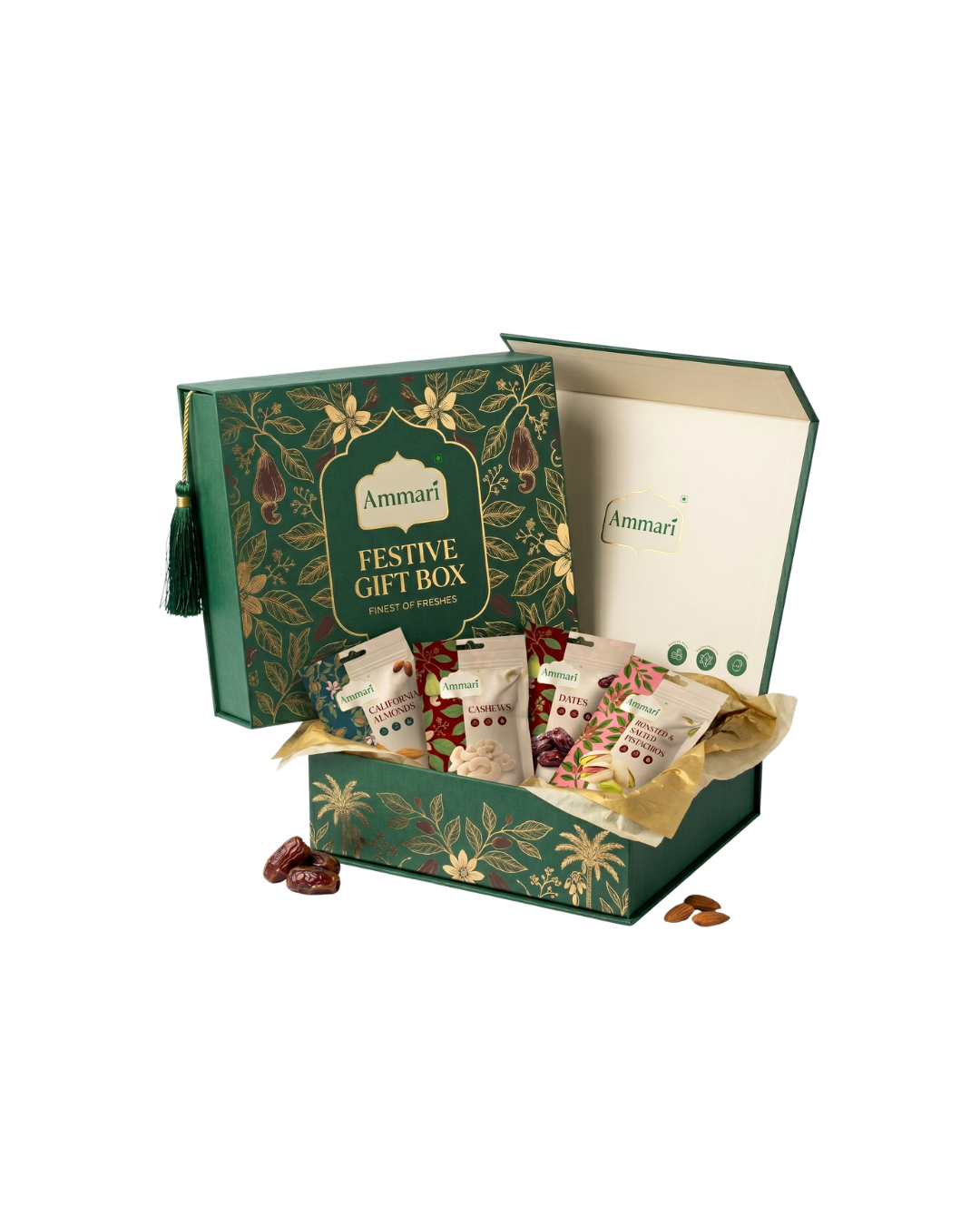
A rigid box with a fitted, lift-off lid holds its shape far better than a folding carton, especially if the gift will travel by hand, car or courier before it’s opened. Square or rectangular boxes in the 6 to 8 inch range fit most single-dry-fruit or two-dry-fruit combinations without leaving too much empty space. Ammari’s festive gift box already comes packed and finished if you’d rather skip the assembly step entirely.
Step 2: Layer by dry fruit type and weight
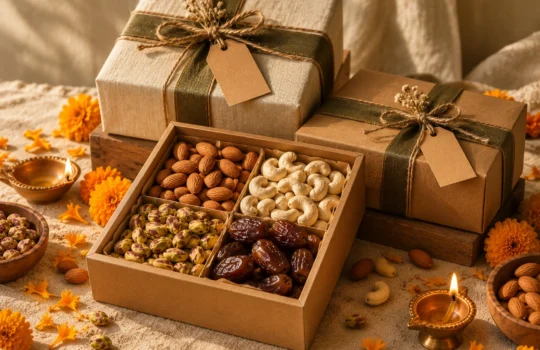
Place heavier, denser dry fruits, cashews or almonds, at the base of the box in a small container or compartment. Add lighter items, raisins, dried figs or dates, in a second layer on top. This order keeps the arrangement stable if the box is tilted or stacked with others, and it also creates visual depth when the lid comes off, rather than a single flat layer of one dry fruit.
Step 3: Use filler for structure, not just decoration
Crinkle paper or tissue paper in gold, terracotta or deep red serves two purposes here: it fills empty space so the contents don’t shift, and it sets the color palette before anything else is placed. Push filler into corners and gaps first, then position the dry fruit containers on top, rather than pouring filler over the top at the end. A tightly packed box travels better and looks fuller when opened.
Step 4: Add a Diwali motif tastefully
A small diya-shaped card cutout, a strip of gold paper folded into a simple toran-style edge, or a single marigold-colored ribbon knot are enough to signal the occasion without cluttering the box. One motif is usually more effective than several; a box with a diya cutout, a gold ribbon and a rangoli-pattern sticker all at once starts to look busy rather than festive. Pick one element and let the dry fruit itself be the visual centerpiece.
Step 5: Place the card and write it well
A short, warm message works better than a long one. Something like “Wishing you a Diwali as bright as this box” or “A small gift, a warm Diwali wish” reads as considered without being elaborate. Place the card on top of the filler, angled slightly rather than laid flat, so it’s the first thing visible when the lid comes off. For corporate quantities, Ammari’s customized corporate gift box guide covers adding a printed card or logo at scale.
Step 6: Finish the ribbon and seal
A single ribbon, tied once around the box in gold, maroon or terracotta, finishes the presentation better than multiple ribbons or elaborate bows, which can look overdone against a Diwali palette that’s already warm and busy. If the box needs to travel, a strip of clear tape under the ribbon at the back keeps the lid from shifting without being visible from the front.
Common packing mistakes to avoid
A few mistakes show up often enough to be worth naming directly. Overfilling a box so the lid strains to close usually crushes the top layer of dry fruit and flattens the filler underneath it, so it’s better to choose a slightly larger box than to force everything into a tight one. Using too many colors, gold, silver, red and green all in the same box, tends to look chaotic rather than festive; picking two colors and repeating them across the tissue paper, ribbon and card keeps the box visually calm. Skipping the card is a missed opportunity even for a quick gift, since a card is what turns a box of dry fruit into a gift with the recipient’s name attached to it. Finally, sealing a box with visible tape on the front, rather than tucking it underneath the ribbon at the back, is a small detail that undercuts an otherwise well-packed box.
Packing several boxes for a longer list
If you’re packing more than four or five boxes for Diwali, consistency across the batch matters more than perfecting any single box. Lay out all the boxes, filler, dry fruit portions and ribbon in an assembly-line order, box and filler first, then dry fruit, then card and ribbon last, rather than finishing one box completely before starting the next. This keeps the color palette and layering consistent across the whole batch and is noticeably faster once you’re past the first two or three boxes.
What Ammari recommends
For a Diwali box, stick to a warm, limited palette, gold, terracotta, deep red, rather than mixing in unrelated colors, and let one festive motif do the work rather than several small ones. If packing several boxes for a longer list, Ammari’s dry fruit gifting guide and bulk order guide both cover sourcing dry fruit at scale so the packing process stays consistent across every box. Free delivery applies on orders over ₹999 where natural.
For packing technique that isn’t Diwali-specific, see Ammari’s how to pack dry fruit gifts aesthetically guide.
Frequently Asked Questions
What kind of box works best for a Diwali dry fruit gift?
A rigid box with a fitted, lift-off lid holds its shape better than a folding carton, especially if the gift travels by hand or courier. Square or rectangular boxes in the 6 to 8 inch range suit most single or two-dry-fruit combinations.
How do I layer different dry fruits in one box?
Place heavier items like cashews or almonds at the base and lighter ones like raisins or dried figs on top. This keeps the arrangement stable in transit and creates visual depth when the lid is removed, rather than one flat layer.
What colors work best for Diwali gift box packing?
Gold, terracotta and deep red are the standard festive palette for Diwali. Sticking to one or two of these colors, in the tissue paper, ribbon and card, looks more intentional than mixing in unrelated colors or too many at once.
Should I add a diya or festive decoration to the box?
One tasteful festive element, a small diya-shaped card cutout or a gold ribbon knot, is usually enough. Adding several decorative elements at once, stickers, cutouts and multiple ribbons together, tends to look cluttered rather than festive.
What should I write on a Diwali gift card?
A short, warm line works better than a long message. Simple wording like “Wishing you a Diwali as bright as this box” reads as considered without being elaborate, and it’s easy to personalize with the recipient’s name.
How is this different from Ammari’s general dry fruit packing guide?
Ammari’s general guide to packing dry fruit gifts aesthetically covers technique that works year-round. This guide focuses specifically on Diwali-appropriate colors, motifs and card wording, on top of the same base packing steps.
Frequently Asked Questions
What kind of box works best for a Diwali dry fruit gift?
A rigid box with a fitted, lift-off lid holds its shape better than a folding carton, especially if the gift travels by hand or courier. Square or rectangular boxes in the 6 to 8 inch range suit most single or two-dry-fruit combinations.
How do I layer different dry fruits in one box?
Place heavier items like cashews or almonds at the base and lighter ones like raisins or dried figs on top. This keeps the arrangement stable in transit and creates visual depth when the lid is removed, rather than one flat layer.
What colors work best for Diwali gift box packing?
Gold, terracotta and deep red are the standard festive palette for Diwali. Sticking to one or two of these colors, in the tissue paper, ribbon and card, looks more intentional than mixing in unrelated colors or too many at once.
Should I add a diya or festive decoration to the box?
One tasteful festive element, a small diya-shaped card cutout or a gold ribbon knot, is usually enough. Adding several decorative elements at once, stickers, cutouts and multiple ribbons together, tends to look cluttered rather than festive.
What should I write on a Diwali gift card?
A short, warm line works better than a long message. Simple wording like ‘Wishing you a Diwali as bright as this box’ reads as considered without being elaborate, and it’s easy to personalize with the recipient’s name.
How is this different from Ammari’s general dry fruit packing guide?
Ammari’s general guide to packing dry fruit gifts aesthetically covers technique that works year-round. This guide focuses specifically on Diwali-appropriate colors, motifs and card wording, on top of the same base packing steps.