

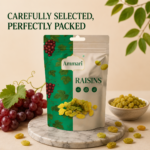
Indian Green Raisins (Kishmish)

Product details
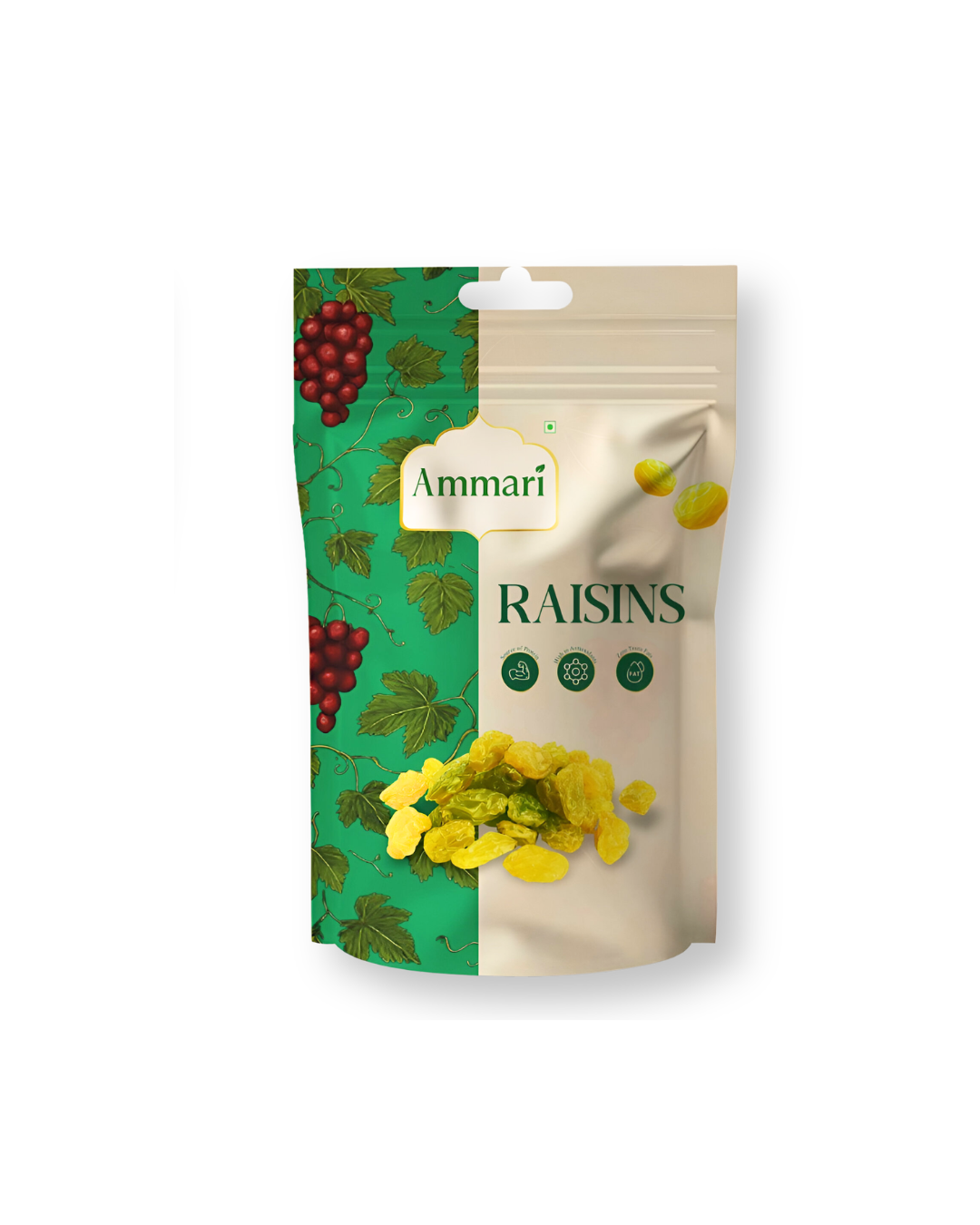
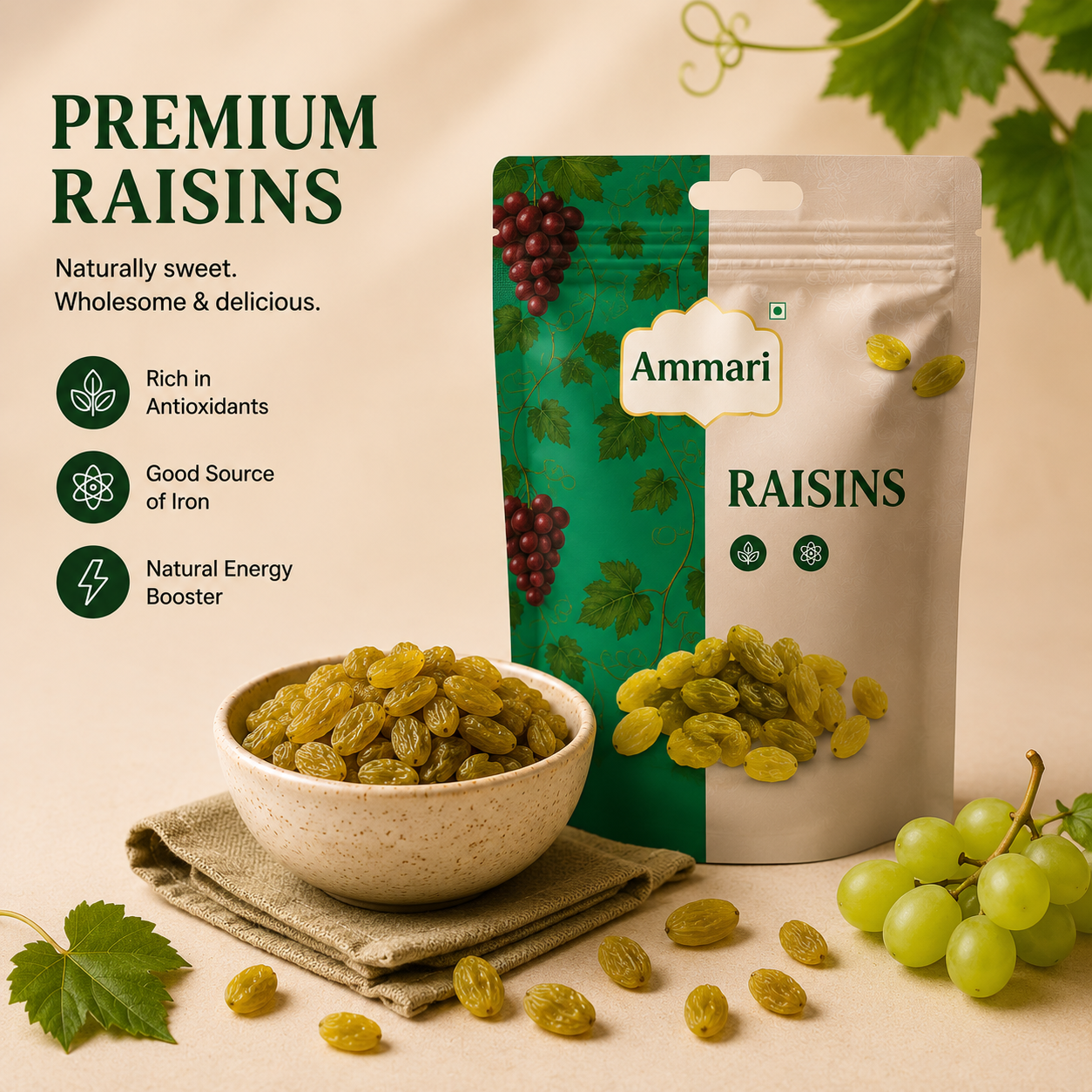
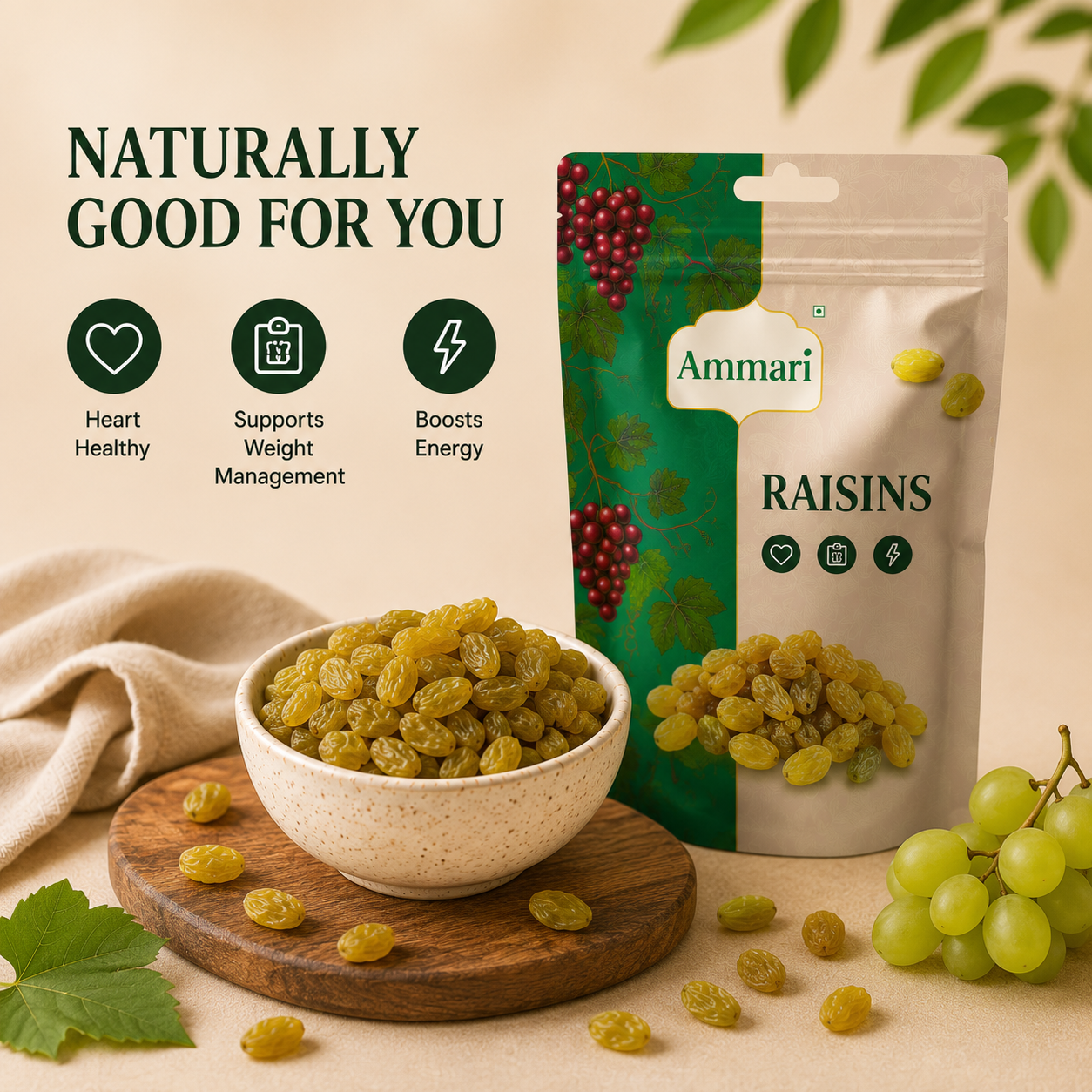
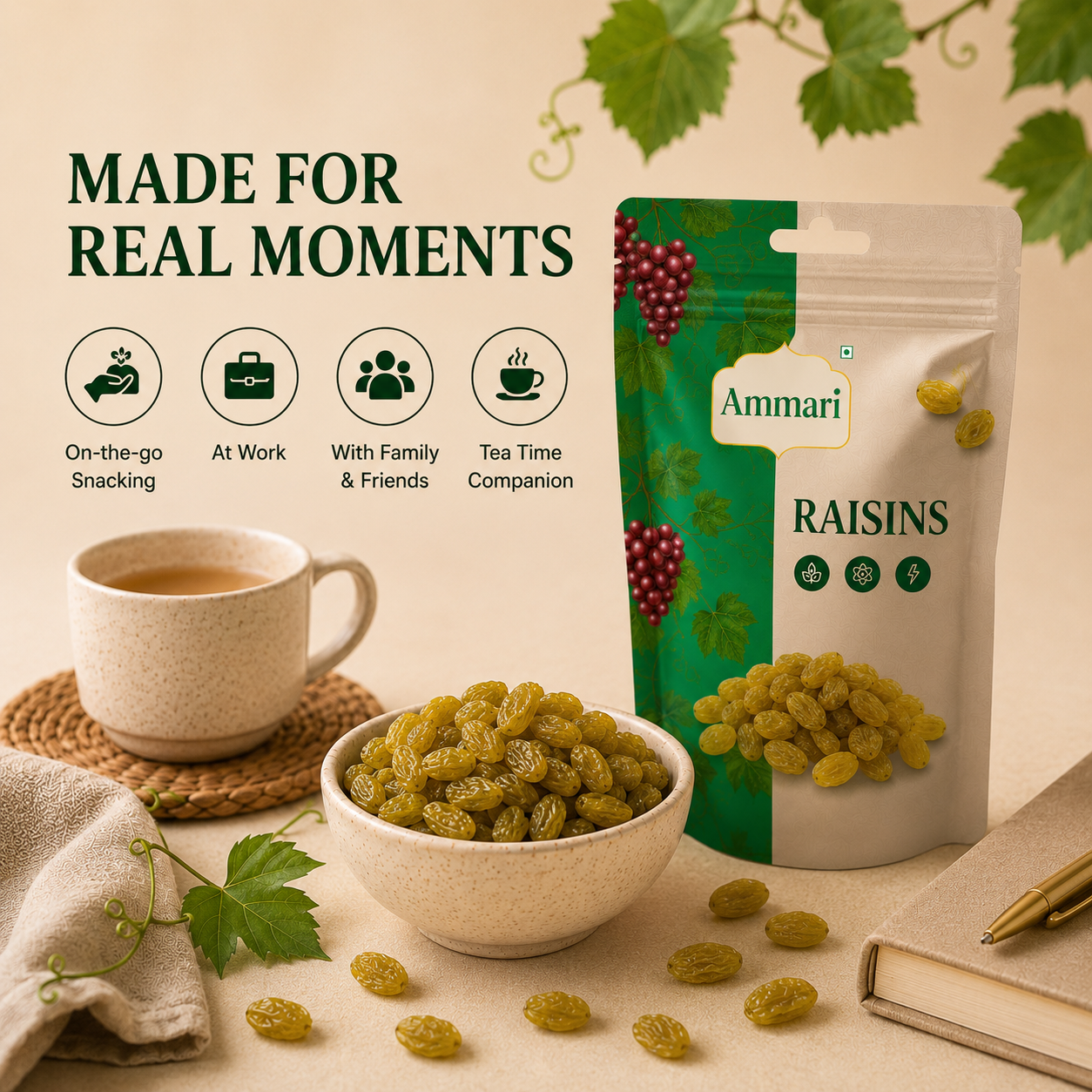
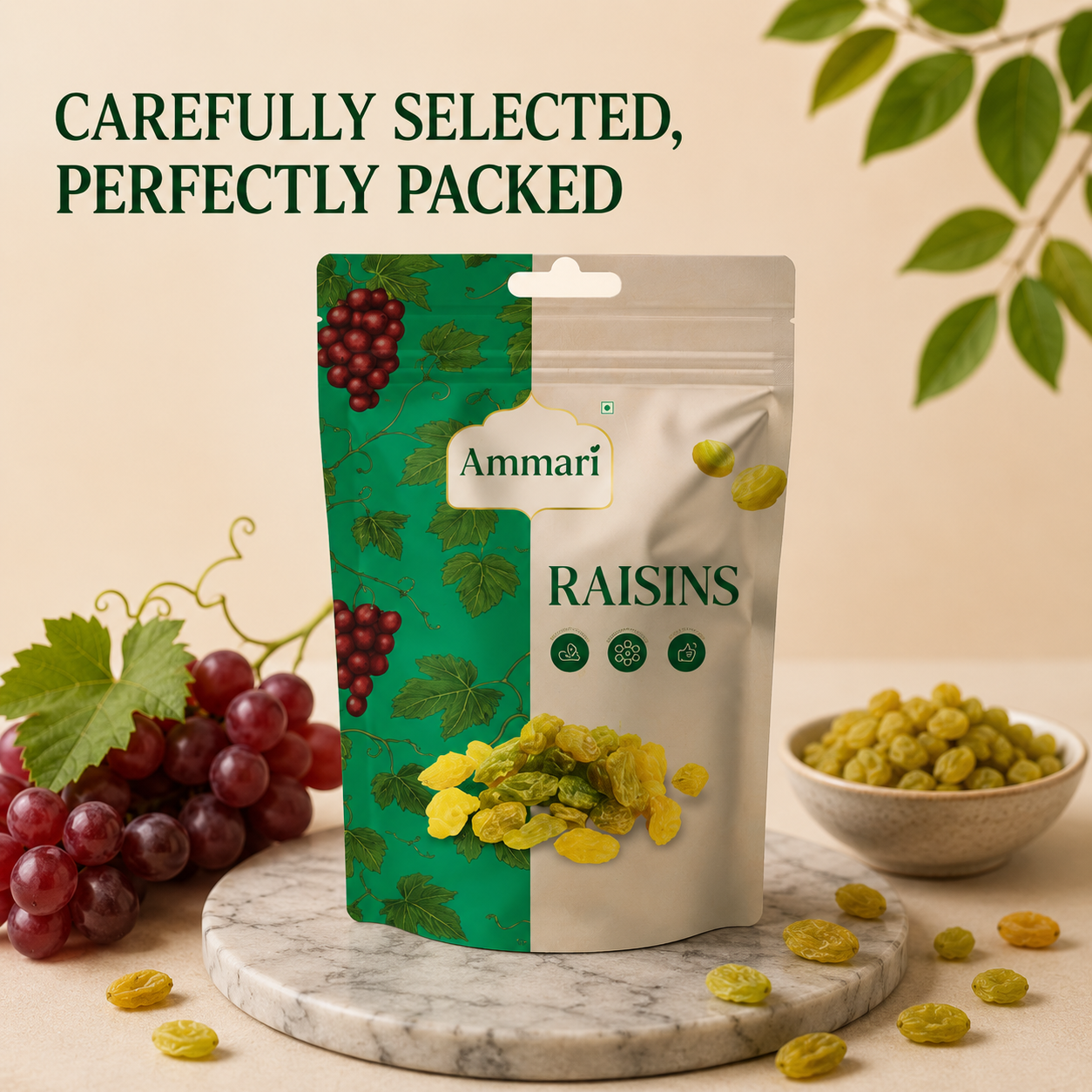
Plump, pale-green, and honest in flavour, our Indian Kishmish carries the clean sweetness of grapes ripened on Maharashtra’s Deccan plateau. Each raisin is supple to the bite, with a subtle floral finish that comes only from slow, careful drying. We source the Thompson Seedless variety locally known as Sundarkhani, sort by hand for size and colour, and pack without sulphur dioxide. The result is a raisin that tastes like fruit, not preservative, the way our grandmothers remembered it.
Where We Source
Our Kishmish travels a short road. The grapes are grown in the vineyards around Sangli, Nashik and Solapur in Maharashtra, with a smaller harvest from Bijapur in northern Karnataka. These regions sit at the right elevation and dryness for Thompson Seedless, the variety that yields Sundarkhani (also called Manuka) raisins. We work with two grower families who shade-dry the bulk of their crop, which preserves the green colour and softer texture, and sun-dry a smaller lot for a more concentrated, golden raisin. We visit the drying yards each February before the season’s first lots leave the cooperative.
How to Enjoy
- Kheer and payasam: Add a handful in the last five minutes so they swell without breaking down.
- Soaked overnight: Eight to ten raisins in water, eaten on an empty stomach, is a classic Ayurvedic morning habit.
- Halwa and ladoos: Toss in warm ghee for thirty seconds before folding into sooji or besan mixtures.
- Granola and trail mix: Pairs cleanly with almonds, cashews and rolled oats for a daily school-tiffin snack.
Storage & Freshness
Store in an airtight glass or steel container in a cool, dry cupboard, away from direct sunlight. At Jaipur room temperature, our Kishmish stays fresh for nine to twelve months from the pack date. In peak summer, or in coastal humidity, refrigerate after opening to prevent the natural sugars from crystallising on the surface. Resealable pouch included.
Nutritional Snapshot (per 30g serving)
- Calories: ~90 kcal
- Natural sugars: ~18 g (fructose and glucose, no added sugar)
- Fibre: ~1.1 g
- Iron: ~0.8 mg | Potassium: ~220 mg
- Key micronutrients: Boron, Copper, Vitamin B6
Frequently Asked
Why are these raisins green and not golden?
Indian Kishmish is shade-dried under nets, which preserves the natural green-yellow chlorophyll of the Thompson Seedless grape. Commercial golden raisins are sulphur-treated to lock in colour, while darker raisins are sun-dried for longer. We deliberately skip sulphur dioxide, so colour can vary slightly from pack to pack depending on the harvest week. This is a sign of natural processing, not a flaw.
Are they sweet enough to replace sugar in cooking?
For most Indian sweets, yes. A quarter cup of soaked Kishmish, blended into a paste, can replace two to three tablespoons of sugar in kheer, halwa or smoothies. The sweetness is gentler and more rounded than refined sugar, and it brings fibre and potassium with it. For baking where structure matters, reduce the recipe sugar by about a third rather than removing it entirely.
How do I know they have not been treated?
Treated raisins are uniformly bright, glossy and slightly sticky from coating oils. Ours look matte, vary slightly in size and shade, and have a clean grape aroma when you open the pouch. There is no sharp chemical smell. We send each batch for a basic moisture and sulphur test before packing, and the lot number on your pouch traces back to a specific drying yard.
Free delivery on orders over Rs.999. Direct-sourced. Naturally processed.
Shipping and Returns
Shipping cost is based on weight. Just add products to your cart and use the Shipping Calculator to see the shipping price.
We want you to be 100% satisfied with your purchase. Items can be returned or exchanged within 30 days of delivery.
There are no question found.
Quick Comparison
| Indian Green Raisins (Kishmish) remove | Afghan Black Raisins (Munakka) remove | ||||||||
|---|---|---|---|---|---|---|---|---|---|
| Name | Indian Green Raisins (Kishmish) remove | Afghan Black Raisins (Munakka) remove | |||||||
| Image | 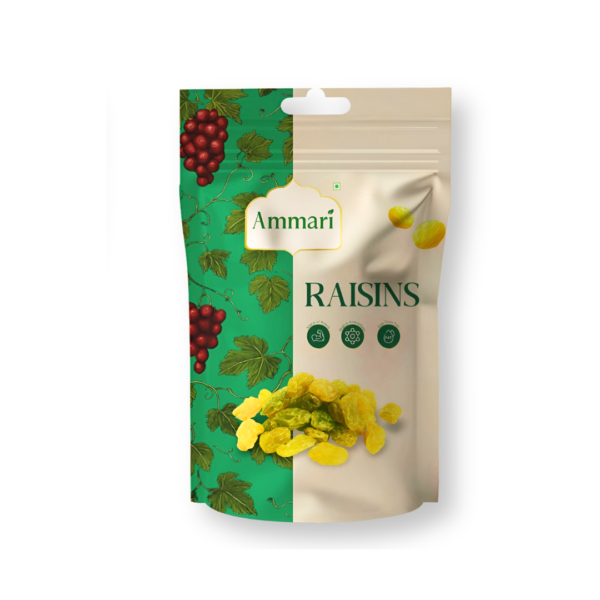 |  | |||||||
| SKU | AMM-RSN-GRN-500 | AMM-RSN-MUN-500 | |||||||
| Rating | |||||||||
| Price | Original price was: ₹349.00.₹299.00Current price is: ₹299.00. Save 14% | Original price was: ₹399.00.₹349.00Current price is: ₹349.00. Save 13% | |||||||
| Stock |
150 in stock
|
Out of stock
| |||||||
| Availability | 150 in stock | Out of stock | |||||||
| Add to cart | |||||||||
| Description | Size: 200g | Size: 200g | |||||||
| Content | Plump, pale-green, and honest in flavour, our Indian Kishmish carries the clean sweetness of grapes ripened on Maharashtra's Deccan plateau. Each raisin is supple to the bite, with a subtle floral finish that comes only from slow, careful drying. We source the Thompson Seedless variety locally known as Sundarkhani, sort by hand for size and colour, and pack without sulphur dioxide. The result is a raisin that tastes like fruit, not preservative, the way our grandmothers remembered it. Where We SourceOur Kishmish travels a short road. The grapes are grown in the vineyards around Sangli, Nashik and Solapur in Maharashtra, with a smaller harvest from Bijapur in northern Karnataka. These regions sit at the right elevation and dryness for Thompson Seedless, the variety that yields Sundarkhani (also called Manuka) raisins. We work with two grower families who shade-dry the bulk of their crop, which preserves the green colour and softer texture, and sun-dry a smaller lot for a more concentrated, golden raisin. We visit the drying yards each February before the season's first lots leave the cooperative. How to Enjoy
Storage & FreshnessStore in an airtight glass or steel container in a cool, dry cupboard, away from direct sunlight. At Jaipur room temperature, our Kishmish stays fresh for nine to twelve months from the pack date. In peak summer, or in coastal humidity, refrigerate after opening to prevent the natural sugars from crystallising on the surface. Resealable pouch included. Nutritional Snapshot (per 30g serving)
Frequently AskedWhy are these raisins green and not golden? Are they sweet enough to replace sugar in cooking? How do I know they have not been treated? Free delivery on orders over Rs.999. Direct-sourced. Naturally processed. | Munakka is the elder cousin of the everyday raisin: bigger, darker, deeply sweet, and carrying a single seed in the old way. Our Afghan Munakka has a wrinkled mahogany skin and a soft, jammy interior that tastes of dried plum and dark caramel. Generations of Indian households have kept a small jar of these on the kitchen shelf, soaked overnight in milk or water for children with a winter cough, or stirred into kahwa on cold mornings. Where We SourceTrue Munakka comes from grapes grown in the high, dry plateaus of Afghanistan, primarily around Kandahar and Herat, with a smaller share from the Iranian provinces bordering Khorasan. The vines benefit from cold winters, hot summers and very low humidity, which concentrates the sugars before drying. The grapes are dried slowly in traditional mud-brick kishmish khanas, ventilated rooms with slatted walls that let dry air circulate without direct sun. This shade-drying over several weeks is what gives Munakka its characteristic depth of flavour and chewy texture, very different from quickly sun-dried table raisins. How to Enjoy
Storage & FreshnessKeep Munakka in an airtight container in a cool, dark cupboard. Best consumed within nine to twelve months of packing. Because Munakka has higher residual moisture than seedless raisins, refrigeration is recommended in summer or in humid coastal climates after the pouch is opened. If they stiffen over time, a five-minute soak in warm water restores the original soft texture. Nutritional Snapshot (per 30g serving)
Frequently AskedWhat is the difference between Munakka and Kishmish? Why does Munakka have a seed inside? Is Munakka safe during pregnancy? Free delivery on orders over Rs.999. Direct-sourced. Naturally processed. | |||||||
| Weight | 0.5 lbs | 0.5 lbs | |||||||
| Dimensions | N/A | N/A | |||||||
| Additional information |
|
| |||||||
| Sold | 0 | 0 | |||||||
| Shipping |
Rating & Review
There are no reviews yet.