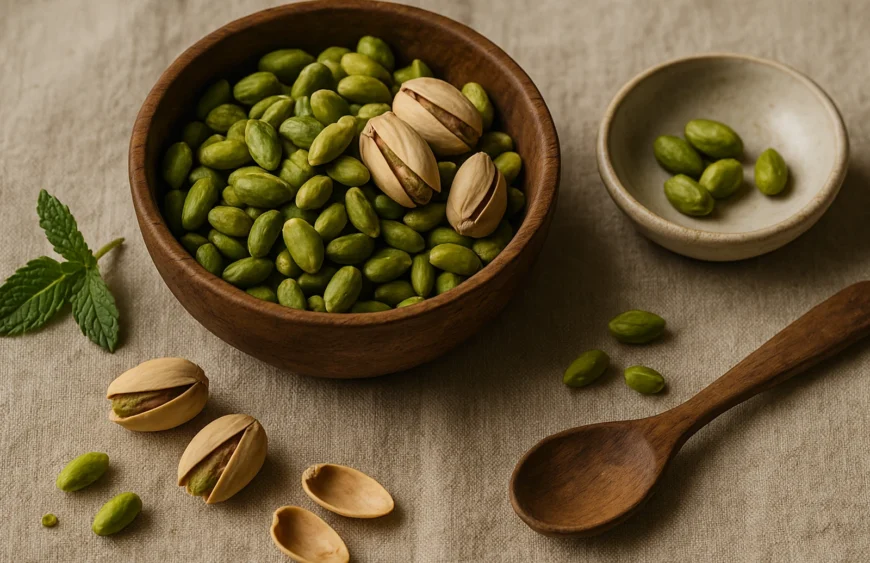
Pistachios Health Benefits: The Short Answer
Last updated: 19 May 2026
A 30 g daily serving of pistachios (~49 kernels, 159 calories) supports 9 distinct health outcomes:
- Heart health – LDL cholesterol drops 4–6% on average; FDA-approved heart-health claim
- Eye health – highest lutein and zeaxanthin of any common nut (1.4 mg per serving)
- Blood sugar – flattens post-meal glucose spike by ~20% when paired with carbohydrate meals
- Weight management – high satiety, partial fat absorption, in-shell version slows eating
- Plant protein – 5.7 g per serving, useful for vegetarian Indian diets
- Skin & hair – vitamin E and biotin support antioxidant defence
- Bone strength – phosphorus, calcium, magnesium contribute to bone density
- Digestive health – 2.9 g fibre per serving feeds gut microbiome
- Pregnancy nutrition – folate, magnesium, iron support across all trimesters
For exact daily portions by age and condition, see our how many pistachios per day guide.
1. Heart health – measurable LDL drop
A 30 g daily serving lowers LDL cholesterol by 4 to 6 percent on average across multiple AHA-published clinical trials, when pistachios replace refined-carb snacks like chips or biscuits. The benefit comes from the monounsaturated fat profile (~45% of total fat), plant sterols, and L-arginine content. The FDA permits a qualified heart-health claim on packaging at the 1.5 oz daily threshold (about 65 pistachios). Indian cardiology research aligns broadly – pistachios fit naturally into a heart-protective diet alongside the reduction of fried snacks, ghee-heavy preparations, and packaged sweets.
2. Eye health – highest lutein content of any nut
Pistachios contain 1.4 mg of lutein and zeaxanthin per 30 g serving – significantly more than almonds, walnuts, cashews, or any other common Indian nut. Lutein and zeaxanthin are carotenoids that accumulate in the macular region of the retina and act as a natural blue-light filter. Long-running cohort studies show populations with higher lutein intake have measurably lower rates of age-related macular degeneration. For Indians who spend many hours on screens, daily pistachios are one of the cleanest ways to support retinal health beyond targeted leafy greens.
3. Blood sugar control – flattens post-meal glucose spikes
Pairing pistachios with a carbohydrate-heavy meal flattens the post-meal blood glucose curve by roughly 20 percent in pre-diabetic adults – documented in PubMed-indexed studies. The fat and fibre content slow carbohydrate absorption; the magnesium content (32 mg per serving) supports insulin signalling. Practical Indian application: 25 to 30 pistachios eaten with white rice, biryani, or roti meals smooth out the glucose response. People with type-2 diabetes can include pistachios as part of a controlled diet, ideally paired with paneer, yogurt, or another protein source.
4. Weight management – partial fat absorption + satiety
Multiple Indian and international studies report neutral-to-positive weight outcomes when pistachios replace ultra-processed snacks. Three mechanisms drive this:
- Partial fat absorption – the intact kernel structure means a portion of the fat is excreted rather than absorbed; published studies estimate the “true caloric value” of pistachios is 5 to 15 percent lower than the label.
- High satiety – the protein and fibre combination keeps you full longer than refined-carb snacks of the same calorie count.
- In-shell slows eating – cracking pistachios in-shell takes about 40 percent longer than eating shelled nuts, giving satiety signals time to register.
Pistachios health benefits – here is what actually matters when you choose. Replacing 30 g of namkeen or biscuits with 30 g of pistachios is one of the most evidence-supported snack swaps in Indian dietary research.
5. Plant protein for vegetarian Indian diets
A 30 g serving delivers 5.7 g of plant protein – comparable to a large egg white or a quarter cup of cooked dal. For Indian vegetarian diets where complete-protein sources are limited (paneer, dal, milk), daily pistachios contribute meaningful protein with a minimal volume penalty. The amino acid profile is also relatively complete, with reasonable lysine content that complements grain-heavy Indian meal patterns.
6. Skin and hair – vitamin E plus biotin
Pistachios contain 0.7 mg of vitamin E per serving (about 5 percent of the adult RDA) along with biotin and healthy fats that support skin elasticity, hair strength, and antioxidant defence. The benefit is more modest than almonds (which carry 7.3 mg vitamin E per serving) but pistachios add the unique carotenoid content that almonds lack. For combined skin-and-eye support, a daily mix of 15 almonds plus 25 pistachios delivers broader coverage than either alone.
7. Bone strength – phosphorus, calcium, magnesium
Pistachios contain 140 mg phosphorus, 32 mg magnesium, and 32 mg calcium per 30 g serving. The phosphorus content is particularly notable – it supports bone mineralisation alongside calcium intake from dairy and leafy greens. For Indians over 50 managing bone density concerns, pistachios fit cleanly into a calcium-and-magnesium-supporting daily pattern.
8. Digestive health – fibre for gut microbiome
A 30 g serving delivers 2.9 g of fibre – both soluble and insoluble. The fibre content feeds beneficial gut bacteria (particularly Lactobacillus and Bifidobacterium species, per emerging research), improves stool consistency, and supports a healthier microbiome. For Indians with fibre-light dietary patterns (refined-grain heavy diets), daily pistachios are one of the easier ways to add fibre without adding bulk volume.
9. Pregnancy nutrition – folate, magnesium, iron
For pregnant women, 25 to 30 shelled pistachios daily delivers folate (essential for neural tube development in the first trimester), magnesium for muscle and nerve function, vitamin E for fetal brain development, and modest iron support against the anaemia risk that rises with pregnancy. The plant-protein content is also useful when meat intake decreases due to morning sickness or food aversions. As with all dry fruits during pregnancy, source matters – pick fresh-batch, vacuum-sealed pistachios from origin-labelled suppliers.
Sourcing transparency
- Ingredient: Pistachios (kernel and shell)
- Primary origin: Iran (Kerman, Rafsanjan provinces, Khorasan)
- Varieties available: Akbari, Ahmad Aghaei, Kerman/Round, Fandoghi
- Harvest: September through October
- Oil content: 45 to 55 percent (varies by variety)
- Carotenoid content: highest lutein/zeaxanthin of any common nut
Related reading
References & further reading
For independent reference points, the USDA FoodData Central – nutrient database is the standardised dataset we cross-check composition against. Clinical work like the PubMed – pistachios and metabolic health helps separate marketing claims from evidence.
Frequently Asked Questions
How many pistachios should I eat daily for health benefits?
The standard 30 g serving (~49 shelled pistachios) is the daily anchor used in most health research, including the FDA heart-health claim threshold. For most healthy Indian adults, this is the right daily portion. Adults over 60 or with sensitive digestion should drop to 25 to 30 shelled pistachios; pregnant women in second and third trimester benefit from the same range.
Are pistachios better than almonds for health?
Neither is universally better – they win on different axes. Almonds lead on vitamin E (7.3 mg vs 0.7 mg) and magnesium (80 mg vs 32 mg). Pistachios lead on lutein and zeaxanthin for eye health (almonds carry negligible amounts), have higher potassium (285 mg vs 200 mg), and slightly more protein per serving. A daily mix of 15 almonds plus 25 pistachios covers both well.
Can pistachios help reduce cholesterol?
Yes. Multiple AHA-published studies show 30 g of pistachios daily reduces LDL cholesterol by 4 to 6 percent on average when they replace refined-carb snacks. The FDA permits a heart-health claim at the 1.5 oz (42 g) daily level. The benefit is strongest in adults with elevated baseline cholesterol.
Do salted pistachios still have the same benefits?
Most nutrition is preserved (protein, fibre, vitamin E, lutein, magnesium), but the added sodium shifts the balance for blood-pressure management. A 49-kernel serving of salted roasted pistachios contains roughly 250 mg sodium, meaningful at daily-snack quantities. Pick unsalted versions for daily consumption; salted is fine for occasional use.
Are pistachios safe for daily consumption during pregnancy?
Yes. 25 to 30 shelled pistachios daily is the recommended portion during pregnancy. The serving provides folate, magnesium, vitamin E, and modest iron support. Avoid high-sodium salted varieties; pick unsalted, fresh-batch, vacuum-sealed pistachios from origin-labelled suppliers.
Do pistachios cause digestive issues?
For most adults, no. The 2.9 g fibre per serving is well-tolerated. For sensitive individuals, daily portions above 60 kernels can cause bloating or gas due to the fibre and fructose content. Drop to 25 daily and reassess after a week if you notice digestive discomfort.
Do pistachios help with weight loss?
Pistachios support weight management when they replace ultra-processed snacks rather than adding calories on top of an existing diet. Three mechanisms help: partial fat absorption (true caloric value 5-15% lower than label), high satiety from protein and fibre, and the in-shell habit slows eating speed. They are not, however, a magic-bullet weight-loss food.