How Many Dates Per Day: The Short Answer
Last updated: 19 May 2026
Most healthy adults benefit from 2 to 4 medium dates per day (30–50 g). At this serving size:
- 80–280 calories depending on date variety and size
- 0.5–2.5 g plant protein
- 2–8 g fibre
- 270–700 mg potassium per 100 g (more than a banana)
- Iron: notable for vegetarian diets (1–1.5 mg per 100 g for Ajwa)
How many dates per day – here is what actually matters when you choose. For pregnant women in third trimester, athletes, and people recovering from illness, 5 to 7 dates per day is often appropriate. Children under 5 do well with 1 to 2 soft, well-pitted dates. Diabetics should pair dates with nuts or yoghurt and stay under 3 daily.
For variety-specific notes (Medjool vs Ajwa vs Sukkari), see our premium dates buying guide.
Recommended daily intake of dates
Dates are calorie-dense, naturally sweet, and pack micronutrients efficiently – but they are also concentrated sugar. The right daily portion depends on which variety you’re eating, your overall diet, and your blood-sugar context.
The general consensus among Indian and international dietary guidelines:
- 2 to 4 medium dates daily for healthy adults. This delivers fibre, potassium, magnesium, and a steady natural-sugar input without overshooting on calories.
- By weight, 30 to 50 g is the everyday range – easy to eyeball as 2 small Medjool, 4 medium Ajwa, or 5 small Sukkari.
- By variety: dates vary widely in size. One Medjool weighs 24–30 g – so 2 Medjool dates equal roughly 4 Ajwa dates by weight. Adjust your count by variety.
- Calories: 2 medium dates = ~140–160 calories, 4 = ~280–320. Sensible everyday range that adds genuine nutrition without spiking total calorie intake.
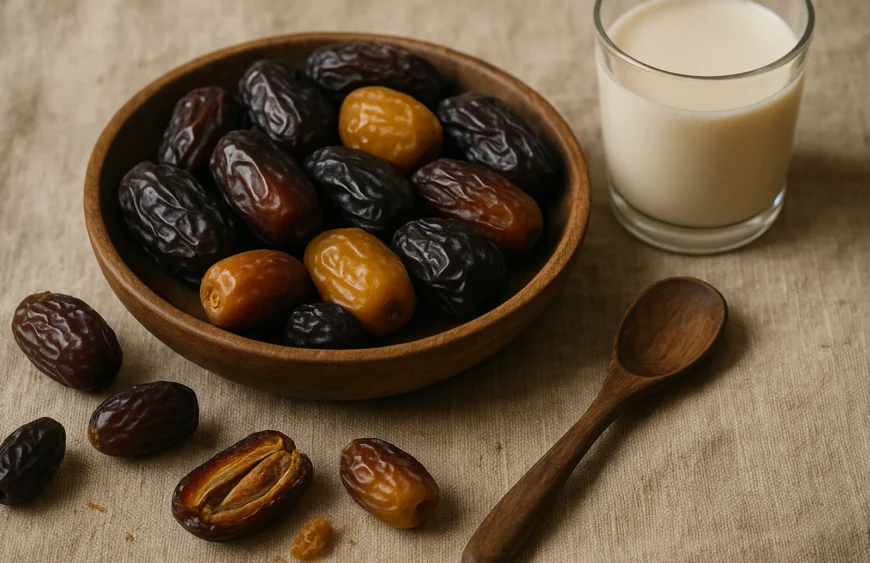
A practical anchor for Indian adults: 3 medium Ajwa dates with milk in the morning, plus 2 Medjool dates as a mid-afternoon snack is a balanced everyday pattern. About 220 calories total, 6 g fibre, 700 mg potassium, and useful trace iron and magnesium.
Health benefits of eating dates daily
Daily date intake supports several measurable health outcomes:
- Sustained energy – natural sugars in dates release more slowly than refined sugar because of the fibre content. Two dates before a workout deliver steady energy across 60–90 minutes.
- Iron support – particularly valuable for vegetarian Indian diets and during pregnancy. Ajwa dates lead at ~1.5 mg iron per 100 g.
- Potassium for blood pressure – 270–700 mg per 100 g supports sodium balance. Useful for adults managing high blood pressure or recovering from sweat-heavy summer days.
- Pregnancy support – multiple Indian and international studies show 6 to 7 Ajwa dates daily in the final 4 weeks of pregnancy is associated with shorter labour duration and reduced need for medical interventions. Consult your OBGYN before adopting.
- Magnesium – 50–60 mg per 100 g supports muscle and nerve function, which is why dates are traditionally given to athletes and recovering patients.
- Polyphenols and antioxidants – particularly concentrated in darker varieties (Ajwa, Khalas).
- Religious and cultural use – Ajwa dates carry deep significance in Islamic tradition (mentioned in hadith). Three Ajwa with water at iftar is the classical Ramadan opening.
Dates for different age groups
Daily portions shift across the lifespan:
- Children 3 to 5 – 1 to 2 soft, well-pitted dates per day. Choose softer Medjool or Sukkari rather than firmer Ajwa for younger children. Always check for and remove pits.
- Children 6 to 12 – 2 to 3 dates daily, ideally with milk or yoghurt. School-age kids respond well to dates as a refined-sugar replacement.
- Pregnant women – 4 to 6 dates daily, increasing to 6 to 7 in the final 4 weeks under medical guidance. Iron + folate + magnesium support; some studies link daily dates to easier labour outcomes.
- Healthy adults – 2 to 4 medium dates daily. Athletes and active adults can safely raise to 5 to 7 daily on training days.
- Adults 60+ – 2 to 3 soft dates per day. Soft Medjool or Sukkari are easier on aging dental health than the firmer Ajwa or Mabroom.
- Type-2 diabetics – limit to 2 to 3 dates daily, paired with nuts or protein to slow sugar absorption. Dates have a moderate glycemic index (42 to 55), lower than white bread, but still concentrated sugar. Always confirm exact daily quantity with your physician.
Risks and side effects
Most healthy adults handle 4 dates daily without issue. But specific groups should watch:
- Diabetes – dates contain natural sugars, but their fibre and polyphenols give them a moderate glycemic index of 42 to 55. Pair with nuts or yoghurt to slow absorption further. Limit to 2 to 3 daily under medical supervision.
- Weight management – eating 8+ dates daily adds 600+ calories, leading to gradual weight gain. Stay at 2 to 4 daily unless you’re an athlete or in a high-energy phase of life.
- Dental health – dates are sticky and concentrate on teeth. Brush or rinse the mouth after eating. Particularly important for children.
- Allergies – date pollen allergies are rare but exist; people allergic to date palm pollen should consult an allergist before daily consumption.
- Sulphite sensitivity – some imported pre-packaged dates use sulphur dioxide as a preservative. Pick sulphite-free, vacuum-sealed origin-labelled packs if you’re sensitive.
Best time to eat dates
Morning, with milk or warm water is the traditional Indian recommendation, especially during winter. The simple sugars give a clean energy lift; the fibre slows the spike.
When to eat them:
- Iftar (breaking fast) – 3 Ajwa dates with water is the traditional Ramadan opening. Quick natural sugar + potassium for rehydration.
- Pre-workout – 2 dates + 5 almonds = clean energy across 60–90 minutes of training.
- Mid-afternoon snack – 2 dates + a glass of warm milk replaces tea-time biscuits with vastly better nutrition.
- As a dessert substitute – stuffed Medjool dates with almonds and a strand of saffron are a clean alternative to processed sweets.
- Evening – fine for most people. Eating dates close to bedtime can disrupt sleep for a small minority due to the sugar spike.
Sourcing transparency
- Ingredient: Dates (across multiple varieties)
- Origin (Medjool): California (Coachella Valley) and Jordan
- Origin (Ajwa): Madinah, Saudi Arabia (verified)
- Origin (Sukkari, Mabroom, Safawi): Saudi Arabia and UAE
- Origin (Kimia): Iran
- Harvest: August through October
- Storage: airtight container in cool dry place; refrigerate during Indian summer
Related reading
References & further reading
For independent reference points, the USDA FoodData Central – nutrient database is the standardised dataset we cross-check composition against. Clinical work like the PubMed – date palm nutritional review helps separate marketing claims from evidence.
Frequently Asked Questions
How many dates should an Indian adult eat daily?
For healthy Indian adults, 2 to 4 medium dates daily (30 to 50 g) is the consensus serving. This delivers fibre, potassium, magnesium, and natural sugars without overshooting on calories. Adjust by variety – 2 Medjool ≈ 4 Ajwa by weight.
Are 7 dates per day too many?
Seven dates daily is appropriate during specific contexts: pregnancy in the final 4 weeks (under medical guidance), athletes on training days, and people recovering from illness. For everyday consumption by most adults, this is on the higher end at ~500 calories per day from dates alone – fine if balanced elsewhere.
Are dates good for diabetics?
Dates have a moderate glycemic index of 42 to 55, lower than white bread or most Indian sweets. Small studies suggest 2 to 3 dates daily, eaten with nuts or yoghurt, can fit a controlled diabetic diet. They are not, however, a free food. Anyone with diabetes or insulin resistance should clear an exact daily quantity with their physician.
Can pregnant women eat dates daily?
Yes. 4 to 6 dates daily through pregnancy supports iron, folate, magnesium, and natural-sugar intake. Multiple studies link daily Ajwa dates in the final 4 weeks of pregnancy to easier labour outcomes – consult your OBGYN before increasing intake. Pick fresh-batch, sulphite-free dates from origin-labelled suppliers.
Are dates better in the morning or evening?
Morning is the traditional Indian recommendation – particularly with milk or warm water in winter. Modern research finds similar benefits across the day. Iftar (sunset) is the traditional Ramadan opening for Muslim households. Pre-workout works well too. The most important factor is consistency.
How should I store dates in Indian summer?
From April to September across most of India, refrigerate dates after opening. Pack them in an airtight container, ideally in a single layer or two, and keep them in the main fridge compartment, not the door. They will firm up slightly but stay fresh for 6 to 9 months. Freeze for storage beyond a year.
Which date is best for daily eating?
Sukkari (Saudi origin, golden flesh, melt-in-mouth texture) is often the best everyday-snack choice – affordable, soft, and gentle on dental health. Medjool is luxurious but pricier. Ajwa is preferred for traditional and religious use (Ramadan, daily seven-dates practice). Many Indian households keep Sukkari for daily and Medjool or Ajwa for occasions.
Can children under 3 eat dates?
Whole dates are not recommended below age 2 – choking hazard, plus pit risk. From age 2 onward, finely chopped soft Medjool or Sukkari (well-pitted) is fine in small amounts (1 piece per day). Always inspect for and remove pits manually before serving.