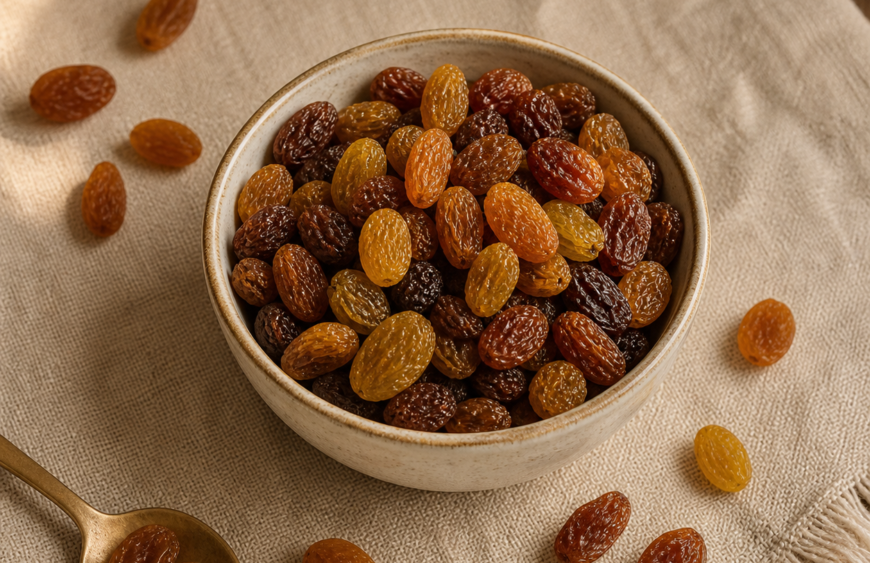
Raisins price per kg in India depends on origin, colour, moisture and grading. At Ammari Foods, our current pack prices are ₹299 for Indian Green Raisins (regular ₹349) and ₹349 for Afghan Black Raisins / Munakka (regular ₹399). If you want a soft everyday raisin, go Kishmish. If you want a darker, richer raisin for soaking and winter use, go Munakka.
For shoppers comparing prices, the big difference is not just sweetness. It is the drying method, the grape variety, the harvest window, how much sorting happened after drying, and whether the fruit was packed quickly enough to stay soft. That is why two raisins with the same weight can feel very different in the mouth and on the invoice.
Current Ammari Prices
| Product | Current Price | Regular Price | Best for |
|---|---|---|---|
| Indian Green Raisins (Kishmish) | ₹299 | ₹349 | Everyday snacking, kheer, baking |
| Afghan Black Raisins (Munakka) | ₹349 | ₹399 | Soaking, winter use, richer flavour |
Why Raisin Prices Change
Raisin pricing is mainly driven by grape origin, drying method, grading and moisture retention. Shorter, cleaner lots with fewer broken pieces cost more because the sorting loss is higher. Sulphur-free or lightly processed lots also tend to sell at a premium because they retain a more natural fruit taste. In practice, the softest raisins are usually the most sought after in India.
Indian Kishmish is usually the more affordable option because it is locally sourced and moves faster from orchard to pack house. Munakka costs more because it is larger, darker, and typically treated as a premium soaks-and-gifting fruit. If you are buying for daily use, price per kg matters, but so does how many servings you actually get from one pack.
Kishmish vs Munakka
- Kishmish: lighter, milder, and a little more versatile in breakfast and dessert recipes.
- Munakka: richer, darker and better for soaking, ayurvedic routines and traditional winter use.
- Value: Kishmish wins on everyday affordability; Munakka wins on premium taste and ritual use.
How to Choose the Right Pack
If you want raisins for granola, upma, kheer or baking, pick Kishmish. If you want a bedtime soak or a richer sweet note for the kitchen, pick Munakka. In either case, choose a pack that is clean, flexible, and not overly sticky. Overly hard raisins usually mean the lot was old or dried too aggressively.
For current product options, see Indian Green Raisins and Afghan Black Raisins.
Storage
Keep raisins in an airtight jar away from moisture and direct heat. In humid weather, refrigeration after opening helps preserve softness and slows crystallisation. If the raisins clump slightly, that is normal; if they smell fermented, the pack is past its best.
FAQ
What is the cheapest raisin option?
Usually Indian Kishmish, because it is locally sourced and easier to sort and pack in volume.
Why is Munakka more expensive?
It is larger, richer and treated as a premium soaking raisin, so it carries a higher market price per kg.
Which raisin is best for daily use?
Kishmish is the better everyday choice for most households. Munakka is the stronger premium option for special use and soaking.
Shop the current packs: Kishmish and Munakka.
Buyer Checklist Before You Order Raisins
Look for flexible texture, a clean fruity smell, and a pack that is not over-sticky. Kishmish is better when you want a soft, everyday raisin. Munakka is better when you want a richer flavour and a stronger soaking routine. For baked goods, the cheaper option is not always the best if it dries out too quickly after opening.
If you are buying for a household, split the pack into a jar for weekly use and a second airtight container for backup storage. That keeps the main pack fresher and reduces moisture exposure. It also helps you see the real pace of use, which matters more than the sticker price when you buy by the kilogram.
Related Reading
Continue with the most useful guides
These links connect the article to the main product, comparison, and support pages so readers do not hit a dead end.