TL;DR
- Dry fruit kheer (kheer, a milk-based rice pudding) takes about 45 minutes of active cooking, mostly slow simmering, and serves 6 to 8 people from 1 liter of milk and 60 grams of rice.
- Soaking the nuts, roughly 15 almonds, 15 cashews and 10 pistachios, for 20 to 30 minutes before slicing keeps them tender rather than crunchy inside the finished kheer.
- Lightly roasting the cashews and raisins in a teaspoon of ghee before adding them brings out sweetness without needing extra sugar.
- Kheer can be made a day ahead and refrigerated; it thickens as it cools, so thin it with a splash of warm milk before serving on Diwali or Bhai Dooj.
- This is a full step-by-step recipe. For a broader roundup of festival sweets made with dry fruits, see Ammari’s dry fruit ladoo recipes guide.
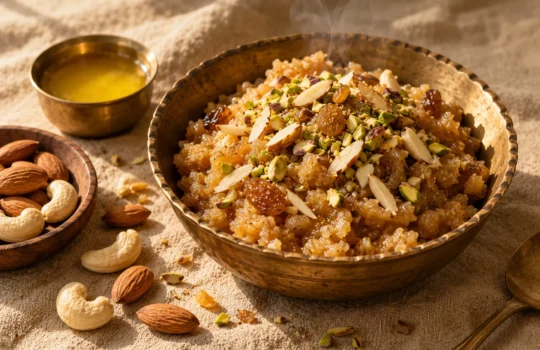
Dry fruit kheer is a milk-based rice pudding finished with almonds, cashews, pistachios and raisins, simmered slowly until the rice breaks down and the milk reduces to a thick, spoonable consistency. It is a standard dessert on Diwali and Bhai Dooj tables across North India, and the version below uses real quantities and timings rather than approximate ratios, so it works the same way each time.
This recipe serves 6 to 8 people from 1 liter of milk, takes about 10 minutes of prep and 35 to 40 minutes of mostly hands-off simmering, and can be made a day ahead. Ammari’s dry fruit ladoo recipes guide covers other festival sweets if kheer isn’t the dessert you’re after.
Ingredients
For 6 to 8 servings: 1 liter full-fat milk, 60g basmati rice (about 3 tablespoons, rinsed and drained), 100g sugar (adjust to taste), a pinch of saffron strands soaked in 2 tablespoons warm milk, 4 to 5 green cardamom pods (crushed), 1 teaspoon ghee, 15 almonds (sliced), 15 cashews (halved), 10 pistachios (sliced), and 15 to 20 raisins.
Step 1: Prep the nuts
Soak the almonds and pistachios in warm water for 20 to 30 minutes; this softens them enough to slice thinly and keeps them tender rather than crunchy once folded into the finished kheer. Peel the almonds after soaking if you prefer a smoother garnish, though the skin is fine to leave on. Slice the almonds and pistachios lengthwise into slivers, and halve the cashews. Set a small handful of each aside, unroasted, for the final garnish.
Step 2: Roast the cashews and raisins
Heat the ghee in a small pan on low and add the cashew halves and raisins. Stir for 2 to 3 minutes until the cashews turn a light golden color and the raisins puff up slightly. This step brings out natural sweetness in both without needing extra sugar, and it is the single step that makes the kheer taste distinctly festive rather than plain. Remove from the pan and set aside.
Step 3: Simmer the rice and milk
Bring the milk to a boil in a heavy-bottomed pan, then reduce to a low simmer. Add the rinsed rice and crushed cardamom, and cook uncovered, stirring every 4 to 5 minutes to prevent the milk from catching at the bottom. This takes 25 to 30 minutes; the rice should break down until the kheer thickens to a consistency that coats the back of a spoon. Stir more frequently as it thickens toward the end.
Step 4: Sweeten and add the dry fruits
Once the rice has fully softened and the milk has reduced by roughly a third, stir in the sugar and the saffron-soaked milk. Cook for another 3 to 4 minutes until the sugar dissolves completely. Fold in the roasted cashews and raisins along with half the sliced almonds and pistachios, reserving the rest for garnish. Simmer for 2 more minutes, then remove from heat.
Step 5: Cool, garnish and serve
Let the kheer cool to room temperature before refrigerating; it thickens noticeably as it cools, which is expected. Garnish with the reserved almond and pistachio slivers just before serving, either warm or chilled. Ammari’s pistachios and green raisins work well here if you want a slightly different flavor profile from the roasted version above.
Making it ahead for Diwali or Bhai Dooj
Kheer holds well in the refrigerator for up to 2 days, which makes it a practical dessert to prepare the day before Diwali or Bhai Dooj rather than cooking on the day itself. It thickens further in the fridge, so warm it gently on the stove or thin it with a splash of warm milk before serving. Add the garnish fresh at serving time rather than storing it mixed in, since the nuts soften and lose their texture if left in the kheer overnight.
Common variations worth trying
A few adjustments change the character of this kheer without changing the core method. Replacing basmati rice with broken vermicelli (seviyan) gives a lighter texture and cuts the simmering time by roughly 10 minutes, since vermicelli cooks faster than rice. Swapping half the sugar for jaggery adds a deeper, slightly smoky sweetness that pairs well with the roasted cashews, though jaggery should be added off the heat once the milk has cooled slightly, since it can curdle hot milk if stirred in too early. For a firmer, more textured kheer, toast the almond and pistachio slivers separately in a dry pan for a minute before using them as garnish, which brings out a slightly nuttier flavor than raw slivers.
Portion sizes also matter on a festival table where kheer is usually one of several desserts rather than the only one. A small serving bowl, roughly 100ml to 120ml per person, is standard for a Diwali or Bhai Dooj spread with multiple sweets, rather than a full dessert-sized portion.
Nutrition context for a festival dessert
Kheer made this way carries the natural fat and protein of milk and nuts alongside its sugar content, which sets it apart from sugar-syrup-based sweets that offer little beyond sweetness. The almonds and cashews contribute healthy fats and a small amount of protein, and the saffron and cardamom add flavor without extra sugar. It remains a dessert, not a health food, but the dry fruit content means a modest serving offers more nutritional value than an equivalent portion of most other festival sweets. Ammari’s dry fruits versus fresh fruits nutrition guide has more background on how dry fruits fit into everyday and festival eating.
What Ammari recommends
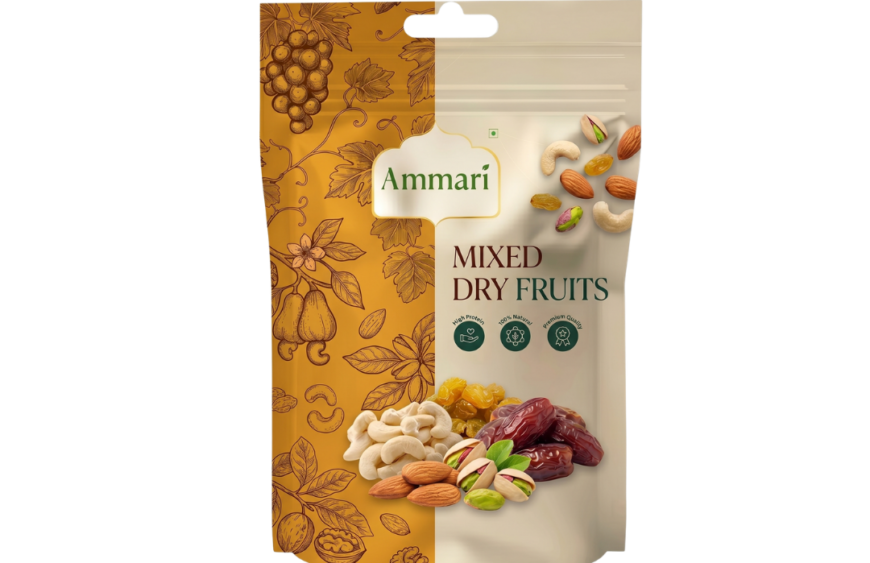
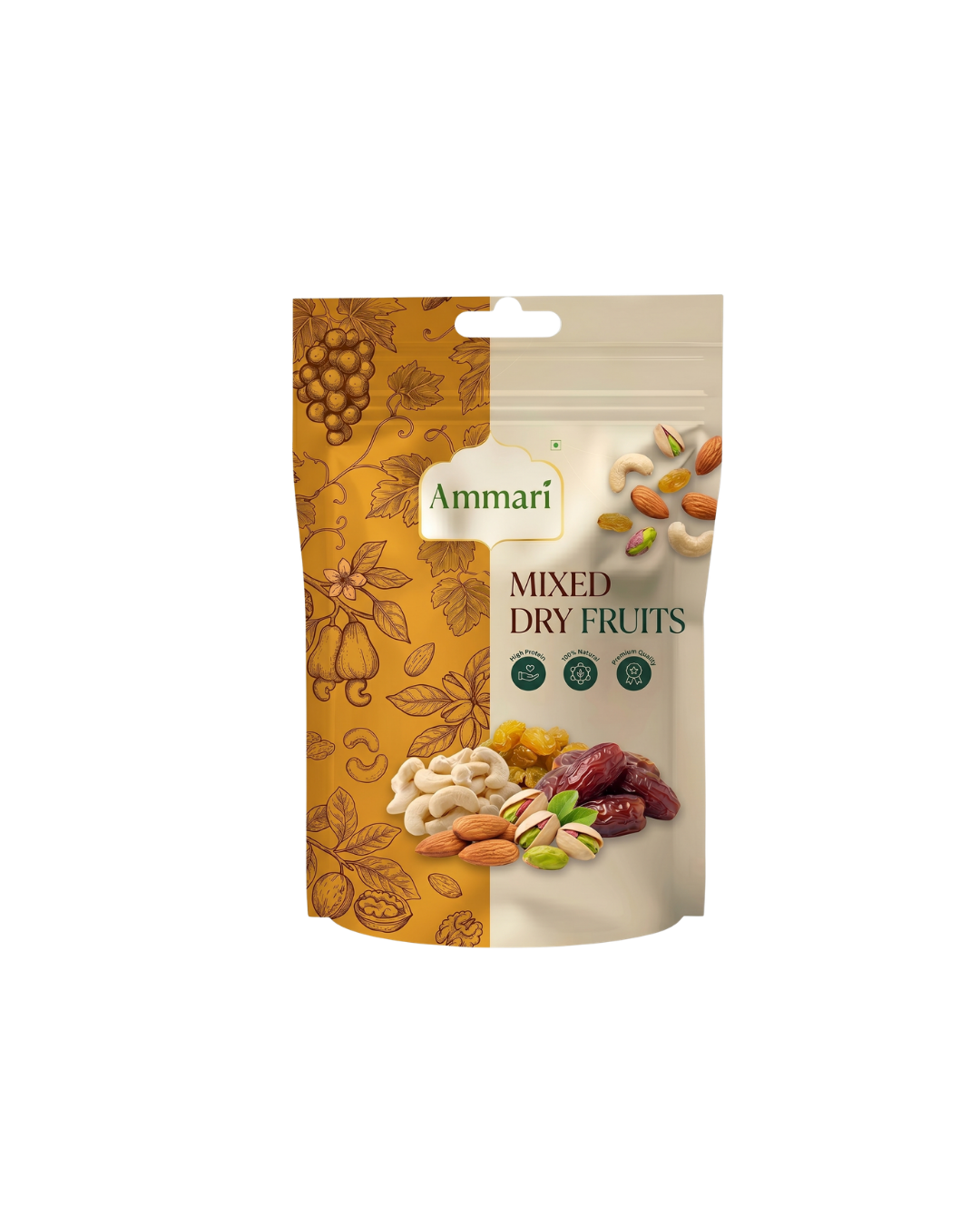
For the best texture, use whole almonds, cashews and pistachios rather than pre-sliced or pre-broken pieces, since fresher whole nuts hold their texture better through the soaking and roasting steps. Ammari’s premium mixed dry fruits pack covers all three in one order if you’d rather not buy them separately. Free delivery applies on orders over ₹999 where natural.
For more festival dessert ideas built around dry fruits, see Ammari’s dry fruit ladoo recipes guide and the dry fruit breakfast recipes guide for everyday use beyond the festival table.
Frequently Asked Questions
How long does dry fruit kheer take to make?
About 45 minutes total, roughly 10 minutes of prep and 35 to 40 minutes of mostly hands-off simmering. Most of the time is spent letting the milk reduce slowly on low heat while the rice softens.
Can I make kheer a day ahead of Diwali?
Yes. Kheer keeps well in the refrigerator for up to 2 days. It thickens as it cools, so warm it on the stove or add a splash of warm milk before serving, and add the nut garnish fresh rather than storing it mixed in.
Do I need to soak the almonds and pistachios first?
Soaking for 20 to 30 minutes softens the nuts enough to slice thinly and keeps them tender in the finished kheer, rather than crunchy against the soft rice and milk. It’s not strictly required, but it improves the texture noticeably.
Why roast the cashews and raisins in ghee before adding them?
Roasting brings out natural sweetness in both, especially the raisins, which puff up and taste noticeably richer than if added raw. It also gives the cashews a light golden color and a slight bite that holds up against the soft texture of the kheer.
Can I use brown rice or a rice substitute for kheer?
Basmati rice is standard for kheer because it breaks down evenly and doesn’t turn gummy during the long simmer. Other short-grain rice can work but changes the cooking time, so basmati is the more reliable choice for a first attempt.
How is this different from a general dry fruit ladoo recipe?
Ladoos are a dry, rolled sweet made with roasted dry fruits bound together, while kheer is a milk-based pudding that needs a separate simmering process. Ammari’s dry fruit ladoo recipes guide covers the rolled version if that’s what you’re after.
Frequently Asked Questions
How long does dry fruit kheer take to make?
About 45 minutes total, roughly 10 minutes of prep and 35 to 40 minutes of mostly hands-off simmering. Most of the time is spent letting the milk reduce slowly on low heat while the rice softens.
Can I make kheer a day ahead of Diwali?
Yes. Kheer keeps well in the refrigerator for up to 2 days. It thickens as it cools, so warm it on the stove or add a splash of warm milk before serving, and add the nut garnish fresh rather than storing it mixed in.
Do I need to soak the almonds and pistachios first?
Soaking for 20 to 30 minutes softens the nuts enough to slice thinly and keeps them tender in the finished kheer, rather than crunchy against the soft rice and milk. It’s not strictly required, but it improves the texture noticeably.
Why roast the cashews and raisins in ghee before adding them?
Roasting brings out natural sweetness in both, especially the raisins, which puff up and taste noticeably richer than if added raw. It also gives the cashews a light golden color and a slight bite that holds up against the soft texture of the kheer.
Can I use brown rice or a rice substitute for kheer?
Basmati rice is standard for kheer because it breaks down evenly and doesn’t turn gummy during the long simmer. Other short-grain rice can work but changes the cooking time, so basmati is the more reliable choice for a first attempt.
How is this different from a general dry fruit ladoo recipe?
Ladoos are a dry, rolled sweet made with roasted dry fruits bound together, while kheer is a milk-based pudding that needs a separate simmering process. Ammari’s dry fruit ladoo recipes guide covers the rolled version if that’s what you’re after.