TL;DR
- Dry fruit halwa (mewa halwa) uses ground almonds, cashews and dates cooked in ghee, and needs no refined sugar since the dates provide the sweetness.
- The full recipe for four servings uses 1 cup mixed dry fruits (almonds, cashews, pistachios), 8 to 10 pitted dates, 3 tablespoons ghee, and 1 cup milk, ready in about 20 minutes.
- The key technique is roasting the ground nuts in ghee until they turn a light golden color before adding the date paste, which builds the halwa’s depth of flavor.
- This halwa works well through the festive season, Diwali, Navratri fasting, or any celebration meal, since it holds its texture for a day or two when covered and refrigerated.
- Reheat gently with a splash of milk or ghee to loosen the texture; it should never be reheated dry, which makes the halwa stiff and grainy.
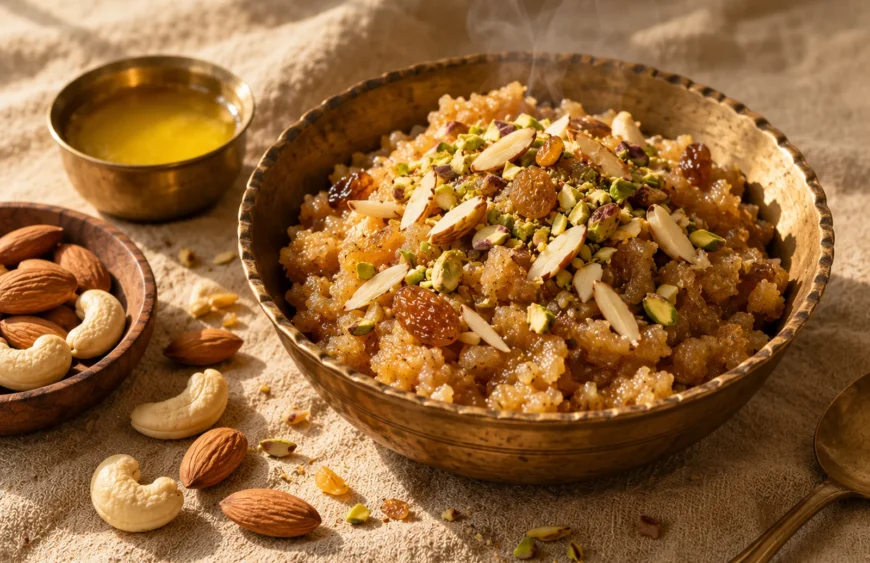
Dry fruit halwa, sometimes called mewa halwa, is a thick, ghee-based Indian dessert made by cooking ground nuts and dried fruit together until they form a soft, fudge-like texture. What makes this version worth making at home is that it needs no refined sugar at all, dates (Khajoor) provide all the sweetness, ground into the mix along with the nuts. It is a dish that comes together in about 20 minutes and works well anywhere a festive sweet is expected, from a Diwali dessert table to a Navratri fasting-friendly treat, depending on the ingredients used.
Ingredients for four servings
This recipe makes roughly four generous servings. Quantities matter more than technique here, since the ratio of nuts to dates to ghee determines whether the halwa sets properly.
- 1 cup mixed dry fruits, roughly ⅓ cup each of almonds, cashews and pistachios
- 8 to 10 pitted dates, soaked in warm water for 15 minutes
- 3 tablespoons ghee, divided
- 1 cup full-fat milk
- ¼ teaspoon cardamom powder
- A pinch of saffron strands, optional
- 2 tablespoons chopped pistachios and almond slivers, for garnish
Ammari’s Premium California Almonds and Premium Whole Cashews (W240) both grind cleanly for this recipe, and the Premium Medjool Dates work well for the sweetening paste since they are soft enough to blend without much soaking time.
Method: step by step
Start by soaking the pitted dates in warm water for 15 minutes, then drain and blend them into a smooth paste using a little of the soaking water if needed. Separately, pulse the almonds, cashews and pistachios in a food processor until coarsely ground, not a fine powder, some texture should remain for bite.
Heat 2 tablespoons of ghee in a heavy-bottomed pan on medium-low heat. Add the ground nut mixture and roast it, stirring constantly, for 5 to 6 minutes until it turns a light golden color and smells toasted. This roasting step is the one place recipes go wrong if rushed; a low, patient heat prevents the nuts from browning unevenly or burning at the edges.
Add the date paste to the pan and stir it through the roasted nuts. Pour in the milk gradually, stirring continuously, and cook for another 6 to 8 minutes until the mixture thickens and starts pulling away from the sides of the pan. Add the remaining tablespoon of ghee, the cardamom powder and saffron if using, and stir for another minute. The halwa is done when it holds its shape on a spoon rather than running.
Transfer to a serving dish, garnish with chopped pistachios and almond slivers, and serve warm. For a fasting-friendly Navratri version, skip any added milk and use water instead, checking the specific fasting rules being followed since ingredient allowances vary by household. Ammari’s Navratri vrat dry fruits guide covers which dry fruits are typically permitted during fasting.
Why dates work as the sweetener
Dates are dense in natural sugars, mainly glucose and fructose, held together with fiber that slows how quickly those sugars digest compared to refined white sugar. Blended into a paste, dates also add moisture and a caramel-like depth that plain sugar cannot replicate, which is part of why traditional halwa recipes across India lean on dates, jaggery or khoya rather than sugar alone. Ammari’s dry fruit breakfast recipes guide has more ideas for using dates as a natural sweetener beyond dessert.
Using dates instead of sugar does not make this a low-calorie dish, dry fruits are calorie-dense by nature, but it does mean the sweetness comes packaged with fiber, potassium and other nutrients rather than being empty sugar. Portion size still matters; a small bowl, roughly 2 to 3 tablespoons, is a satisfying festive serving rather than a full dessert bowl.
Storage and reheating
Dry fruit halwa keeps well for two to three days when covered and refrigerated in an airtight container. It firms up considerably once chilled, since the ghee solidifies, so it should always be reheated before serving rather than eaten cold straight from the fridge.
To reheat, warm it gently in a pan on low heat with a splash of milk or a small extra spoon of ghee, stirring until it loosens back to a soft, spoonable texture. Reheating it dry, without any added liquid or fat, tends to make the halwa stiff and slightly grainy. It does not freeze well, since the texture of ground nuts and dates changes noticeably after thawing, so this is best made in a batch that will be finished within a few days.
What Ammari recommends
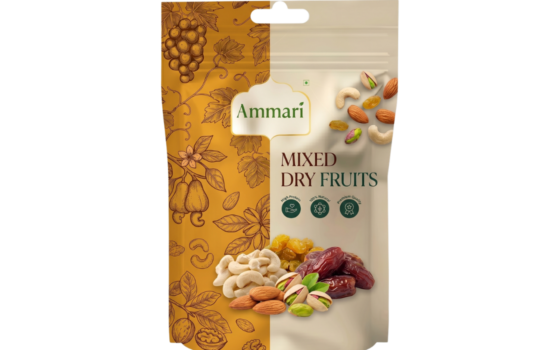
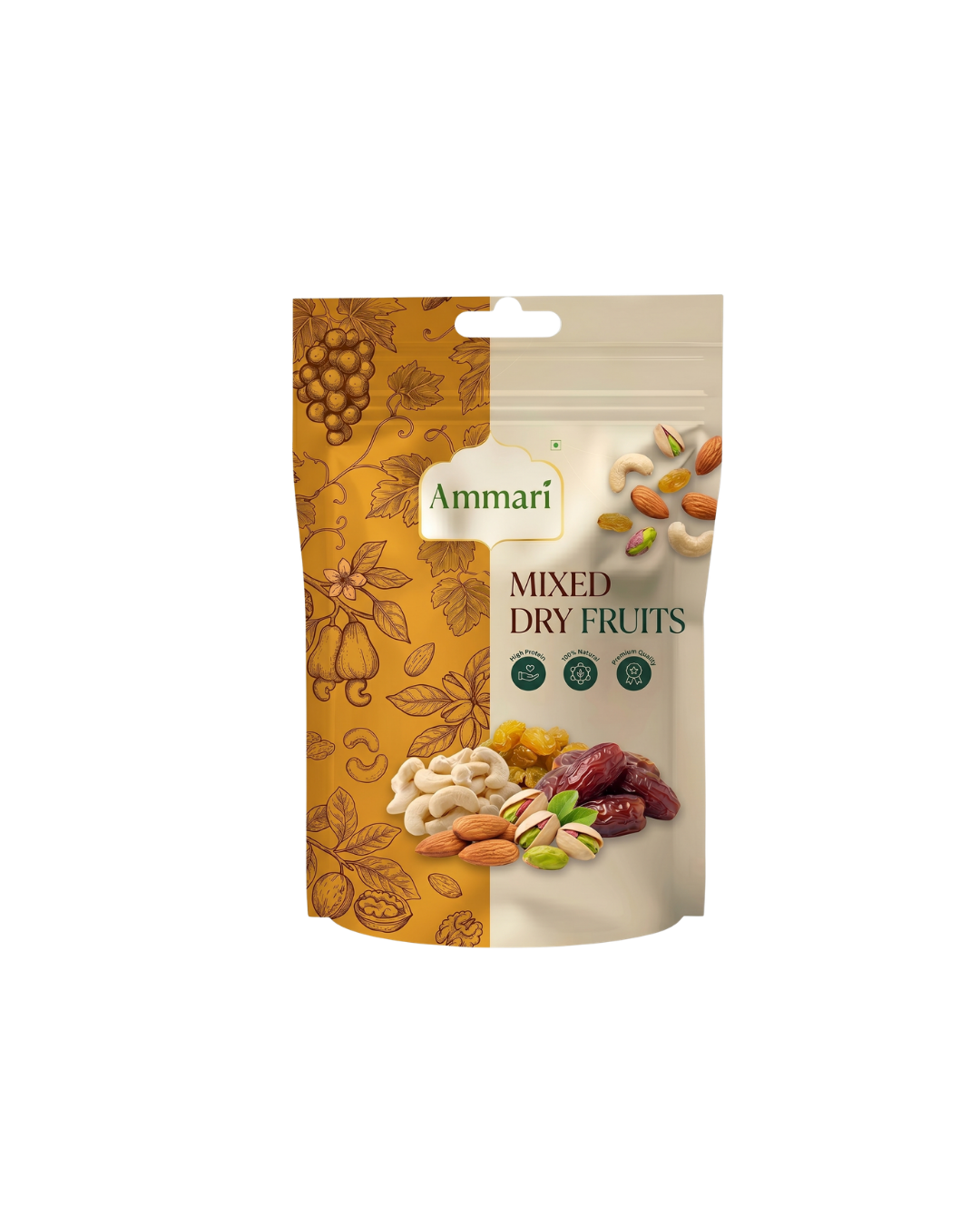
For the best texture, buy whole almonds, cashews and pistachios rather than pre-ground powders, since freshly ground nuts hold more of their natural oils and roast more evenly. Ammari’s Premium Mixed Dry Fruits Pack is a convenient way to get all three in one order for this recipe. Free delivery applies on orders over ₹999 where natural. For other festive dry fruit recipes, see Ammari’s dry fruit ladoo recipes guide.
Frequently Asked Questions
Can dry fruit halwa be made without any added sugar at all?
Yes. This recipe uses dates as the only sweetener, and most people find the sweetness level satisfying without any refined sugar. If a sweeter halwa is preferred, an extra date or two can be added to the paste rather than adding sugar separately.
Which dry fruits work best for halwa?
Almonds, cashews and pistachios form the base for most dry fruit halwa recipes, since they grind well and roast evenly in ghee. Walnuts can be added in smaller quantity for extra richness, though their stronger flavor works best as a minor addition rather than the main nut.
How long does dry fruit halwa last in the fridge?
Covered and refrigerated in an airtight container, dry fruit halwa stays good for two to three days. It should be reheated gently with a splash of milk or ghee before serving, since it firms up considerably once chilled.
Is dry fruit halwa suitable for Navratri fasting?
A version made without milk, using water instead, works for many Navratri fasting routines, though specific fasting rules vary by household and region. It is worth checking which ingredients are permitted in a particular fasting practice before serving it as a vrat dish.
Can this halwa be made ahead for a festival?
It can be made up to a day ahead and refrigerated, then gently reheated with a little milk or ghee before serving. Making it fresh on the day gives the best texture, but a day-ahead version reheats well if time is limited during festival preparations.
What can be used instead of dates if they are unavailable?
Jaggery is the closest traditional substitute, melted separately and stirred in during the same step where the date paste is added. The flavor profile shifts slightly toward a more caramel note, but the technique and quantities stay largely the same.
Frequently Asked Questions
Can dry fruit halwa be made without any added sugar at all?
Yes. This recipe uses dates as the only sweetener, and most people find the sweetness level satisfying without any refined sugar. If a sweeter halwa is preferred, an extra date or two can be added to the paste rather than adding sugar separately.
Which dry fruits work best for halwa?
Almonds, cashews and pistachios form the base for most dry fruit halwa recipes, since they grind well and roast evenly in ghee. Walnuts can be added in smaller quantity for extra richness, though their stronger flavor works best as a minor addition rather than the main nut.
How long does dry fruit halwa last in the fridge?
Covered and refrigerated in an airtight container, dry fruit halwa stays good for two to three days. It should be reheated gently with a splash of milk or ghee before serving, since it firms up considerably once chilled.
Is dry fruit halwa suitable for Navratri fasting?
A version made without milk, using water instead, works for many Navratri fasting routines, though specific fasting rules vary by household and region. It is worth checking which ingredients are permitted in a particular fasting practice before serving it as a vrat dish.
Can this halwa be made ahead for a festival?
It can be made up to a day ahead and refrigerated, then gently reheated with a little milk or ghee before serving. Making it fresh on the day gives the best texture, but a day-ahead version reheats well if time is limited during festival preparations.
What can be used instead of dates if they are unavailable?
Jaggery is the closest traditional substitute, melted separately and stirred in during the same step where the date paste is added. The flavor profile shifts slightly toward a more caramel note, but the technique and quantities stay largely the same.