TL;DR
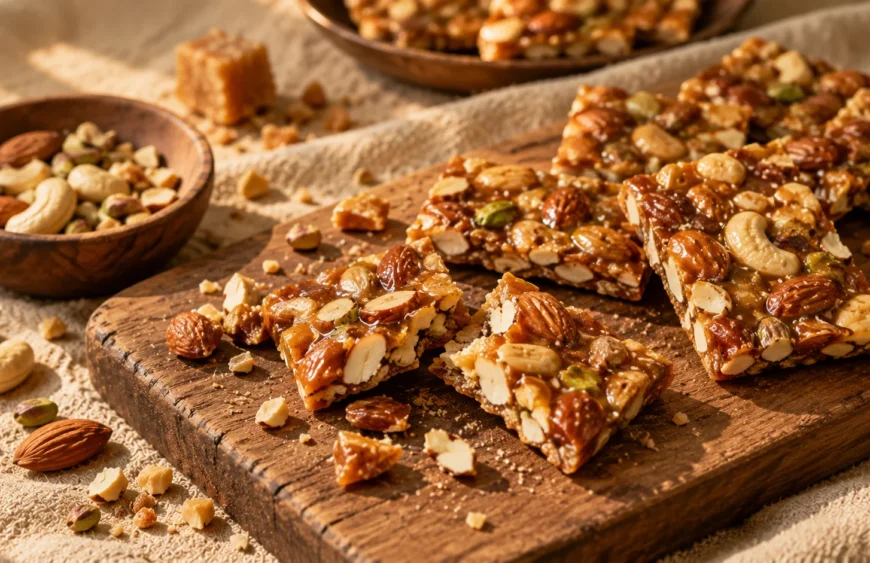
- Dry fruit chikki is a jaggery-based brittle, made by cooking jaggery to the hard-crack stage, around 148 to 150 degrees Celsius, then setting mixed nuts into it before it cools.
- The working ratio is 1 cup jaggery to 1.5 cups mixed dry fruits, with 1 teaspoon ghee, which sets into roughly 20 pieces of chikki.
- Getting the jaggery syrup to the correct hard-crack stage is the one step that determines whether the chikki turns out crisp or chewy; a drop of syrup in cold water should shatter, not bend.
- Chikki is a traditional winter snack across much of India, tied to Makar Sankranti and the cold months when jaggery and sesame-based sweets are eaten for their warming quality in Ayurvedic tradition.
- Stored in an airtight container away from humidity, dry fruit chikki stays crisp for three to four weeks; any moisture exposure turns it soft and sticky within days.
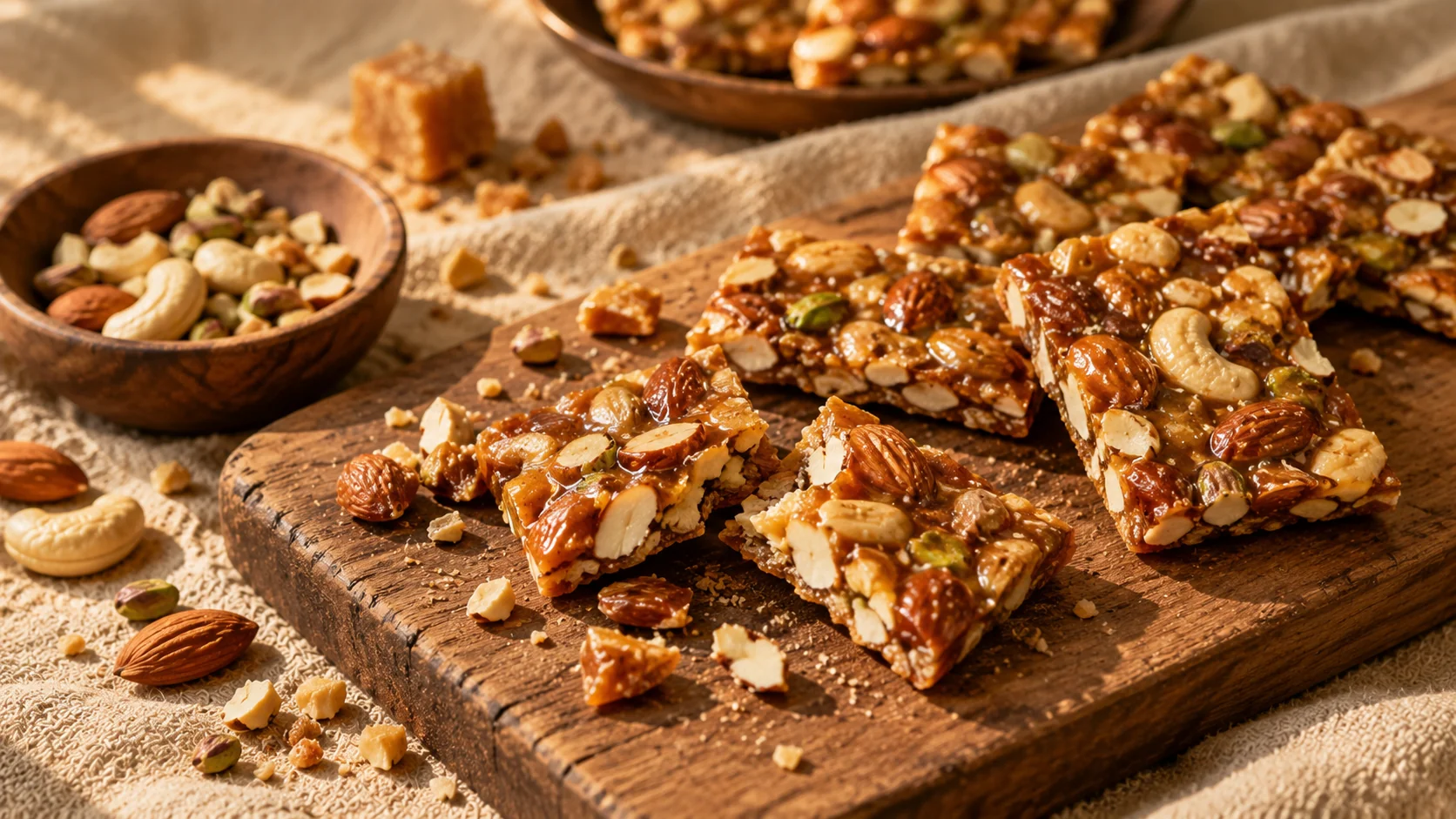
Dry fruit chikki is a jaggery-based brittle made by cooking jaggery syrup to a precise hard-crack stage and setting a mix of nuts into it before it cools and hardens. It is one of the more forgiving Indian sweets to make at home, since only two steps genuinely matter, getting the jaggery syrup to the right temperature and working quickly once the nuts go in, and both are easy to get right with a thermometer or a simple water-drop test. This recipe uses almonds, cashews and peanuts, though the ratio adapts easily to whatever mix of nuts is on hand.
Ingredients and exact ratios
The working ratio for a batch that sets into roughly 20 pieces of chikki is 1 cup jaggery to 1.5 cups mixed dry fruits, with 1 teaspoon ghee. Getting this ratio roughly right matters more than exact ingredient choice, since too little jaggery relative to nuts leaves the chikki crumbly and loose, while too much makes it overly hard and difficult to bite.
- 1 cup jaggery, grated or broken into small pieces
- 1.5 cups mixed dry fruits: ½ cup almonds, ½ cup cashews, ½ cup roasted peanuts, roughly chopped
- 1 teaspoon ghee, plus extra for greasing
- 2 tablespoons water
- A pinch of cardamom powder, optional
Ammari’s Premium California Almonds and Premium Whole Cashews (W240) both hold their crunch well through the cooking process, which matters since the nuts should still have some bite once the chikki has set.
Method: the jaggery syrup stage
Lightly toast the chopped almonds, cashews and peanuts in a dry pan for 3 to 4 minutes until fragrant, then set aside. This step matters more than it looks; raw nuts added straight into hot jaggery syrup taste noticeably flatter than pre-toasted ones.
In a heavy-bottomed pan, melt the jaggery with the 2 tablespoons of water on medium heat, stirring occasionally until it fully dissolves into a syrup. Add the teaspoon of ghee once it starts bubbling. Continue cooking, without stirring too frequently, until the syrup reaches the hard-crack stage, around 148 to 150 degrees Celsius on a candy thermometer.
Without a thermometer, use the water-drop test: drop a small amount of the syrup into a bowl of cold water. At the hard-crack stage, it should form a brittle strand that snaps cleanly when bent, not a soft, chewy ball. This usually takes 8 to 10 minutes of steady cooking on medium heat, and the color should shift to a slightly darker amber just before it reaches temperature.
Setting the chikki
Once the syrup hits the hard-crack stage, remove it from heat immediately and work fast, jaggery syrup begins to set within a minute or two. Add the toasted nuts and cardamom powder, stirring quickly and thoroughly to coat every piece evenly.
Pour the mixture onto a greased steel plate, marble slab, or a sheet of parchment paper, and flatten it quickly with a greased rolling pin or the back of a greased spoon to about half a centimeter thickness. While it is still warm and slightly pliable, roughly 2 to 3 minutes after pouring, score it into pieces with a greased knife; once fully cooled it will only crack rather than cut cleanly. Let it cool completely, about 20 to 30 minutes, before snapping along the scored lines.
Why chikki is a winter tradition
Chikki is closely tied to the winter months across India, particularly around Makar Sankranti in mid-January, when til (sesame) and gur (jaggery) based sweets are traditionally exchanged and eaten. In Ayurvedic tradition, jaggery and sesame are considered warming foods, suited to the cold season, which is part of why chikki, along with gajak and til ladoo, becomes a common household snack specifically in winter rather than year-round.
Beyond tradition, jaggery also brings iron and trace minerals that refined sugar does not, though chikki remains a calorie-dense sweet and is best treated as an occasional winter treat rather than a daily snack. Ammari’s dry fruit ladoo recipes guide covers other jaggery-based winter sweets that follow a similar principle.
Storage: keeping it crisp
Dry fruit chikki is highly sensitive to moisture. Stored in an airtight container, away from humidity and direct sunlight, it stays crisp for three to four weeks at room temperature. Any exposure to moist air, an improperly sealed container, or a humid kitchen, turns it soft and sticky within just a few days, since jaggery readily absorbs ambient moisture.
Layering the pieces with parchment or wax paper inside the container prevents them from sticking to each other over time. Refrigeration is not necessary and can actually introduce condensation-related moisture when the container is opened and closed repeatedly in a humid climate, so a cool, dry cupboard is generally the better storage spot than the fridge.
What Ammari recommends
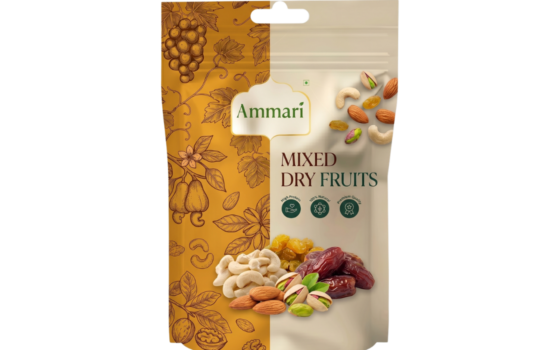
For the best texture, use whole, unroasted almonds and cashews and toast them fresh just before making the chikki rather than using pre-roasted, salted nuts, which throw off both the flavor balance and the syrup’s ability to coat evenly. Ammari’s Premium Mixed Dry Fruits Pack is a convenient base for this recipe. Free delivery applies on orders over ₹999 where natural. For other winter snacking ideas using dry fruits, see Ammari’s dry fruit breakfast recipes guide.
Frequently Asked Questions
What temperature should jaggery syrup reach for chikki?
The syrup needs to reach the hard-crack stage, around 148 to 150 degrees Celsius. Without a thermometer, drop a little syrup into cold water; it should form a brittle strand that snaps cleanly rather than a soft, chewy ball. This usually takes 8 to 10 minutes of steady cooking on medium heat.
Why did my chikki turn out chewy instead of crisp?
A chewy result almost always means the jaggery syrup did not reach the hard-crack stage before the nuts were added. Cooking the syrup a little longer, checking with the cold-water drop test rather than guessing by time alone, usually fixes this on the next attempt.
How long does dry fruit chikki stay fresh?
Stored in an airtight container in a cool, dry place, chikki stays crisp for three to four weeks. Moisture is the main enemy; any humidity exposure or a loosely sealed container turns it soft within days rather than weeks.
Can chikki be made with only one type of nut?
Yes, a single-nut chikki, peanut chikki being the most common traditional version, works with the same jaggery syrup method and ratio. Mixed dry fruit versions simply combine two or three nuts for variety in texture and flavor.
Is chikki healthier than regular sugar-based sweets?
Chikki uses jaggery instead of refined sugar, which brings trace iron and minerals that white sugar lacks, but it remains a calorie-dense sweet overall. It is reasonably considered a better occasional choice than sugar-syrup sweets, not a health food to eat freely.
Why is chikki traditionally eaten in winter?
Chikki is closely associated with Makar Sankranti and the broader winter season in India, when jaggery and sesame based sweets are traditionally exchanged and eaten. In Ayurvedic tradition, both ingredients are considered warming foods suited to the cold months.
Frequently Asked Questions
What temperature should jaggery syrup reach for chikki?
The syrup needs to reach the hard-crack stage, around 148 to 150 degrees Celsius. Without a thermometer, drop a little syrup into cold water; it should form a brittle strand that snaps cleanly rather than a soft, chewy ball. This usually takes 8 to 10 minutes of steady cooking on medium heat.
Why did my chikki turn out chewy instead of crisp?
A chewy result almost always means the jaggery syrup did not reach the hard-crack stage before the nuts were added. Cooking the syrup a little longer, checking with the cold-water drop test rather than guessing by time alone, usually fixes this on the next attempt.
How long does dry fruit chikki stay fresh?
Stored in an airtight container in a cool, dry place, chikki stays crisp for three to four weeks. Moisture is the main enemy; any humidity exposure or a loosely sealed container turns it soft within days rather than weeks.
Can chikki be made with only one type of nut?
Yes, a single-nut chikki, peanut chikki being the most common traditional version, works with the same jaggery syrup method and ratio. Mixed dry fruit versions simply combine two or three nuts for variety in texture and flavor.
Is chikki healthier than regular sugar-based sweets?
Chikki uses jaggery instead of refined sugar, which brings trace iron and minerals that white sugar lacks, but it remains a calorie-dense sweet overall. It is reasonably considered a better occasional choice than sugar-syrup sweets, not a health food to eat freely.
Why is chikki traditionally eaten in winter?
Chikki is closely associated with Makar Sankranti and the broader winter season in India, when jaggery and sesame based sweets are traditionally exchanged and eaten. In Ayurvedic tradition, both ingredients are considered warming foods suited to the cold months.