TL;DR
- Raisins (Kishmish) are naturally sweet and dried, which concentrates their sugar content per gram well above fresh grapes, so portion size matters more with raisins than with most other dry fruits.
- Raisins sit in the medium-to-high glycemic index range, generally higher than dates, almonds or walnuts, meaning they can raise blood glucose faster if eaten in a large portion or on an empty stomach.
- A small daily portion, around 15 to 20 grams (a level tablespoon), eaten with a source of protein or fat, is a more sensible approach than treating raisins as a freely snackable food.
- Pairing raisins with nuts, yogurt or a meal slows the glucose response compared to eating them alone, which is a more useful lever than avoiding raisins entirely.
- This is general guidance, not medical advice; anyone managing diabetes should confirm specific portions with their doctor or dietitian, especially alongside insulin or other glucose-lowering medication.
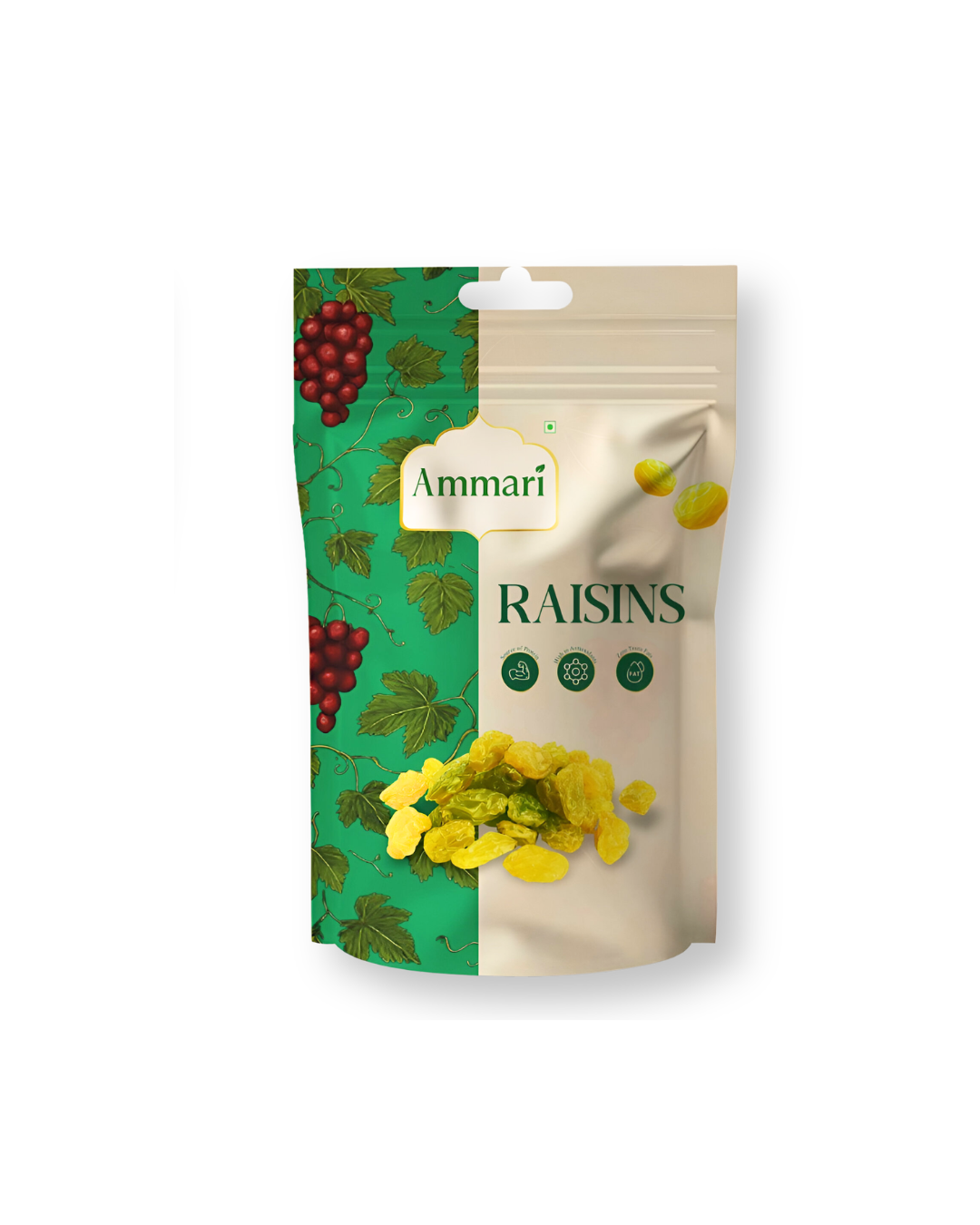
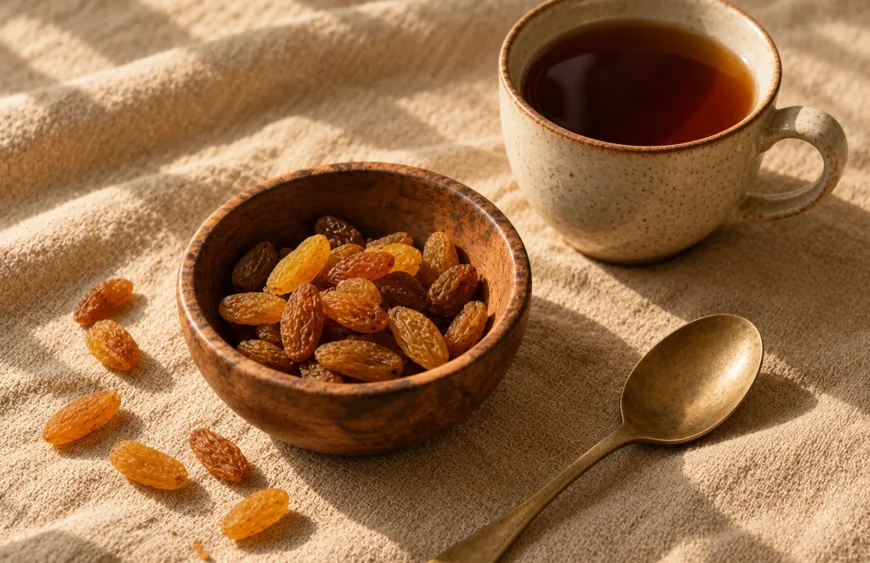
Raisins for diabetics is a genuinely more cautious topic than most dry fruit and diabetes questions, and it deserves a straight answer rather than a reassuring one. Raisins (Kishmish) are dried grapes, and drying concentrates natural sugar into a much smaller volume than the fresh fruit, which is exactly why portion control matters more here than with almonds, walnuts or even most dates. This guide lays out the honest picture: what the glycemic numbers actually mean, what a sensible portion looks like, and how to reduce the impact if raisins are part of a diabetic diet.
Why raisins need more caution than other dry fruits
A gram of raisins carries meaningfully more concentrated sugar than a gram of most other dry fruits, since grapes are already a sugar-dense fruit before drying removes most of their water content. That concentration is also what raises raisins’ glycemic load, a measure of how much a typical serving actually raises blood glucose, once portion size is factored in alongside glycemic index. This is not a reason to treat raisins as harmful, but it is a reason to be more deliberate about how much is eaten at once, and to not assume raisins behave the same way almonds or walnuts do simply because they are grouped together as “dry fruits.”
Ammari’s kishmish benefits guide covers the nutritional upsides, iron, potassium and antioxidants among them, that make raisins worth including in moderation for most people. The caution here is specifically about blood sugar management, not about raisins being an unhealthy food overall.
What the glycemic index and glycemic load actually mean here
Glycemic index (GI) ranks how quickly a food’s carbohydrate content raises blood glucose compared to pure glucose. Raisins generally sit in the medium-to-high GI range, higher than most dates, almonds or walnuts, and considerably higher than raw fruit like apples or oranges. Glycemic load (GL) adjusts that number for a realistic portion size, and is the more useful figure for everyday decisions, since a food can have a moderate GI but still produce a large glucose response if the portion eaten is large.
For raisins, a small handful adds up quickly in carbohydrate terms compared to the same weight of almonds or walnuts, since raisins are almost entirely carbohydrate by dry weight while nuts carry substantial fat and protein alongside their carbs. This is the core reason portion size deserves more attention with raisins specifically. Ammari’s dates for diabetics guide and best dry fruits for diabetics guide cover how other dry fruits compare on this same measure.
What a sensible portion actually looks like
A reasonable daily portion for most people managing diabetes is around 15 to 20 grams of raisins, roughly a level tablespoon, rather than a loose handful eaten freely from a bag. That amount can fit inside a balanced daily carbohydrate plan when accounted for alongside other meals, but it is not a food to snack on repeatedly through the day the way a smaller-portion nut might be.
Raisins should not be eaten on an empty stomach, since without protein or fat to slow digestion, the glucose from their concentrated sugar content is absorbed faster. Eating them alongside or immediately after a meal, rather than as a standalone snack, is a more sensible default. This is general guidance; individual tolerance varies significantly based on the type and stage of diabetes, other medications, and overall diet, so specific portions should be confirmed with a doctor or dietitian rather than applied as a fixed rule.
How to pair raisins to blunt the glucose response
Pairing raisins with a source of protein or fat is the most practical way to reduce their glucose impact. A small handful of raisins alongside a few almonds or walnuts, a spoon of yogurt, or as part of a savoury meal rather than eaten alone, slows how quickly that sugar reaches the bloodstream. This is the same principle that applies to dates, where pairing rather than avoidance is usually the more sustainable long-term approach for most people.
Cooking raisins into a dish, stirred into a small portion of dal or a savoury pulao rather than eaten as a standalone sweet snack, is another practical way many Indian households already moderate their portion naturally, since the raisins are spread thin across a larger meal rather than concentrated in one bite.
How raisins compare to other dry fruit choices
For anyone specifically managing blood sugar, almonds and walnuts are generally the more forgiving everyday choice, since their glycemic load per serving is meaningfully lower than raisins, owing to their higher fat and protein content relative to carbohydrate. Dates, despite also being naturally sweet, tend to sit at a somewhat lower glycemic index than raisins per gram in many comparisons, though portion still matters there too. Ammari’s black raisins vs green raisins guide and how many raisins per day guide cover variety differences and general portioning outside the diabetes-specific context.
None of this means raisins are off-limits. It means raisins are a food that rewards a smaller, more deliberate portion and thoughtful pairing more than most other dry fruits do, and that blanket rules borrowed from lower-glycemic dry fruits do not transfer directly to raisins.
What Ammari recommends
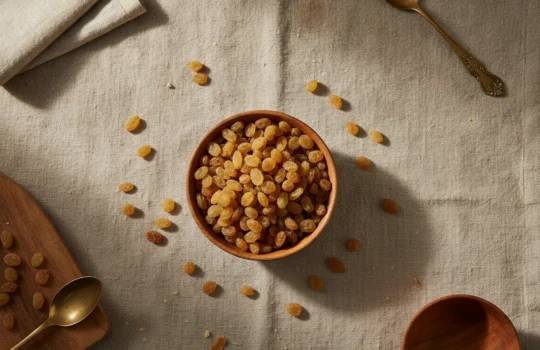
For anyone managing diabetes who wants to include raisins occasionally, Ammari recommends starting with a measured 15 to 20 gram portion, eaten with a meal or alongside a handful of nuts rather than alone, and tracking how it affects blood glucose over a couple of weeks before treating that portion as a routine. Ammari’s Indian Green Raisins (Kishmish) and Afghan Black Raisins (Munakka) are both natural, unsweetened products with no added sugar coating. Free delivery applies on orders over ₹999 where natural. This guide is educational, not medical advice; always confirm portions with a doctor or dietitian familiar with an individual’s diabetes management plan.
Frequently Asked Questions
Can diabetics eat raisins at all?
In most cases, yes, in a measured, small portion, typically around 15 to 20 grams, eaten with a meal or alongside protein or fat rather than alone. Raisins carry a higher glycemic load per gram than most other dry fruits, so portion control matters more here than with almonds or walnuts. Individual tolerance varies, so this should be confirmed with a doctor or dietitian.
Why are raisins riskier for blood sugar than other dry fruits?
Raisins are dried grapes, and drying concentrates their natural sugar content into a much smaller volume, which raises their glycemic load per gram compared to nuts like almonds or walnuts that carry more fat and protein relative to carbohydrate. This does not make raisins unhealthy, but it does mean a “handful” of raisins carries more sugar impact than the same size handful of most nuts.
What is a safe daily portion of raisins for a diabetic?
A commonly reasonable portion is around 15 to 20 grams, roughly a level tablespoon, eaten alongside a meal rather than as a standalone snack. This is general guidance, not a fixed rule; portions should be adjusted based on individual glucose response and confirmed with a healthcare provider.
Does pairing raisins with nuts actually help?
Yes. Eating raisins alongside a source of protein or fat, such as a few almonds or walnuts, slows how quickly the sugar in raisins is absorbed, which generally produces a gentler blood glucose response than eating raisins alone on an empty stomach.
Are black raisins or green raisins better for diabetics?
Both carry a broadly similar sugar concentration once dried, and the choice between them for a diabetic diet comes down more to portion size and pairing than to variety. Ammari’s black raisins vs green raisins guide covers the other nutritional and flavor differences between the two.
Should raisins be avoided completely by diabetics?
Not necessarily. Complete avoidance is rarely required for most people with well-managed diabetes; the more practical approach is a small, measured portion paired with protein or fat rather than eliminating raisins outright. Anyone with poorly controlled blood sugar or specific medical guidance to avoid them should follow their doctor’s advice.
Frequently Asked Questions
Can diabetics eat raisins at all?
In most cases, yes, in a measured, small portion, typically around 15 to 20 grams, eaten with a meal or alongside protein or fat rather than alone. Raisins carry a higher glycemic load per gram than most other dry fruits, so portion control matters more here than with almonds or walnuts. Individual tolerance varies, so this should be confirmed with a doctor or dietitian.
Why are raisins riskier for blood sugar than other dry fruits?
Raisins are dried grapes, and drying concentrates their natural sugar content into a much smaller volume, which raises their glycemic load per gram compared to nuts like almonds or walnuts that carry more fat and protein relative to carbohydrate. This does not make raisins unhealthy, but it does mean a handful of raisins carries more sugar impact than the same size handful of most nuts.
What is a safe daily portion of raisins for a diabetic?
A commonly reasonable portion is around 15 to 20 grams, roughly a level tablespoon, eaten alongside a meal rather than as a standalone snack. This is general guidance, not a fixed rule; portions should be adjusted based on individual glucose response and confirmed with a healthcare provider.
Does pairing raisins with nuts actually help?
Yes. Eating raisins alongside a source of protein or fat, such as a few almonds or walnuts, slows how quickly the sugar in raisins is absorbed, which generally produces a gentler blood glucose response than eating raisins alone on an empty stomach.
Are black raisins or green raisins better for diabetics?
Both carry a broadly similar sugar concentration once dried, and the choice between them for a diabetic diet comes down more to portion size and pairing than to variety. Ammari’s black raisins vs green raisins guide covers the other nutritional and flavor differences between the two.
Should raisins be avoided completely by diabetics?
Not necessarily. Complete avoidance is rarely required for most people with well-managed diabetes; the more practical approach is a small, measured portion paired with protein or fat rather than eliminating raisins outright. Anyone with poorly controlled blood sugar or specific medical guidance to avoid them should follow their doctor’s advice.