Almonds Shelf Life: Almonds Storage Shelf Life: The Short Answer
Last updated: 20 May 2026
Almonds are oil-rich and slowly oxidise once shelled. Storage choice determines shelf life.
- Pantry, airtight container: 6 to 9 months at room temperature below 25°C
- Refrigerator: 9 to 12 months in a sealed container – slows oxidation
- Freezer: up to 18 months – frozen almonds don’t need thawing for soaking
- Soaked, peeled almonds: 2 days in the fridge maximum
- Indian summer (April–September): always refrigerate after opening – kitchen temps regularly exceed 30°C and oxidation accelerates
- Signs of spoilage: rancid paint-like or fishy smell, bitter taste, oily film on kernel surface – discard the entire batch
For variety-specific shelf-life notes (Mamra goes rancid faster than California due to higher oil), see our complete almonds buying guide.
Why almonds need careful storage in India
Almonds are about 49 to 52 percent fat by weight for California and 55 to 60 percent for Mamra. Most of that fat is monounsaturated and polyunsaturated – heart-healthy but chemically unstable. Once an almond is shelled, the kernel surface is exposed to oxygen, light, and humidity, all of which accelerate oxidation. Oxidised fat is what produces the rancid smell and taste of an old almond batch.
Almonds storage shelf life – here is what actually matters when you choose. India’s climate makes storage tricky. From April through September, kitchen temperatures across most of the country regularly exceed 30°C, and humidity in coastal cities like Mumbai, Chennai, and Kochi can hit 80% during monsoon. Both conditions accelerate rancidity. Almonds bought in good condition can spoil in 2-3 months if stored on a shelf above the stove or near a window.
Storage methods ranked by shelf life
In order of shelf-life duration, with practical Indian-context notes:
- Freezer (best for long-term) – up to 18 months with no quality loss. Use freezer-safe glass jars or vacuum-sealed bags. Frozen almonds can go straight into water for soaking – no thawing needed. Best for buying in 1+ kg quantities and dispensing weekly portions.
- Refrigerator (best for daily use) – 9 to 12 months in a sealed container. The cold slows oxidation by 2-3×. Bring almonds to room temperature for 30 minutes before eating; cold almonds taste flat and the texture is less pleasant.
- Pantry, airtight (room-temperature default) – 6 to 9 months below 25°C. Use glass or food-grade steel; avoid plastic, which can absorb oils over time. Keep in a cool, dark cupboard away from the stove. In Indian summer, drop to fridge immediately.
- Pantry, opened bag – 3 to 4 months max. Each opening lets oxygen in. The original retail pack is rarely fully airtight.
- Soaked, peeled almonds (the daily Ayurvedic preparation) – 2 days maximum in a covered bowl with a little water in the fridge. After that, fermentation flavours develop.
Variety-specific notes – Mamra vs California vs Gurbandi
The three main varieties have different oil contents, which translates to different shelf lives:
- California (49-52% oil) – the longest-keeping variety. Pantry: 6-9 months; fridge: 12+; freezer: 18+
- Mamra (55-60% oil) – shortest shelf life. Pantry: 6-8 months max; fridge: 10-12; freezer: 14-18. The higher oil oxidises faster, so refrigeration after opening is strongly recommended even outside summer.
- Gurbandi (53-58% oil) – between the two. Pantry: 6-9 months; fridge: 10-12. The dense kernel structure has a slight protective effect.
For festival-cooking Mamra reserves you only use occasionally, freezer storage is the practical default.
What accelerates rancidity (avoid)
Six things that shorten almond shelf life faster than expected:
- Heat – kitchen above 25°C halves shelf life. The shelf above your stove is the worst storage spot.
- Light – direct sunlight oxidises fats. Clear glass jars on windowsills are pretty but rancidity-accelerating.
- Air exposure – every time you open the container, oxygen enters. Smaller containers (250 g) used to depletion are better than 1 kg jars stretched over months.
- Moisture – humid air during monsoon causes condensation on the kernels. Always store with a desiccant or in a dry container.
- Strong-smelling foods nearby – almonds absorb odors. Don’t store next to onions, garlic, or spice mixes.
- Plastic containers (long-term) – leach trace plastic oils into the kernels over months. Glass or food-grade steel is preferred.
Signs almonds have gone bad
Test before eating, especially with batches older than 6 months:
- Smell – fresh almonds have a clean, faintly sweet nutty aroma. Rancid almonds smell like paint, cardboard, or fish. The smell test is the single most reliable indicator.
- Taste – bitter, sharp, harsh, or off-flavoured. Discard the whole batch if any kernel tastes wrong.
- Visual – yellowed or grey kernel colour, dark spots, oily film on the surface. Visible mould patches: discard immediately.
- Texture – soft or chewy when fresh almonds should be crisp. Indicates moisture absorption and likely fermentation.
A single rancid almond can taint the rest of the batch – discard the whole pack rather than picking out the bad ones.
Practical storage routine for Indian households
The pattern most premium-buyers follow:
- Buy in 250 g vacuum-sealed packs rather than 1 kg+ giants – smaller, fresher rotation
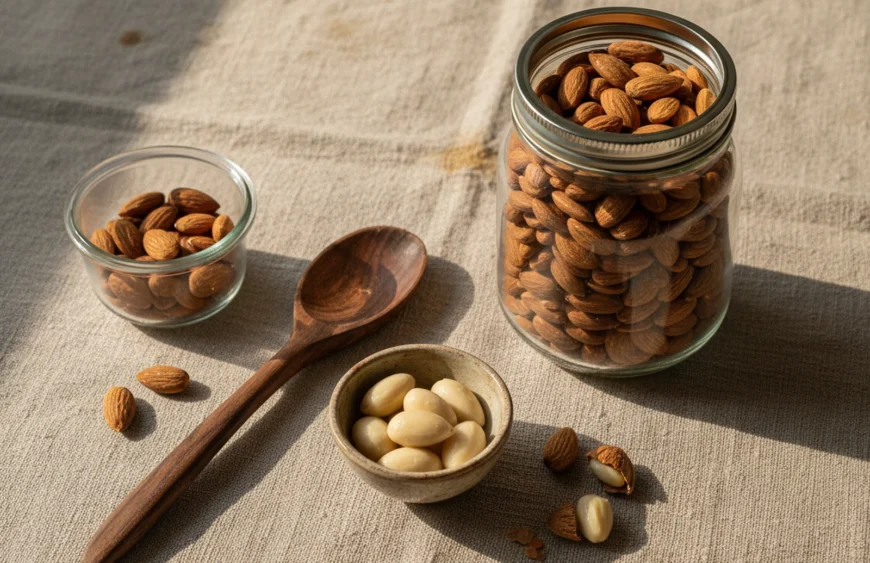
- Decant into a glass jar with a tight lid as soon as you open the pack
- Store in a cool dark cupboard during cooler months (October-March)
- Move to refrigerator during summer (April-September)
- For Mamra or other premium varieties – refrigerator default year-round
- Soak each day’s portion fresh rather than batch-soaking – soaked almonds keep just 2 days
For deeper variety-specific guidance, see our Mamra almonds benefits guide and how many almonds per day for portioning.
Sourcing transparency
- Ingredient: Almonds (across California , Mamra, Gurbandi varieties)
- Pack format: 250 g vacuum-sealed for freshness rotation
- Recommended storage: airtight glass or food-grade steel; refrigerate after opening during Indian summer
- Shelf-life benchmarks: pantry 6-9 months · fridge 9-12 months · freezer 18 months
- Spoilage indicator: rancid paint-like or fishy smell
References & further reading
For independent reference points, the USDA FoodData Central – nutrient database is the standardised dataset we cross-check composition against. Clinical work like the PubMed – almonds and cardiovascular risk review helps separate marketing claims from evidence.
Frequently Asked Questions
How long do almonds stay fresh once opened?
In an airtight container, opened almonds stay fresh 2 to 3 months at room temperature (below 25°C) and 6 to 9 months refrigerated. Indian summer humidity reduces these windows by roughly 30%. For longest freshness, transfer to the fridge after opening if you live in a city above 30°C average.
Can I store almonds in the freezer?
Yes, and it’s the best option for long-term storage. Frozen almonds keep up to 18 months with no quality loss. Use freezer-safe glass jars or vacuum-sealed bags. Frozen almonds don’t need thawing for soaking – drop them straight into water. For daily-eating portions, take out a 250 g batch and refrigerate it; refreeze isn’t ideal.
Do soaked almonds last longer than dry?
No, the opposite. Soaked-and-peeled almonds keep 2 days maximum in the fridge with a little water in the bowl. After that, fermentation flavours develop and the texture breaks down. The Ayurvedic standard is to soak each day’s portion fresh – 23 almonds at night, eaten in the morning.
How do I know if almonds have gone bad?
Smell is the most reliable test. Fresh almonds smell clean and faintly sweet; rancid almonds smell like paint, cardboard, or fish. Visual signs: yellowed kernels, dark spots, oily film, or mould patches. Taste: bitter or off-flavoured. Discard the whole batch if any single kernel fails the smell or taste test.
Should I refrigerate almonds in winter?
Not strictly necessary. From October through March, most Indian kitchens stay below 25°C and pantry storage is fine for 6-9 months. Refrigerate during summer (April–September) when temperatures push 30°C and humidity rises. For premium varieties like Mamra (which oxidise faster), fridge storage year-round is safer. When evaluating almonds storage shelf life, the key is verification not branding.
Can I store almonds with other dry fruits?
Yes, but in separate compartments. Almonds, walnuts, pistachios, and cashews can share a multi-compartment dry-fruit jar. Keep dates and raisins separate (their moisture content is higher and can transfer to the nuts, accelerating spoilage). Don’t store with strong-smelling foods like onions, garlic, or whole spices.
Is plastic container storage OK for almonds?
Acceptable for short-term (under 3 months) but not recommended long-term. Plastic can absorb almond oils over months, and some plastic types leach trace compounds into the kernels. Glass or food-grade stainless steel is the recommended default for any storage longer than a month.
Why do my almonds taste different after long storage?
Slow oxidation of the polyunsaturated fats. Even before reaching full rancidity, almonds develop a slightly stale or cardboard-like aftertaste over 9-12 months at room temperature. The flavour is still safe to eat but no longer optimal. Refrigeration prevents this for 6+ months longer.