TL;DR
- Green raisins (golden kishmish) are lightly processed and lightly dried for a milder, sweeter everyday raisin.
- Black raisins (kali kishmish) are naturally sun-dried longer, giving a deeper flavour and slightly higher iron and antioxidant content.
- Both come from the same grape family — the difference is drying method and how much processing the skin goes through.
- Green kishmish suits daily snacking, lunchboxes and baking; black raisins suit traditional remedies, festive cooking and richer recipes.
- Neither is objectively ‘healthier’ — the right pick depends on your recipe and taste preference.
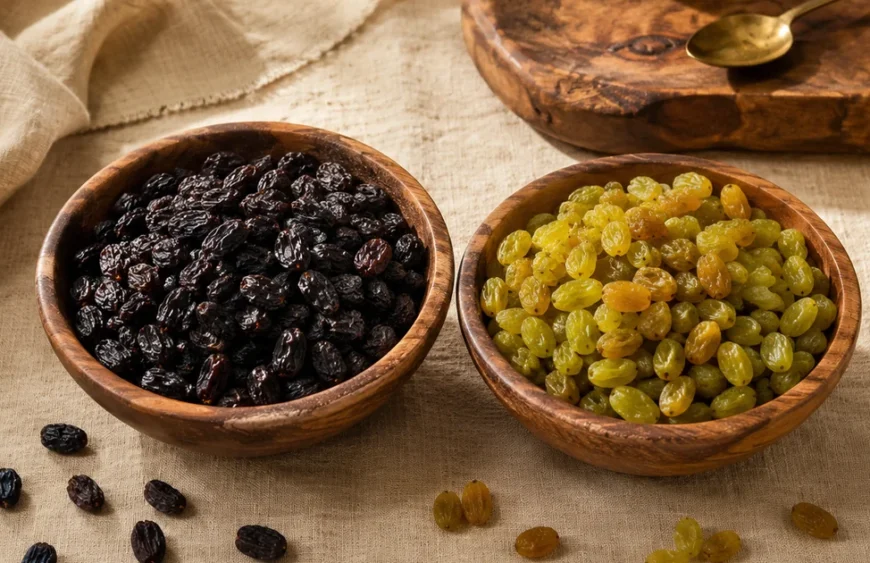
Black raisins vs green raisins is one of the most common questions in Indian kitchens, because both sit on the same shelf labelled kishmish, yet they taste, cook and behave quite differently. The short answer: they come from the same grape varieties, but the drying process and skin treatment set them apart, and that difference shapes which one belongs in your pantry.
This guide breaks down what actually separates black raisins (kali kishmish) from green raisins (golden kishmish), so you can pick the right one instead of guessing at the grocery shelf.
Black raisins vs green raisins: quick comparison
| Aspect | Green raisins (golden kishmish) | Black raisins (kali kishmish) |
|---|---|---|
| Drying process | Faster drying, sometimes lightly sulphured to hold golden colour | Slower natural sun-drying, minimal processing |
| Flavour | Mild, clean, gently sweet | Deeper, slightly tangy, more concentrated sweetness |
| Texture | Soft, plump, uniform | Slightly firmer, more wrinkled skin |
| Typical iron content | Moderate | Slightly higher due to less processing and darker skin |
| Best use | Daily snacking, lunchboxes, baking, breakfast bowls | Traditional remedies, festive cooking, richer sweets |
| Price band | ₹250–₹400/kg (premium seedless) | ₹300–₹450/kg, more for Afghan munakka |
For the full price breakdown across both varieties, see Raisins Price Per Kg in India.
What actually makes them different
Both black and green raisins start life as fresh grapes, usually from seedless varieties. The colour difference comes almost entirely from how they are dried. Green (golden) kishmish is typically dried faster, and some processing methods use light sulphur treatment to lock in the golden-yellow colour and prevent the fruit from darkening. This keeps the raisin bright and mild-tasting, but it is a more industrial process.
Black raisins are usually dried the traditional way — slow sun-drying with no added treatment. Without sulphur to hold back the natural browning reaction, the skin darkens over the drying period, deepening both the colour and the flavour. This slower process is also why black raisins and Afghan munakka tend to cost a little more per kilo: less throughput, more time in the sun, and more variation between batches.
Nutrition: is one actually healthier?
Both varieties are calorie-dense, fibre-rich and a reasonable source of iron and potassium, since they are simply dried grapes with the water removed. Black raisins often test slightly higher in iron and polyphenol antioxidants, largely because their skin goes through less processing and retains more of the grape’s natural pigment compounds. That said, the difference is modest, not dramatic — neither variety should be framed as a health supplement over the other.
If your goal is iron intake or a slightly more traditional nutrient profile, black raisins have a small edge. If your goal is a mild, everyday snack that works in any recipe without changing the flavour, green kishmish is the more practical choice. For a deeper look at raisin nutrition and daily intake, read Kishmish Benefits and How Many Raisins Per Day.
Which one should you cook with?
Green kishmish is the safer default for most kitchen uses. Its mild sweetness blends into pulao, kheer, cakes and lunchbox trail mixes without overpowering other flavours. It also softens quickly when soaked, which is why it turns up so often in soaked raisin routines.
Black raisins bring a more assertive, slightly tangy sweetness that stands out in richer preparations — think festive halwa, spiced rice dishes, or traditional home remedies where a stronger flavour is welcome. Munakka in particular, being larger and seeded, is often used whole in slow-cooked sweets rather than mixed into batters.
What Ammari recommends
For everyday snacking, lunchboxes and baking, choose fresh seedless green kishmish — it is consistent, mild and easy to build a daily habit around. Keep black raisins or munakka on hand for festive cooking or when a recipe calls for a deeper, more traditional flavour. Ammari currently stocks Indian Green Raisins (Kishmish) as our everyday raisin, with darker varieties joining the lineup as availability allows.
Frequently Asked Questions
Are black raisins and green raisins the same fruit?
Largely yes. Both usually come from seedless grape varieties. The colour and flavour difference comes mainly from the drying method and how much processing the skin goes through, not from a completely different fruit.
Are black raisins healthier than green raisins?
Black raisins often carry slightly more iron and antioxidant compounds because they go through less processing, but the difference is modest. Both are nutritious dried-fruit options, and the better choice usually comes down to taste and recipe, not health superiority.
Which raisins are better for daily snacking?
Green (golden) kishmish tends to work better for daily snacking because the flavour is mild and consistent, making it easy to eat plain, add to breakfast, or pack in a lunchbox without overpowering other foods.
Why do black raisins cost more?
Black raisins are typically sun-dried more slowly with less processing, which lowers the yield per batch and adds time to production. That, combined with tighter supply for varieties like Afghan munakka, pushes the price higher than everyday green kishmish.
Can I substitute one for the other in recipes?
In most recipes, yes, though the flavour will shift. Green kishmish keeps a dish mild and sweet, while black raisins add a deeper, slightly tangy note. For delicate dishes like kheer, green kishmish is usually the safer swap; for richer festive sweets, black raisins can add welcome depth.
For the live product page, see Indian Green Raisins (Kishmish). Free delivery on orders over ₹999 where natural.
Frequently Asked Questions
Are black raisins and green raisins the same fruit?
Largely yes. Both usually come from seedless grape varieties. The colour and flavour difference comes mainly from the drying method and how much processing the skin goes through, not from a completely different fruit.
Are black raisins healthier than green raisins?
Black raisins often carry slightly more iron and antioxidant compounds because they go through less processing, but the difference is modest. Both are nutritious dried-fruit options, and the better choice usually comes down to taste and recipe, not health superiority.
Which raisins are better for daily snacking?
Green (golden) kishmish tends to work better for daily snacking because the flavour is mild and consistent, making it easy to eat plain, add to breakfast, or pack in a lunchbox without overpowering other foods.
Why do black raisins cost more?
Black raisins are typically sun-dried more slowly with less processing, which lowers the yield per batch and adds time to production. That, combined with tighter supply for varieties like Afghan munakka, pushes the price higher than everyday green kishmish.
Can I substitute one for the other in recipes?
In most recipes, yes, though the flavour will shift. Green kishmish keeps a dish mild and sweet, while black raisins add a deeper, slightly tangy note. For delicate dishes like kheer, green kishmish is usually the safer swap; for richer festive sweets, black raisins can add welcome depth.