Dates Vs Figs Natural Sweetener: At a glance
Last updated: 19 May 2026
Dates are sweeter per gram and lower on the glycemic index. Dried figs are milder, with more calcium and iron per 100 g.
- Sweetness: dates ~66 g sugar per 100 g; figs ~48 g (USDA FoodData Central).
- Glycemic index: Medjool dates ~42; figs ~61. Dates favour blood-sugar steadiness.
- Calcium per 100 g: figs ~162 mg; dates ~64 mg. Figs deliver about 2.5x more.
- Iron per 100 g: figs ~2.0 mg; dates ~0.9 mg. Figs deliver roughly 2x more.
- Fibre per 100 g: figs ~9.8 g; dates ~6.7 g. Figs hold the edge.
- Best use: dates as refined-sugar replacement; figs as milder sweetener for breakfast and salads.
- Ammari stocks Medjool, Ajwa, Mabroom, and Safawi dates packed to order in Jaipur.
For the full date variety landscape, see our premium dates buying guide.
Two fruits, two roles in natural sweetening
Dates vs figs natural sweetener – here is what actually matters when you choose. Dates and dried figs are both ancient natural sweeteners. Their roles in modern Indian kitchens differ enough that the smart pantry keeps both rather than picking one.
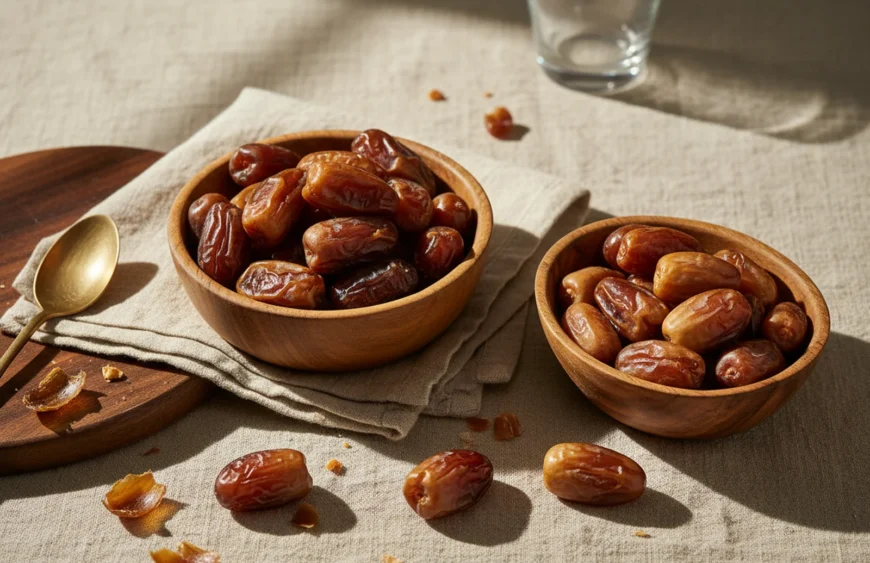
Dates are the fruit of Phoenix dactylifera, a palm grown across the Middle East, North Africa, California, and Pakistan. Premium varieties include Medjool (large, plump, caramel-sweet, from California or Jordan), Ajwa (small, dark, from Madinah, Saudi Arabia), Mabroom (firm, fibrous, from Saudi Arabia), and Safawi (semi-dry, balanced sweetness). Dates are sold dried but retain significant moisture, which is why they feel sticky and bend rather than snap.
Figs are the fruit of Ficus carica, a Mediterranean tree grown widely in Turkey, Iran, Afghanistan, Greece, and increasingly in India (Maharashtra and Karnataka). Dried figs (anjeer in Hindi-Urdu) are sold as light brown or dark purple chewy fruit, around 8 to 14 g per piece. Indian buyers most often see Turkish or Afghan dried figs.
The key sensory difference is intensity. One Medjool date carries roughly 18 g of sugar and tastes intensely sweet. One dried fig carries roughly 5 g of sugar and tastes mildly sweet. For recipes where you want bold sweetness in a small piece (date balls, kheer, smoothies), dates win. For recipes where you want gentle sweetness spread across more chew (breakfast bowls, salads, baked goods), figs win.
Nutrition per 100 g, side by side
| Nutrient | Dates (Medjool) | Dried Figs | Winner | |-|-|-|-| | Calories | 277 kcal | 249 kcal | tie | | Sugars | 66.5 g | 47.9 g | figs (less) | | Carbohydrates | 75 g | 64 g | figs | | Fibre | 6.7 g | 9.8 g | figs | | Protein | 1.8 g | 3.3 g | figs | | Fat | 0.2 g | 0.9 g | tie | | Calcium | 64 mg | 162 mg | figs | | Iron | 0.9 mg | 2.0 mg | figs | | Potassium | 696 mg | 680 mg | tie | | Magnesium | 54 mg | 68 mg | figs | | Vitamin K | 2.7 mcg | 15.6 mcg | figs | | Glycemic index | 42 to 55 | 55 to 61 | dates |
This table reads counter to most people’s intuition. By the line-item count, dried figs win on more nutrients than dates: more fibre, more protein, more calcium, more iron, more magnesium, more vitamin K. Dates win on potassium and on glycemic index.
For Indian families using dried fruit primarily as a calcium and iron source (pregnant women, growing children, vegetarian adults), dried figs are the better daily pick. For Indian families using dried fruit primarily as a refined-sugar replacement, dates are the better choice because the GI is lower and the sweetness is more intense per gram.
Glycemic index: where dates win
The glycemic index gap is where dates earn their reputation for being diabetic-friendly despite the high sugar content.
Medjool dates sit at GI 42, Ajwa at GI 42 to 55, and dried figs at GI 55 to 61. Dates carry their sugar mostly as glucose and fructose in roughly equal parts, paired with significant fibre, which slows absorption. Dried figs have a higher proportion of free fructose and less moisture binding the sugar, which is why the GI is higher.
For an adult with type-2 diabetes, the practical takeaway: 2 to 3 dates with protein (curd, milk, almonds) is well-tolerated as an afternoon snack. The same gram weight of dried figs (about 4 to 5 small figs) produces a slightly higher glycemic response and is best paired with more protein.
For specific portion guidance, our dates for diabetics guide covers safe daily intake and pairing strategies.
Calcium and iron: where figs win
Dried figs are one of the densest plant calcium sources in the dry-fruit category. At 162 mg per 100 g, figs deliver more calcium per weight than almonds (269 mg, the only common dry fruit ahead) and significantly more than dates (64 mg).
For Indian vegetarian diets where plant calcium sources matter (no dairy or limited dairy), a handful of dried figs daily (about 4 to 5 pieces, 30 to 40 g) delivers 60 to 80 mg of calcium. Combined with almonds, leafy greens, and curd, this closes a real gap.
Iron is similar. Dried figs carry 2 mg per 100 g of plant iron, useful in pregnancy and adolescent growth phases. Dates trail at 0.9 mg per 100 g. For pregnancy iron support, the date-and-fig combination (3 dates plus 2 figs at breakfast) is a practical pattern.
For pregnancy-specific guidance, see dates for pregnancy.
Cooking and recipe applications
The two fruits do different jobs in the kitchen.
- Dates work best in: date-and-nut energy balls, sweetened lassi, halwa, kheer (chopped at the end), date paste as a refined-sugar substitute in baking (1 cup dates pureed with 3 tbsp water replaces 1 cup white sugar in most recipes), stuffed-date desserts for Eid and Diwali. The high sweetness intensity lets you use a small quantity.
- Dried figs work best in: breakfast bowls (oats, granola, yogurt with chopped fig), Mediterranean salads (with cheese, rocket, walnut), figgy puddings and baked goods, fig-and-walnut stuffing for chicken or paneer, Christmas baking, soaked fig water as a digestive drink. The milder sweetness blends without dominating.
For Indian sweets specifically, dates dominate because they hold the gulab-jamun-and-mithai cultural register. Figs appear more in modern fusion cooking and Mediterranean-influenced breakfast.
Price in India 2026
| Variety | Indicative price (₹/kg) | Best use | |-|-|-| | Medjool dates (large, California/Jordan) | 1,200 to 2,400 | Direct eating, gifting, baking | | Ajwa dates (Madinah origin) | 2,400 to 4,500 | Daily intake, religious use, Ramadan | | Mabroom dates (firm) | 1,800 to 3,200 | Daily intake, snacking | | Safawi dates (semi-dry) | 1,000 to 1,800 | Daily intake, cooking | | Turkish dried figs (Lerida) | 1,800 to 2,800 | Direct eating, baking | | Afghan dried figs (premium) | 2,200 to 3,500 | Direct eating, gifting | | Indian dried figs (Anjeer) | 1,000 to 1,600 | Daily intake, cooking | When evaluating dates vs figs natural sweetener, the key is verification not branding.
Premium grades of either fruit overlap in the ₹1,800 to ₹3,500 band. For everyday calcium-and-iron use, Indian or Turkish standard dried figs (₹1,000 to ₹1,800) plus Safawi dates (₹1,000 to ₹1,800) gives the most cost-effective pairing.
For the date variety landscape, our Medjool vs Ajwa comparison covers premium choices in detail.
Storage and freshness
Both fruits are stable but need different conditions. Dates keep 6 to 9 months at room temperature in airtight jars, longer with refrigeration. From April to September, refrigerate Medjool and Ajwa. Dried figs keep 4 to 6 months at room temperature because the lower sugar content provides less natural preservation. A white sugar bloom on figs is normal (crystallised natural sugar, not mould).
Sourcing transparency
- Dates: Medjool (California/Jordan), Ajwa (Madinah origin), Mabroom (Saudi Arabia), Safawi (Saudi Arabia). All sourced through verified shippers.
- Date harvest: August through October at origin. Vacuum-packed for shipping.
- Figs: Turkish Lerida and Afghan premium grades stocked seasonally.
- Storage on arrival: vacuum-packed pouches at our Jaipur facility, humidity-controlled.
- Where we ship from: Ammari Foods, Jaipur. Online-only D2C, all-India shipping.
Dates are stocked year-round at Ammari Foods. Figs rotate by season based on origin availability.
References & further reading
For independent reference points, the USDA FoodData Central – nutrient database is the standardised dataset we cross-check composition against. Clinical work like the PubMed – date palm nutritional review helps separate marketing claims from evidence.
Frequently Asked Questions
Which is healthier, dates or dried figs?
Dried figs win on more nutrient lines (calcium, iron, fibre, protein, magnesium, vitamin K), but dates have a lower glycemic index and higher potassium. For Indian vegetarian diets where calcium and iron gaps matter, figs are the better daily pick. For diabetic-friendly natural sweetening, dates are the safer choice. The smart pattern is to use both: figs for breakfast and salads, dates as refined-sugar replacement in cooking.
Are dried figs higher in sugar than dates?
No, the opposite. Dates carry about 66 g of natural sugar per 100 g; dried figs carry about 48 g. Dates taste sweeter per gram. The intuition that figs are sweeter often comes from eating figs as a whole fruit (one fig has 5 g sugar) versus eating one Medjool date (18 g sugar) in the same setting. Per gram, dates are denser in sugar.
Which is better for diabetics?
Dates, slightly. Medjool dates sit at GI 42, dried figs at GI 55 to 61. The fibre and moisture in dates slow sugar absorption better than figs. Practical portion: 2 to 3 dates daily for an adult with controlled type-2 diabetes is well-tolerated; the same weight of dried figs (3 to 4 pieces) produces a slightly higher post-meal glucose response. Pair either with protein.
Can I substitute figs for dates in recipes?
Sometimes. For energy balls, kheer, and Indian sweets where date stickiness binds the recipe, figs do not substitute well. For breakfast bowls, baked goods, and salads where the sweetness is dispersed, figs substitute fine. The flavour profile changes (figs are milder and slightly nuttier), but the recipe holds together. Use roughly 1.3x weight of figs to match the sweetness of the original date amount.
How many dates and figs should I eat daily?
A balanced pattern for adults: 2 to 4 dates plus 2 to 4 dried figs daily. Total calories about 130 to 180 kcal. This delivers calcium, iron, fibre, potassium, and natural sugars without overshooting on either nutrient. Pregnant women can scale to 4 to 6 of each in trimester three; growing children to 1 to 2 of each daily.
Are dried figs good for pregnancy?
Yes. The combination of calcium (162 mg per 100 g), iron (2 mg), fibre (9.8 g), and magnesium makes dried figs useful in pregnancy. Three to four figs daily with milk or curd provides meaningful nutrition without excess sugar. For iron-deficiency anaemia in pregnancy, pair figs with vitamin-C-rich foods (lemon, amla, citrus) to improve absorption.
Do figs taste similar to dates?
No. Dates taste intensely sweet with caramel, butterscotch, or honey notes depending on the variety. Dried figs taste mildly sweet with nutty, faintly seedy notes from the small interior seeds that crunch slightly when chewed. The textures also differ: dates are sticky and bend, figs are chewy and slightly grainy.