Ajwa Dates Benefits Religious: At a glance
Last updated: 19 May 2026
Ajwa is a small, dark, soft-firm date grown only in and around Madinah, Saudi Arabia. It is valued for nutrition and for Islamic tradition.
- Nutrition per 100 g: about 283 kcal, 64 g natural sugars, 8 g fibre, 2.5 g protein, 656 mg potassium and 1.5 mg iron (USDA FoodData Central values for dates).
- Glycemic index: moderate, in the 42 to 55 range. Lower than white bread and most Indian mithai when eaten in 2 to 3 date portions.
- Religious significance: the hadith in Sahih Bukhari (5445) cites the practice of eating seven Ajwa each morning. Many Muslim households follow this Sunnah daily.
- Origin: Madinah region only. Verified Ajwa typically retails ₹2,400 to ₹4,500 per kg in India.
- Ammari sources Ajwa from Madinah-area growers and ships across India from Jaipur.
For the full date landscape, see our premium dates buying guide.
What Ajwa actually is
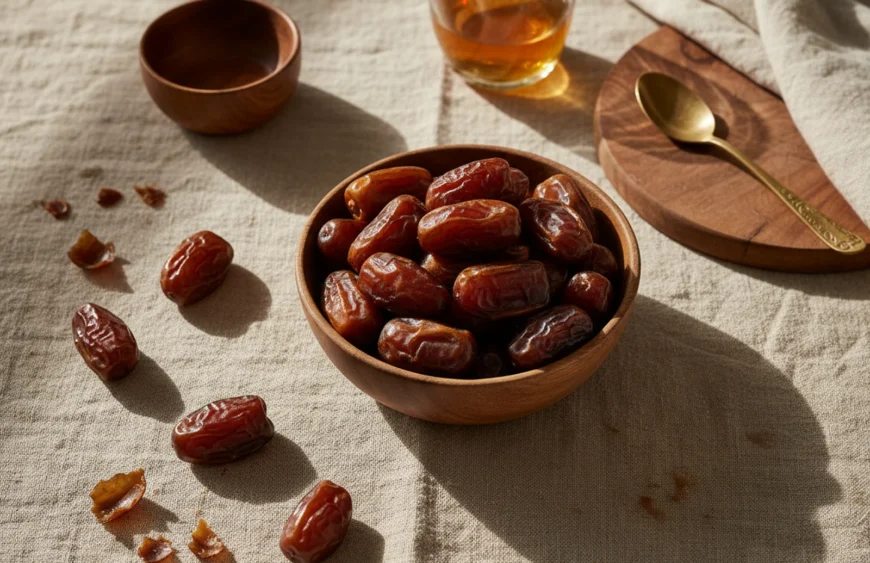
Ajwa is a single variety of date palm fruit (Phoenix dactylifera) grown almost only in the orchards in and around Madinah, in western Saudi Arabia. Compared with bigger varieties like Medjool, Ajwa is small. A single date is 8 to 12 grams. The skin is near-black and matte, the flesh is dense and chewy, the taste is clean sweetness with light caramel notes. The fruit ripens fully on the tree, which gives the firmer texture.
Ajwa dates benefits religious – here is what actually matters when you choose. The supply chain is tight. Ajwa cannot be grown elsewhere with the same identity. The variety has cultural and religious meaning tied to its origin. Verified packs carry origin labelling from Madinah-area producers. That tight supply plus steady global demand is why real Ajwa rarely retails below ₹2,400 per kg in India.
Religious significance: the Sunnah of seven Ajwa
For many Muslim households, the main reason to buy Ajwa has nothing to do with macros. It is the Sunnah of the Prophet Muhammad.
The most-cited narration is Sahih al-Bukhari 5445 (also recorded as 5779): “He who eats seven Ajwa dates every morning, will not be affected by poison or magic on the day he eats them.” This hadith is widely quoted in Islamic tradition. It is the source of the seven-Ajwa morning practice that many practising families follow daily, mostly during Ramadan.
A few honest framing notes:
- The hadith is a religious narration, not a clinical claim. It is cited as the spiritual reason Ajwa is valued.
- Modern peer-reviewed research on dates does show antioxidant, anti-inflammatory, and heart-friendly activity from the fruit’s polyphenols. That is a separate, secular conversation.
- Ajwa is also used to open the daily fast at iftar during Ramadan, often three dates with water, following prophetic tradition.
The religious meaning and the nutrition sit side by side. Households buy Ajwa for both.
Nutrition and modern research
Set aside tradition for a moment. The fruit on its own holds up well.
Per 100 g, Ajwa carries roughly 283 kcal, 64 g of natural sugars (glucose and fructose), 8 g of dietary fibre, 2.5 g of protein, 656 mg of potassium, 50 mg of magnesium, and 1.5 mg of iron. Values are based on USDA FoodData Central data for dried dates and Ajwa-specific studies. The iron figure is notably higher than Medjool, which is one reason Ajwa is often chosen during pregnancy.
A few specific properties come up often in peer-reviewed work:
- Polyphenol density. Ajwa pulp is among the richer date varieties for total phenolic content, with antioxidant activity in in vitro assays.
- Anti-inflammatory signals. Reviews in Trends in Food Science & Technology note flavonoid and tannin compounds that lower inflammation markers in animal studies.
- Heart-friendly patterns. Small clinical studies show modest lipid profile gains when dates replace refined-sugar snacks.
- Moderate glycemic index. Ajwa’s GI sits in the 42 to 55 range. A 2 to 3 date serving is often acceptable for adults with type-2 diabetes under medical supervision.
None of this elevates Ajwa to “superfood” status. That label is marketing, not science. But a daily 5 to 7 date habit does deliver real fibre, potassium, iron and antioxidant intake on top of the spiritual value.
How Ajwa compares to other premium dates
A quick reference for buyers choosing between varieties:
| Feature | Ajwa | Medjool | Mabroom | |-|-|-|-| | Origin | Madinah, Saudi Arabia | California / Jordan | Madinah, Saudi Arabia | | Size per date | 8 to 12 g (small) | 24 to 30 g (large) | 10 to 14 g (small-medium) | | Texture | Firm, dense, chewy | Plump, semi-soft, sticky | Firm, fibrous | | Sweetness | Mild, clean | Intense, caramel-heavy | Moderate, syrupy | | Iron per 100 g | 1.5 mg | 0.9 mg | 1.0 mg | | Indicative price (₹/kg) | 2,400 to 4,500 | 1,200 to 2,400 | 1,800 to 3,200 | | Best use | Daily Sunnah, iftar | Gifting, dessert | Daily eating, milkshakes |
For a head-to-head built for the most common Indian buyer question, our Medjool vs Ajwa comparison covers sensory, nutritional and price differences in more detail.
How to use Ajwa day to day
A few patterns Indian households use:
- Morning Sunnah: 7 Ajwa with water before breakfast. About 70 to 85 kcal total. Pairs well with soaked almonds.
- Iftar opening: 3 Ajwa with water at sunset during Ramadan. The natural sugars rehydrate after a long fast.
- Pregnancy snack: 2 to 4 Ajwa with milk or yogurt in the second and third trimester for iron and gentle energy.
- Kheer and milk sweets: chopped Ajwa folded into kheer or seviyan at the end of cooking, cutting added sugar by 30 to 40 percent.
- Children and elderly: 1 to 2 Ajwa de-pitted, mashed with warm milk for a soft energy and iron boost.
For exact intake by age and condition, our how many dates per day guide covers diabetics, pregnant women, and children specifically.
Buying real Ajwa: what to check before paying premium
The biggest risk for Indian buyers is paying Ajwa prices for a relabelled date. A short checklist:
- Size and colour: small (8 to 12 g), near-black, velvety matte. Large glossy mahogany packs are not Ajwa.
- Origin labelling: Madinah, Saudi Arabia should appear on the pack. Generic “Saudi dates” without Madinah is a red flag.
- Texture: firm and chewy, not plump or sticky. If it crushes under a thumb, it is not Ajwa.
- Price floor: verified Ajwa rarely retails below ₹2,400 per kg. A ₹900-per-kg “Ajwa” pack is usually Khulas, Safawi or Sukkari sold under the wrong name.
- Packaging: origin certificates, batch dates, and clear seller traceability matter at this price point.
For deeper authentication tips, our how to identify real Medjool dates guide applies the same logic, adapted from Medjool to Ajwa.
Sourcing transparency
- Variety: Ajwa (single-variety, Madinah origin)
- Origin: Madinah region, Saudi Arabia. Sourced through Madinah-area suppliers with origin documentation.
- Harvest: August through September. Packed and shipped fresh.
- Storage: vacuum-packed cartons. Airtight repack on arrival in India.
- Where we ship from: Ammari Foods, Jaipur. Online-only D2C, all-India shipping.
- What we don’t claim: medical effect from the Sunnah hadith. That is a religious tradition, not a clinical promise.
Ajwa is one of the date lines we keep alongside Medjool, Mabroom and Safawi at Ammari Foods. Stock turnover is tight so the dates that reach Indian homes stay within a single harvest cycle.
References & further reading
For independent reference points, the USDA FoodData Central – nutrient database is the standardised dataset we cross-check composition against. Clinical work like the PubMed – date palm nutritional review helps separate marketing claims from evidence.
Frequently Asked Questions
What are the main benefits of eating Ajwa dates daily?
Daily Ajwa intake delivers fibre (8 g per 100 g), potassium (656 mg), iron (1.5 mg), and a dense polyphenol load that supports antioxidant defence and steady energy. The moderate glycemic index makes 5 to 7 dates per day workable for most adults without spiking blood sugar. For practising Muslim households, the Sunnah of seven Ajwa each morning (Sahih Bukhari 5445) adds a daily spiritual layer that no other date variety carries. When evaluating ajwa dates benefits religious, the key is verification not branding.
What is the seven Ajwa dates Sunnah?
The Sunnah comes from a hadith in Sahih al-Bukhari (5445). The Prophet Muhammad mentions eating seven Ajwa in the morning. Many Muslim households follow this as a daily practice (seven dates with water before breakfast), mostly during Ramadan. The hadith is a religious tradition with deep cultural meaning. It is not a modern medical claim, and you should treat any “health protection” framing accordingly.
Why are Ajwa dates so expensive in India?
Three reasons. Origin is tight (Madinah only, not California or Jordan like Medjool). Global production is small. Religious demand from Muslim households is steady year-round. Verified Ajwa rarely retails below ₹2,400 per kg, and premium grades reach ₹4,500. Cheaper “Ajwa” packs in the ₹600 to ₹1,200 range are usually Khulas, Safawi, or Sukkari dates sold under the wrong name.
Can pregnant women eat Ajwa dates safely?
Yes. Many obstetricians suggest dates in the third trimester. Two to four Ajwa daily provides iron (1.5 mg per 100 g, useful against pregnancy anaemia), folate, potassium, and natural energy. A 2011 PubMed-indexed study on date consumption at term reported gains in cervical readiness and labour outcomes. Pair Ajwa with milk or yogurt for slower sugar absorption. Confirm with your obstetrician if you have gestational diabetes.