How To Pack Dry Fruit Gifts Aesthetically: At a glance
Last updated: 19 May 2026
How to pack dry fruit gifts aesthetically comes down to four moves: pick a reusable container (wood, brass, jute, or glass), divide varieties visually (don’t pre-mix), layer with kraft shred or jute fibre for cushioning, and finish with a single hand-tied ribbon plus a handwritten note. Avoid plastic blister inserts, novelty-print cartons, and over-decoration.
A premium DIY hamper costs ₹400 to 900 in packaging when assembled at home, against ₹1,500 to 2,500 retail markup for equivalent presentation. The Indian gifting market hit roughly ₹2 lakh crore in 2024, per IBEF, with packaging quality driving an estimated 30–40% of perceived gift value.
Ammari Foods ships vacuum-sealed pouches of California and Mamra almonds, Iranian pistachios, Medjool dates, and Kashmiri walnuts that slot directly into wood, brass, or glass hampers. See our complete dry fruit gifting guide for the framework.
What makes a dry fruit hamper look premium
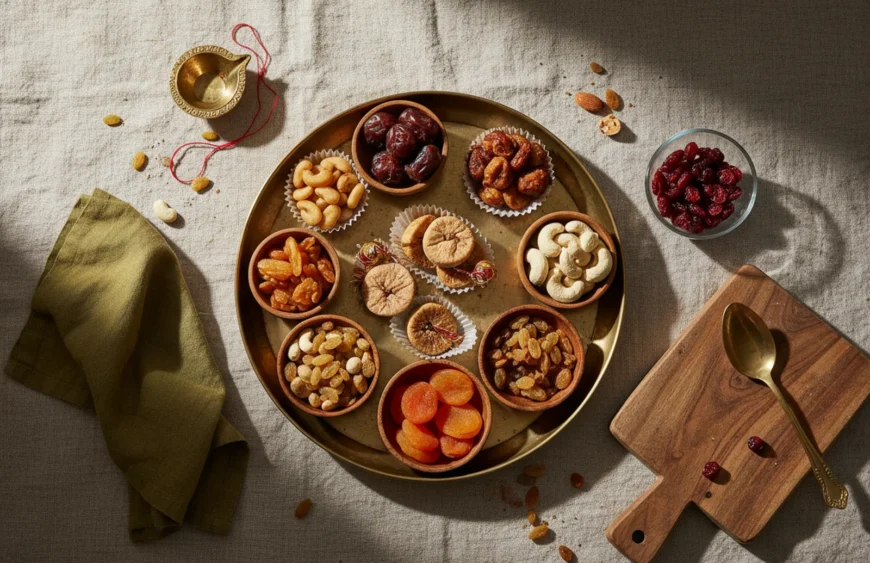
How to pack dry fruit gifts aesthetically – here is what actually matters when you choose. Three visual rules separate a premium hamper from a generic one, and they’re surprisingly easy to apply at home.
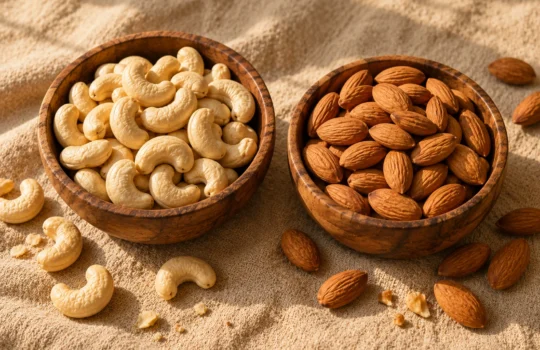
Rule 1: Texture contrast. Dry fruits are textural objects: the wrinkled surface of a Medjool, the matte shell of an Akbari pistachio, the warm brown of California almonds. Premium hampers exploit this by using smooth containers (glass jars, brass bowls, polished wood) so the texture of the contents reads as the visual hero. Avoid corrugated cardboard or printed plastic, which competes for attention.
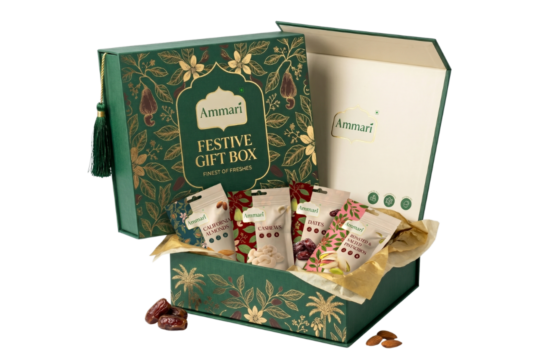
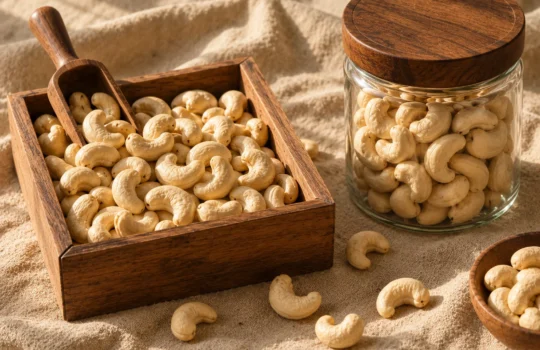
Rule 2: Open architecture. A flat-pack vacuum pouch shouts “supply chain.” A clear glass jar with a brass lid, or a wooden box with the contents on display, says “considered.” Even a simple kraft tube with a clear cellophane window beats a closed printed carton.
Rule 3: Restrained colour palette. The colours of the dry fruits themselves are already rich: warm brown, deep red, jade green, golden yellow. Limit packaging colours to two neutrals plus one accent: natural wood + jute + a single rust-coloured ribbon, for example. Avoid the multicolour festive-print packaging that dominates mass retail.
Step-by-step: packing one hamper
The basic process takes about 15 minutes once you have the materials.
- Pick the container. For a single-recipient hamper, choose either a square wooden box (8x8x4 inches works for 4 varieties), a brass canister with a wide mouth, a round wooden trunk with a hinged lid, or a glass jar set tied together. Avoid anything taller than 6 inches; proportions matter.
- Line the base. Add a 1-inch layer of kraft paper shred (lightly crumpled, not packed). Avoid plastic foam or shiny tissue, which both photograph badly and read cheap. Jute fibre and natural raffia work equally well.
- Portion the varieties. Pre-portion each variety into either glass jars (for visible-contents hampers), small jute drawstring pouches (rustic look), kraft pillow pouches with clear cellophane windows (modern look), or brass bowls (premium look). Aim for 150 to 250g per variety in a 4-variety hamper.
- Arrange by colour. Place the darkest variety (walnuts, Ajwa dates) at the back-left, lightest (almonds, raisins) at the front-right. The eye reads the assortment as intentional rather than random.
- Add a complementary item. One small jar of honey, a single brass spoon, a cloth-wrapped square of dark chocolate, or a small tin of saffron-infused tea elevates the hamper from “nuts in a box” to “considered gift.”
- Top with kraft layer. A second light kraft shred layer over the top of the items, gathered slightly, hides any gaps and creates a sense of abundance.
- Close and tie. A single hand-tied natural-fibre ribbon (cotton, jute, or silk) crossed at the lid centre. Avoid bows; a flat knot with two trailing ends photographs better. Add the handwritten note tucked under the ribbon.
Packaging materials: what works, what doesn’t
| Material | Aesthetic | Cost (per hamper) | Reusability | Best for | |-|-|-|-|-| | FSC-certified wood box | Premium, timeless | ₹250–600 | High (gets reused) | Diwali, weddings, corporate | | Brass canister | Heritage, luxury | ₹400–1,200 | Very high | Eid, anniversaries | | Glass jar set + tray | Modern, open | ₹200–500 | Very high | Birthdays, housewarming | | Jute drawstring pouch | Rustic, casual | ₹50–120 | Medium | Same-day, lower-tier | | Kraft tube with window | Modern, minimal | ₹40–100 | Low (recyclable) | Daily, corporate volume | | Velvet-lined box | Formal, romantic | ₹500–1,500 | Low (display only) | Engagements, milestones | | Plastic blister tray | Cheap, dated | ₹15–40 | None | Avoid for premium | | Printed cartoon carton | Novelty, kitsch | ₹30–80 | None | Avoid; ages poorly | When evaluating how to pack dry fruit gifts aesthetically, the key is verification not branding.
Pairing dry fruits with complementary items
The single move that separates a hamper from a tin of nuts is pairing. Two or three thoughtfully-chosen complementary items lift the perceived value without doubling the cost.
Tea or coffee pairings. A small tin of saffron-infused chai, masala tea, or a single-origin filter coffee pack reads particularly well with dates and almonds. The flavour pairing is real (date + chai is a classic), so it’s not just visual.
Brass or wooden serving objects. A small brass spoon, a wooden honey dipper, or a hammered brass bowl that the recipient can keep. These objects survive the hamper itself and become household memory of the gift.
Honey or jaggery. A 100g jar of single-origin honey (sundarban, neem, or wildflower) pairs beautifully with walnuts and dates. Honey-glazed Medjool dates with a brass spoon is a complete dessert.
Cloth-wrapped chocolate. A single 100g bar of dark chocolate (70%+) wrapped in handmade paper or natural cloth bridges the dry fruit hamper into modern gifting territory without feeling out of place.
Cardamom pods, saffron, or rose petals. A tiny glass vial of saffron or a small muslin pouch of cardamom reads as luxury without taking much space. These also align with how dates and almonds get used in Indian kitchens.
For occasion-specific pairing logic (Diwali sweet vs. Raksha Bandhan rakhi), see our Diwali dry fruit gift ideas 2026 and Raksha Bandhan hamper guide.
Sourcing transparency
- Almonds (California): Central Valley, USA; Aug to Oct harvest.
- Almonds (Mamra): Aleppo Province, Iran; small-batch stony-soil cultivation.
- Pistachios: Kerman Province, Iran; Akbari and Kerman varieties.
- Dates (Medjool): Jordan Valley.
- Walnuts: Sopore belt, Kashmir; paper-shell Akhrot.
Hampers are assembled and vacuum-sealed at our Jaipur packing facility within 24 hours of dispatch. For the broader gifting framework, see our complete dry fruit gifting guide.
References & further reading
For independent reference points, the FSSAI Food Safety & Standards Authority of India is the standardised dataset we cross-check composition against. Clinical work like the NIN-Hyderabad Dietary Guidelines for Indians helps separate marketing claims from evidence.
Frequently Asked Questions
What is the best container for a DIY dry fruit hamper?
The best DIY container is a square FSC-certified wooden box (8x8x4 inches) or a brass canister with a wide mouth, depending on budget. Both photograph well, accommodate four varieties in 150–250g portions, and give the recipient an object they will reuse. Avoid plastic blister trays, novelty-print cartons, and anything taller than 6 inches. Glass jar sets also work for a modern open-architecture look.
How do I keep dry fruits fresh inside the gift hamper?
Use vacuum-sealed pouches inside the visible container, or transfer each variety into airtight glass jars with rubber-gasket lids. Dry fruits stay fresh 6–9 months at room temperature when sealed away from humidity and direct sunlight. Pack the hamper no more than 2 to 3 days before gifting, and avoid leaving pre-portioned open bowls in the open during monsoon (June–September).
What complementary items pair best with dry fruits in a gift hamper?
Best pairings: a small jar of single-origin honey, a tin of masala or saffron-infused chai, a brass spoon or wooden honey dipper, a 100g dark chocolate bar wrapped in handmade paper, and a tiny vial of saffron strands or green cardamom pods. These either pair flavourfully with the dry fruits (chai with dates, honey with walnuts) or add visual luxury without taking much space.
How much packaging budget should I allow per DIY hamper?
For a premium look, allow ₹400 to 900 per hamper for the container, lining, and ribbon. Breakdown: ₹250–600 wood or brass container, ₹50–100 kraft shred or jute fibre, ₹30–80 natural-fibre ribbon, ₹50–150 handwritten note card and complementary item placeholder. Total packaging at this tier reaches roughly 30% of the hamper’s total perceived value.
Should I pre-mix the dry fruit varieties or keep them separate?
Keep them separate. Pre-mixed dry fruit hampers read as commodity and lose the visual texture contrast that makes the gift look premium. Use individual glass jars, jute drawstring pouches, kraft windowed pouches, or small brass bowls, one per variety. Arrange by colour (darkest at back-left, lightest at front-right) so the assortment reads intentional, not random.
What ribbon and finishing touch should I use?
A single natural-fibre ribbon (cotton, jute, or silk) crossed at the lid centre in a flat knot with two trailing ends. Avoid bows, multi-coloured ribbons, and synthetic satin, which photograph plastic. Tuck a handwritten note card (kraft or cream stock) under the ribbon. Skip wax seals, glitter, and printed labels; they age the hamper into novelty territory.
Can I reuse the same hamper container year after year?
Yes, and this is increasingly common among regular gift recipients in the same family. Brass canisters, wooden boxes, and glass jar sets are designed to outlive the contents. Build a family ritual around this: the same brass canister returns to the giver each year, refilled with that season’s nut and date mix. The container itself becomes shared memory.