TL;DR
- Cashews spoil faster than almonds or pistachios because they carry more unsaturated fat, so storage matters more here.
- Room temperature is fine for about 1 month in an airtight container; the fridge stretches that to 4-6 months, the freezer to about a year.
- Humid coastal cities need refrigeration sooner than dry inland cities, especially once the pack is opened.
- A sharp, soapy or paint-like smell is the clearest sign a batch has gone rancid — stop eating it if you notice this.
- Whole W240-grade cashews hold freshness longer than broken pieces or cashew powder.
How to store cashews properly is the difference between a pack that tastes fresh for months and one that goes stale within weeks. Cashews spoil faster than most other dry fruits sold in India — they carry a higher share of unsaturated fat than almonds or pistachios, which makes them soft and buttery to eat but also more prone to turning rancid once exposed to heat, light or moisture.
This guide covers practical storage windows for whole cashews, what changes in humid versus dry climates, and how to catch the early signs of spoilage before a whole batch is wasted.
Cashew shelf life by storage method
| Storage method | Shelf life (unopened) | Shelf life (opened, airtight) | Best for |
|---|---|---|---|
| Room temperature (cool, dry, airtight) | 2-3 months | 3-4 weeks | Daily snacking, quick turnover |
| Refrigerator (airtight container) | 6-8 months | 4-6 months | Households in humid cities, bulk packs |
| Freezer (airtight, moisture-proof) | 10-12 months | 8-10 months | Long-term storage, festive stock-up |
These windows assume whole, raw or lightly roasted cashews kept away from direct sunlight and heat sources like stovetops or sunny kitchen counters. For a full picture of what makes cashews worth storing well in the first place, see Cashew Health Benefits.
Why cashews go bad faster than almonds or pistachios
Cashews contain a higher proportion of monounsaturated and polyunsaturated fat relative to their size, and their kernels are softer and more porous than almonds. That combination means oxygen and moisture reach the oil inside much faster. Once that oil oxidises, the cashew develops a sharp, slightly soapy smell and a flat, bitter aftertaste that no amount of roasting will fix.
Humidity speeds this up considerably. In coastal cities like Mumbai, Chennai or Kochi, an opened pack of cashews left on the counter can start softening and losing crunch within two to three weeks. In drier inland cities like Jaipur or Delhi, the same pack can last closer to a month before quality starts to slip. Either way, once opened, cashews behave more like a perishable pantry item than a shelf-stable one.
How to store cashews step by step
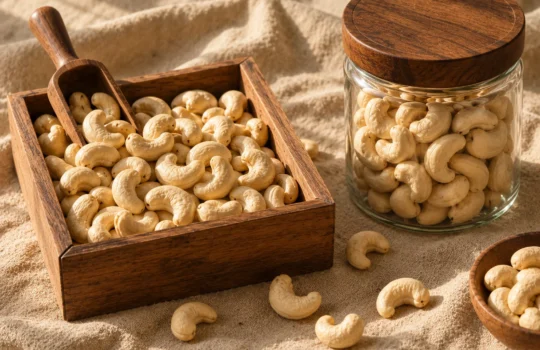
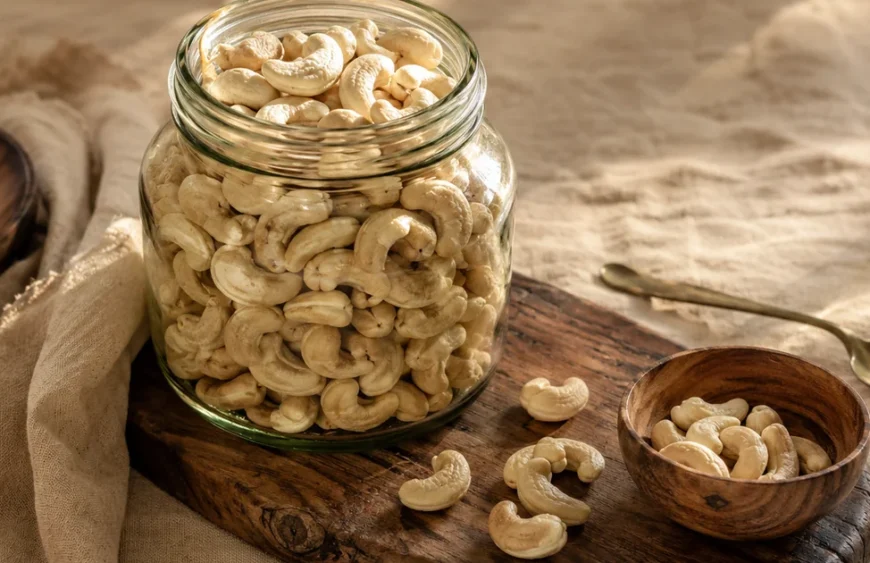
- Use airtight glass or steel containers. Avoid thin plastic bags, which let in air and pick up moisture from the fridge.
- Keep them away from heat and sunlight. Store in a cool cabinet, not near the stove or a sunny window.
- Refrigerate once opened, especially in humid weather. This single step adds months to usable shelf life.
- Freeze for anything you won’t finish in a month. Cashews thaw quickly and taste almost identical to fresh once brought back to room temperature.
- Never store roasted and raw cashews in the same container. Roasted cashews carry surface oils that speed up spoilage in the whole batch.
How to tell if cashews have gone bad
Trust your nose before your eyes. Fresh cashews smell mild, faintly sweet and creamy. Rancid cashews smell sharp, soapy or like old paint — that smell means the oils have oxidised and the batch should be discarded, even if the kernels still look fine. Visually, watch for a slightly yellow or greasy sheen on the surface, softness that feels wrong (mushy rather than firm), or any sign of mould, which shows up as dark spots in humid storage.
Taste is the last check, not the first. If a cashew smells fine but tastes bitter, flat or slightly soapy on the finish, stop eating from that batch and move the rest to the fridge or freezer immediately.
Does cashew grade affect shelf life?
Whole cashews graded W240 (240 kernels per pound) hold their freshness noticeably longer than smaller grades, broken pieces or cashew splits, because a smaller surface-area-to-volume ratio means less exposed surface for oxygen to act on. If you buy whole W240-grade cashews, they will comfortably outlast a bag of broken pieces or cashew powder bought at the same time. Our Premium Whole Cashews (W240) are sold whole for exactly this reason — better texture and a longer usable window at home.
For context on how cashews stack up against other everyday dry fruits, read Cashew vs Almond Comparison and Pistachios vs Cashews Nutrition.
What Ammari recommends
Buy only as much as you will use within a month if you plan to keep cashews at room temperature. For anything more, move opened packs to the fridge, and freeze anything you’re stocking up for festivals or gifting season. Whole W240-grade cashews are worth the small premium over broken pieces precisely because they last longer and taste better through to the last handful. Start with our Premium Whole Cashews (W240) and store them the way this guide describes for the best results.
Frequently Asked Questions
How long do cashews last at room temperature?
An unopened pack typically holds for 2-3 months in a cool, dry spot. Once opened, plan to use it within 3-4 weeks, especially in humid cities, or move it to the fridge to extend that window.
Should I always refrigerate cashews?
It isn’t mandatory, but it helps a lot. Refrigeration slows down the fat oxidation that causes rancidity, which matters more for cashews than for drier nuts like almonds. If you live in a humid coastal city or buy in bulk, refrigeration is the safer default.
Can I freeze cashews?
Yes. Cashews freeze well in an airtight, moisture-proof container for up to a year. They thaw quickly at room temperature and taste close to fresh, making the freezer the best option for festive stock-up or bulk buying.
How do I know if my cashews have gone rancid?
Smell is the clearest signal. Fresh cashews smell mild and creamy; rancid ones smell sharp, soapy or like old paint. If you notice that smell, discard the batch rather than risk the taste or eat around it.
Do whole cashews last longer than broken pieces?
Yes. Whole kernels, like W240-grade cashews, have less exposed surface area than broken pieces or splits, so they oxidise more slowly and hold their flavour longer in storage.
For the live product page, see Premium Whole Cashews (W240). Free delivery on orders over ₹999 where natural.
Frequently Asked Questions
How long do cashews last at room temperature?
An unopened pack typically holds for 2-3 months in a cool, dry spot. Once opened, plan to use it within 3-4 weeks, especially in humid cities, or move it to the fridge to extend that window.
Should I always refrigerate cashews?
It isn’t mandatory, but it helps a lot. Refrigeration slows down the fat oxidation that causes rancidity, which matters more for cashews than for drier nuts like almonds. If you live in a humid coastal city or buy in bulk, refrigeration is the safer default.
Can I freeze cashews?
Yes. Cashews freeze well in an airtight, moisture-proof container for up to a year. They thaw quickly at room temperature and taste close to fresh, making the freezer the best option for festive stock-up or bulk buying.
How do I know if my cashews have gone rancid?
Smell is the clearest signal. Fresh cashews smell mild and creamy; rancid ones smell sharp, soapy or like old paint. If you notice that smell, discard the batch rather than risk the taste or eat around it.
Do whole cashews last longer than broken pieces?
Yes. Whole kernels, like W240-grade cashews, have less exposed surface area than broken pieces or splits, so they oxidise more slowly and hold their flavour longer in storage.