TL;DR
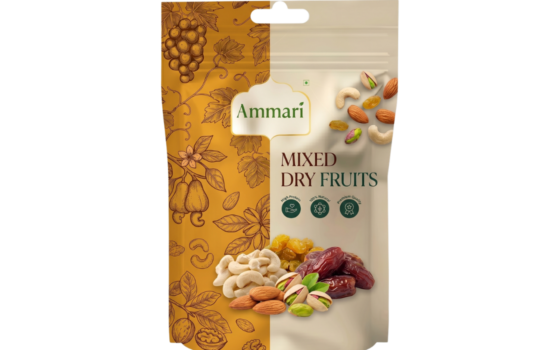
The best dry fruits for weight loss are the ones that crowd out high-glycaemic snacks while staying inside a 30 g daily portion. Pistachios eaten in-shell led the Honselman study by cutting calorie intake 41% versus shelled kernels at the same satisfaction. Almonds carry the second strongest evidence base; the USDA Beltsville group found their metabolisable energy is roughly 20% lower than the label because some fat passes through undigested. Walnuts, chia, and flax add omega-3 ALA and fibre; raisins and dates are the controlled-sweet swap, not a free snack. The honest truth: a 100 g pack of almonds is still 579 kcal, and dry fruits added on top of an existing diet drive weight gain. Ammari Foods packs Iranian pistachios, California and Mamra almonds, and Kashmiri walnuts in single-origin batches from our Jaipur kitchen. For the pistachio detail, see our pistachios for weight loss review.
Can dry fruits actually help with weight loss?
Yes, but only as a swap. No, when they are added on top.
Dry fruits do not “burn fat” or “melt belly fat”, and any article promising that has skipped the calorie arithmetic. What they do well is replace a worse snack. Compared with biscuits, namkeen, or chips at the same calorie load, a handful of nuts delivers more protein, more fibre, a slower eating rate, and a far lower glycaemic spike. The published trials on pistachios, almonds, and walnuts all use the same setup: substitute the nut for a refined snack, hold total calories steady, then measure weight and waist over 8 to 12 weeks. The nut groups consistently lose more.
The trap is the calorie-density paradox. A 100 g pack of almonds is 579 kcal. Four casual handfuls across a day stack up faster than a chapati. This guide ranks dry fruits by satiety per calorie and portion honesty, not by “lowest calorie first”, because nothing in the dry-fruit aisle is genuinely low calorie. The list assumes plain, unsalted, uncoated product. For personal calorie targets and any medical condition, confirm with a registered dietitian.
The 10 best dry fruits for weight loss, ranked
The ranking below uses three filters in order: satiety evidence per calorie, ease of portion control, and the strength of published weight-management studies.
1. Pistachios (the strongest satiety evidence, in-shell).
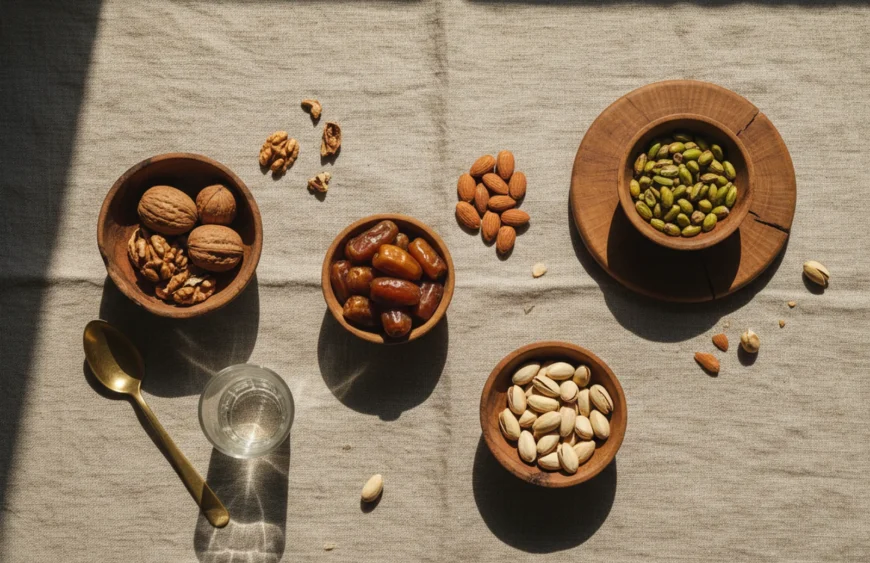
Pistachios lead because they come with a built-in portion brake. In the Honselman in-shell trial, participants given pistachios with the shells on ate 41% fewer calories than those given shelled kernels, while reporting equal fullness. Cracking each shell slows the eating rate and the pile of empty shells is a visible cue. A 30 g serving (about 49 kernels) carries 159 kcal, 6 g protein, and 3 g fibre. Eat in-shell when possible and pre-portion when not. For the deeper mechanism review, read our pistachios for weight loss guide.
2. Almonds (the calorie-absorption surprise).
Almonds rank second because of a quirk most labels do not capture. USDA Beltsville research by Novotny and colleagues measured the true digestible energy of whole almonds and found it runs about 20% below the label value, because some of the fat stays locked inside the cell-wall matrix and exits undigested. A 30 g handful of about 23 almonds gives roughly 164 kcal on the label but closer to 130 kcal absorbed. The fibre (4 g) and protein (6 g) keep satiety high. Cap intake at 25 to 30 kernels and read how many almonds per day for the full math.
3. Walnuts (omega-3 ALA, the appetite signal).
Walnuts carry 2.5 g of plant omega-3 ALA per 30 g serving, the highest of any common nut. A 2018 functional-MRI study by Farr and colleagues at Beth Israel Deaconess found walnut consumption activated the brain’s right insula, an area linked to appetite control, with participants reporting reduced hunger after five days. Walnuts are 185 kcal per 30 g (about 14 halves), the highest in the top three, so the portion must be respected. Pair them with curd or fruit at breakfast.
4. Chia seeds (gel-forming fibre, the volume trick).
Two tablespoons of chia (about 28 g) deliver 10 g of fibre and 138 kcal. Soaked in water or milk, chia absorbs roughly 10 times its weight in liquid and forms a gel that slows gastric emptying. The fullness effect is the strongest in the seed category. Use as overnight chia pudding with curd, or stir into water with lemon as a pre-meal drink. Skip pre-sweetened “chia drink” mixes; the added sugar reverses the benefit.
5. Flaxseeds (lignans plus soluble fibre).
Ground flax adds 8 g of fibre and 4 g of plant omega-3 ALA per 28 g serving. The soluble fibre slows glucose absorption and the lignans support hormonal balance, particularly relevant for women in their 40s and 50s. Grind fresh or buy pre-ground in small packs; whole flax passes through largely undigested. One tablespoon stirred into yogurt or roti dough is the cleanest delivery.
6. Pumpkin and sunflower seeds (magnesium and zinc).
A 30 g mix of pumpkin and sunflower seeds carries roughly 170 kcal, 7 g protein, and 2 g fibre. The mineral profile (magnesium, zinc, selenium) supports insulin sensitivity and slow energy. Useful as a salad or curd topping rather than handful snacking, which drifts upward quickly.
7. Pine nuts (chilgoza, the appetite-hormone outlier).
Pine nuts contain pinolenic acid, a fatty acid shown in a small trial to raise the satiety hormones CCK and GLP-1 within 30 minutes of consumption. The portion is small (a 20 g serving is 135 kcal) and the price is high, so this is a strategic addition, not a daily staple. Sprinkle on a salad or stir into pesto.
8. Apricots, dried (low-energy-density sweet).
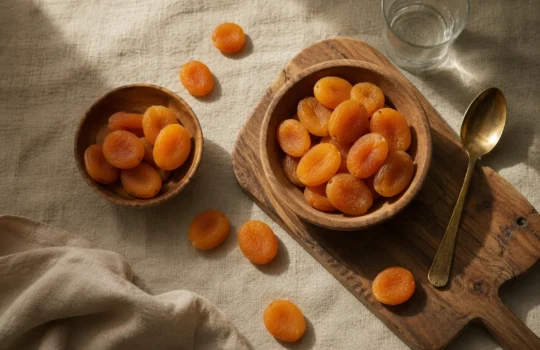
Dried apricots are one of the few dried fruits with a useful calorie-to-volume ratio: a 30 g portion (about 6 halves) is 72 kcal with 2 g of fibre and 1 g of protein. They are sweet enough to replace a dessert craving without the sugar load of dates. Pick unsulphured varieties when possible and pair with two almonds for a controlled snack.
9. Dates (the natural-sweet swap, two pieces).
Dates rank ninth because they only work as a replacement. Two medium dates carry roughly 130 kcal and 28 g of natural sugar, which is a real load. Used as a one-for-one swap for a sweet biscuit, mithai bite, or post-dinner ice-cream urge, dates lower the total sugar exposure and add 3 g of fibre. Used on top of dessert, they are a problem. Cap at two pieces and pair with a nut. See how many dates per day for the full portion math.
10. Raisins, measured (a tablespoon, not a fistful).
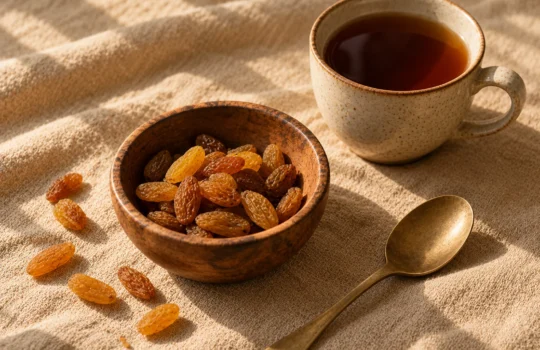
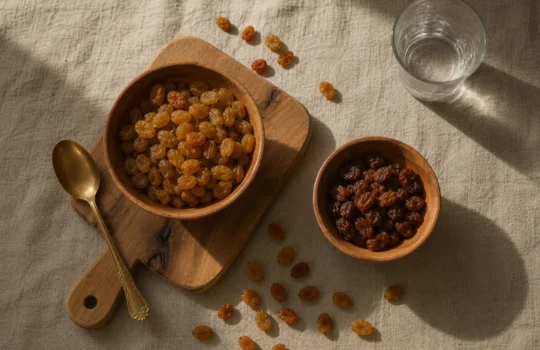
Raisins close the list with the strictest rule on the page. A 15 g serving (about one tablespoon) carries 45 kcal and 11 g of sugar, useful in porridge or curd as a measured sweetener. Above that, the calorie math collapses fast: a 100 g pack is 299 kcal and 60 g of sugar, the same sugar load as 200 ml of cola. If you cannot stop at a tablespoon, swap raisins for dried apricots or pistachios in-shell.
Daily portion table
The honest portion ceiling for weight loss, by piece count and gram weight.
| Dry fruit | Daily portion | Pieces (approx) | Calories | |—|—|—|—| | Pistachios (in-shell) | 30 g kernels | 49 kernels | 159 kcal | | Almonds | 25 to 30 g | 22 to 25 kernels | 164 kcal | | Walnuts | 30 g | 14 halves | 185 kcal | | Chia seeds | 28 g (2 tbsp) | n/a | 138 kcal | | Flaxseeds | 14 g (1 tbsp) | n/a | 75 kcal | | Pumpkin + sunflower mix | 30 g | n/a | 170 kcal | | Pine nuts | 20 g | n/a | 135 kcal | | Dried apricots | 30 g | 6 halves | 72 kcal | | Dates | 14 to 16 g | 2 medium | 130 kcal | | Raisins | 15 g (1 tbsp) | n/a | 45 kcal |
Pick two or three from this table per day, not the whole list. A reasonable template is 30 g pistachios mid-morning, 30 g almonds at 4 pm, and one tablespoon of flax stirred into dinner curd. That is 399 kcal of snacking, replacing biscuits or chips, and the rest of the day’s calories belong to actual meals.
What NOT to do with dry fruits on a weight-loss plan
Three patterns wreck the plan, every time.
Treating dry fruits as additions, not replacements. This is the single biggest mistake. Adding a handful of almonds to a day that already includes biscuits, namkeen, and a sweet adds 164 kcal on top, and the body does not know to subtract elsewhere. The trial evidence assumes the nut replaces a refined snack at roughly equal calories. Without that swap, dry fruits drive weight gain, not loss.
Eating from an open pouch. Without a portion cue, hand-to-mouth grazing reaches 80 to 100 g of nuts in an afternoon, roughly 500 kcal before lunch is digested. The fix is pre-portioning into 30 g bowls in the morning, or buying in-shell pistachios so the shells force a pace. A kitchen scale that costs ₹400 pays for itself in a week.
Buying salted, honey-coated, or chocolate-dipped versions. Coatings add 40 to 70 kcal per 30 g and shift the macro balance toward refined sugar or sodium. The trial evidence is on plain kernels, not flavoured ones. Treat masala pistachios, honey-roasted cashews, and chocolate-coated almonds as confectionery, not as a daily snack. Plain raw or lightly dry-roasted unsalted is the cleaner choice across the category.
A fourth, smaller mistake: replacing meals with dry fruits. A 100 g lunch of mixed nuts at 570 kcal is calorie-equivalent to a real meal but lacks the volume and water content that signal fullness for the next four hours. Dry fruits are a snack format, not a meal format.
How dry fruits compare to other “diet snacks”
Per 100 g, dry fruits sit between fresh fruit and biscuits on a calorie basis but lead both on satiety per calorie. A 100 g pack of digestive biscuits is roughly 480 kcal with 3 g of fibre. A 100 g portion of almonds is 579 kcal with 12 g of fibre and 21 g of protein. The biscuit is lower in raw calories but flat on protein and fibre; the almonds carry the satiety load that keeps the next meal honest.
The category that genuinely beats dry fruits on calorie-per-volume is fresh fruit and vegetables: 100 g of cucumber is 16 kcal, 100 g of apple is 52 kcal. For pure volume eating, those win. Dry fruits’ role is to replace the energy-dense problem snacks (biscuits, chips, mithai) at a one-for-one swap, where the satiety advantage is real and measurable.
For a diabetic-specific take on the same category, see our best dry fruits for diabetics ranking.
Sourcing transparency
- Ingredients: Pistachios, almonds, walnuts, dates, apricots, seeds
- Origin (pistachios): Kerman Province, Iran
- Origin (almonds): California Central Valley, plus Mamra from Iran and Afghanistan
- Origin (walnuts): Kashmir Valley, India
- Pack: Single-origin batches, vacuum-packed within 24 hours of dispatch, no salt, sugar, or oil coating
Ammari Foods runs out of Jaipur as an online-only D2C operation. Every pack is hand-graded before vacuum sealing. Free delivery on orders over ₹999.
Frequently Asked Questions
Which dry fruit is best for weight loss?
Pistachios eaten in-shell carry the strongest evidence base for weight management, because the shell slows the eating rate and lowers total intake by roughly 41% versus shelled kernels at the same satisfaction[2]. Almonds run a close second on satiety per calorie and benefit from a 20% lower true energy absorption versus the label[1]. The honest answer is that the “best” dry fruit is the one you can portion-control. Read our how many pistachios per day guide for the portion math.
How much dry fruit should I eat per day to lose weight?
Roughly 30 to 60 g of dry fruits in total, split across one or two snacks, is the working ceiling for most adults on a weight-loss plan. That is one handful of pistachios in-shell plus a tablespoon of flax, or 25 almonds plus six dried apricot halves. Above 60 g daily, the calorie load (around 350 to 400 kcal) starts to crowd out real meals. Cap at 30 g if you are also eating other calorie-dense snacks, or read our how many almonds per day breakdown for the per-nut detail.
Can I eat dates and raisins while trying to lose weight?
Yes, in measured portions used as swaps for sweets, not as additions. Two medium dates (around 130 kcal) can replace a mithai piece or a post-dinner ice-cream urge and lower total sugar exposure. One tablespoon of raisins (45 kcal) stirred into curd or oats works as a controlled sweetener. The trouble starts at four dates or a fistful of raisins, where the sugar load matches a soft drink. Pair with a nut to flatten the glucose curve.
Are roasted and salted dry fruits okay for weight loss?
Plain dry-roasted unsalted nuts are nutritionally close to raw and fine on a weight-loss plan. Lightly salted is acceptable in moderation. The problem is heavily salted, masala-coated, honey-roasted, or chocolate-dipped versions: coatings add 40 to 70 kcal per 30 g and raise palatability, making the second handful far more likely. The trial evidence on weight loss is on plain kernels[2], not flavoured ones. Read the ingredient list; the only acceptable additions are mild salt and a clean oil if dry-roasting.