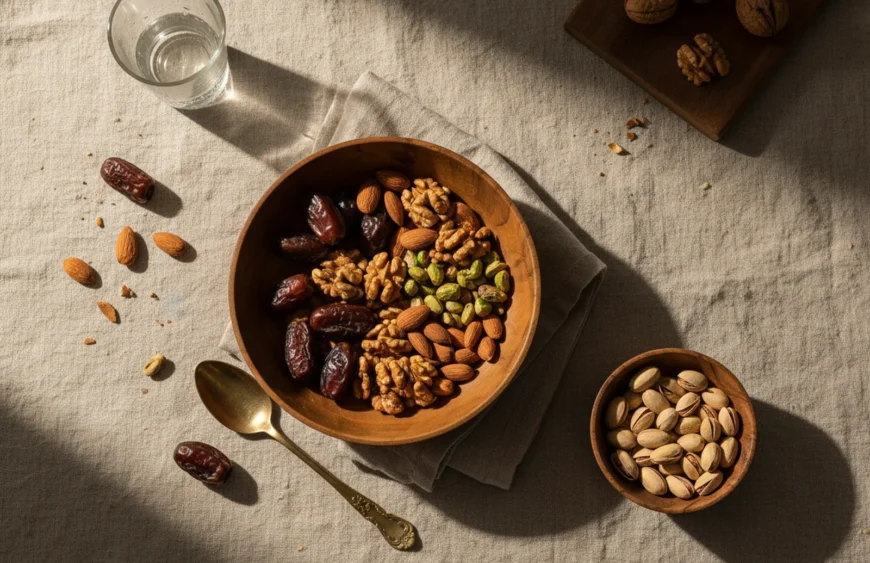
Best Dry Fruits For Immunity: At a glance
Last updated: 19 May 2026
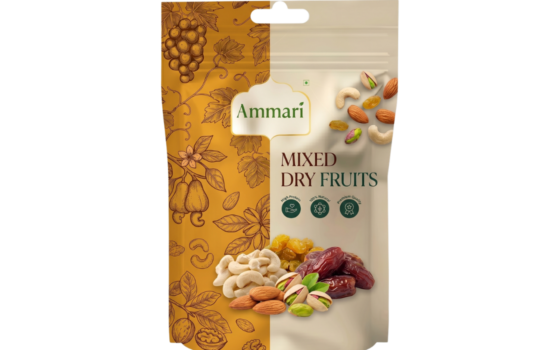
Dry fruits support immunity by supplying zinc, selenium, vitamin E, vitamin A and plant omega-3. These are the same micronutrients the WHO lists as critical for normal immune-cell function. They do not cure colds or “boost” immunity like a switch. The strongest daily mix for an Indian household is roughly 30 g of mixed nuts plus 2 to 4 pieces of softer dried fruit: 5 to 6 almonds for vitamin E, 4 walnut halves for plant omega-3 ALA, 8 to 10 cashews for zinc, 1 to 2 Brazil nuts for selenium, and 2 dates or 2 figs for polyphenols and fibre. ICMR-NIN’s 2020 dietary guidelines back this nut quantity as part of a balanced Indian plate. Ammari Foods packs single-origin California and Mamra almonds, Iranian pistachios and Kashmiri walnuts from our Jaipur facility. This article is general nutrition information, not a treatment plan. Confirm with your doctor if you are immunocompromised, pregnant or on chemotherapy.
Do dry fruits really “boost” immunity? An honest answer
The phrase “immunity-boosting food” is marketing, not medicine. The immune system is not a single dial that one food turns up. It is a network of cells, tissues and signals that needs a steady supply of specific micronutrients to function. When any of zinc, selenium, vitamin E, vitamin A, vitamin C, vitamin D or iron run low, immune-cell production and signalling measurably slow. When intake returns to adequate, function normalises. Dry fruits matter because they are dense, shelf-stable carriers of exactly those micronutrients.
What dry fruits do not do: cure a viral infection, replace a vaccine, shorten a cold below the level of a placebo, or compensate for poor sleep, smoking or chronic stress. A Cochrane review found high-dose zinc supplementation reduced the duration of common cold symptoms modestly, but the effect from food alone is smaller and slower. Treat the daily dry-fruit handful as background nutrition that keeps your immune cells well stocked, not as a remedy you reach for when you already feel ill.
Best dry fruits for immunity – here is what actually matters when you choose. This article is general guidance for healthy adults. Anyone immunocompromised, on chemotherapy, post-transplant, pregnant or managing autoimmune disease should clear daily portions with their treating doctor first.
The 5 micronutrients that actually drive immune function
These five nutrients carry the strongest published evidence for immune-cell support. The ranking that follows is built around delivering all five from a daily 30 g mixed handful.
- Zinc. Required for the development of T-cells and natural killer cells. WHO and NIH ODS rank zinc deficiency as the most common single-nutrient cause of weakened immunity worldwide. Cashews, pumpkin seeds and almonds are the densest dry-fruit sources.
- Selenium. Builds glutathione peroxidase, the enzyme that protects immune cells from oxidative damage during infection. Brazil nuts are the single densest food source on earth, and two nuts cover an adult day.
- Vitamin E. A fat-soluble antioxidant concentrated in the membranes of immune cells. Almonds and hazelnuts are the standout sources. A 30 g handful of almonds delivers around 7.7 mg, roughly 50 percent of the daily target.
- Vitamin A (as beta-carotene). Maintains the mucosal lining of the respiratory tract, your first physical barrier against airborne infection. Dried apricots are the leading dry-fruit source.
- Plant omega-3 ALA. Walnuts are the only common nut with meaningful ALA, which the body partially converts to EPA and DHA. These fats moderate inflammation and resolve immune response after infection.
The 10 best dry fruits for immunity, ranked
Ranking criteria, in order: density of immune-relevant micronutrients per 30 g serving, breadth of evidence in peer-reviewed nutrition studies, and practical fit inside an Indian daily plate.
1. Brazil nuts (the selenium powerhouse).
Two Brazil nuts deliver roughly 140 micrograms of selenium, almost twice the adult daily target. Selenium feeds glutathione peroxidase, the enzyme system that defends T-cells and macrophages during an active infection. Stay strictly at 1 to 2 nuts per day. Selenium toxicity is real above 400 mcg daily and presents as hair loss, nail brittleness and a metallic taste. This is the one dry fruit where more is genuinely worse.
2. Almonds (vitamin E, daily default).
A 30 g handful of almonds (about 23 kernels) delivers 7.7 mg of vitamin E, 4 g of fibre, 76 mg of magnesium and roughly 0.9 mg of zinc. Vitamin E concentrates in immune-cell membranes and protects them from oxidative stress during the inflammatory phase of infection. Soak overnight to improve mineral absorption; the immune profile is identical. Daily portion guidance is in our how many almonds per day guide and the Mamra almonds benefits breakdown for the premium-grade variety. Order our premium California almonds.
3. Walnuts (plant omega-3 ALA).
Walnuts are the only common nut with meaningful alpha-linolenic acid. A 30 g serving (about 14 halves) delivers 2.5 g of ALA, which the body partially converts to the longer-chain omega-3 fats that resolve inflammation after the immune response has done its work. The same ALA load supports cognition. See our pistachios health benefits sibling for the wider antioxidant comparison. Order our Kashmiri walnuts.
4. Cashews (kaju, the zinc workhorse).
Cashews deliver roughly 1.6 mg of zinc per 30 g serving, the densest among everyday Indian nuts. Zinc is non-negotiable for T-cell maturation, and Indian diets often run short. Eight to ten kaju daily, unsalted and not honey-roasted, slot easily into a morning mix. Skip masala variants because the sodium load offsets the mineral gain.
5. Pistachios (lutein, vitamin B6, antioxidant breadth).
Pistachios are the only commonly available nut that supplies meaningful lutein and zeaxanthin, the antioxidant carotenoids better known for eye health. Vitamin B6 (around 0.5 mg per 30 g) supports antibody production. A 25 to 30 g portion daily (roughly 49 kernels in-shell) fits comfortably alongside almonds and walnuts. See how many pistachios per day for the full math.
6. Hazelnuts (vitamin E, second only to almonds).
A 30 g serving of hazelnuts delivers around 4.5 mg of vitamin E, just behind almonds. They are less common in Indian kitchens but worth adding for variety. The fat profile is mostly monounsaturated, which helps the body absorb fat-soluble vitamins from the rest of the plate.
7. Pumpkin seeds (zinc plus magnesium pair).
A 30 g portion of pumpkin seeds carries roughly 2 mg of zinc and 150 mg of magnesium. Magnesium does not directly drive immunity but supports the sleep quality that does. Sprinkle on yoghurt or salad; eat the seeds whole rather than crushed for best texture.
8. Dried figs (anjeer, prebiotic fibre).
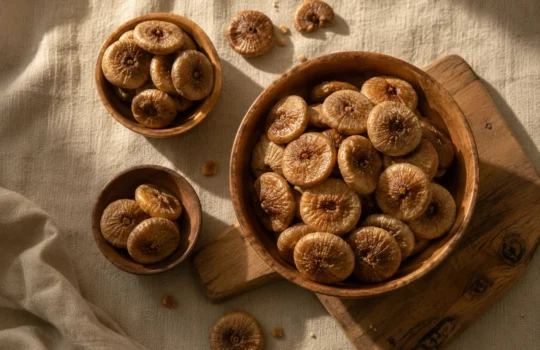
A growing branch of immunology links gut microbiome diversity to immune competence. Anjeer provides roughly 9.8 g of soluble and insoluble fibre per 100 g, which feeds the short-chain-fatty-acid-producing bacteria that prime immune signalling. Two soaked figs daily is the comfortable Indian portion.
9. Dates (polyphenols and steady energy).
Dates are not a vitamin powerhouse, but they contribute polyphenols and iron, the latter quietly important because iron deficiency anaemia is one of the most common reversible drags on immune function in Indian adults. Two medjool dates daily, paired with almonds, work well. Variety guidance is in our Medjool vs Ajwa dates comparison.
10. Dried apricots and raisins (vitamin A and boron).
Dried apricots supply beta-carotene that maintains the respiratory mucosal lining, your first physical line of defence against airborne infection. Four to five unsulphured apricots daily during winter is the traditional Indian pattern. Raisins close the list as a useful but minor contributor: roughly 30 raisins (15 g) give a small dose of boron and iron. Skip if you struggle to portion-control sweet dry fruits.
At-a-glance comparison: who delivers what
| Dry fruit (30 g) | Lead micronutrient | Daily portion | Best paired with | |-|-|-|-| | Brazil nuts | Selenium (~140 mcg) | 1 to 2 nuts only | Yoghurt | | Almonds | Vitamin E (7.7 mg) | 5 to 6 kernels | Warm milk | | Walnuts | Omega-3 ALA (2.5 g) | 4 halves | Honey, oats | | Cashews | Zinc (1.6 mg) | 8 to 10 kernels | Plain rice meal | | Pistachios | Vitamin B6 + lutein | 15 to 20 kernels | Mid-morning snack | | Hazelnuts | Vitamin E (4.5 mg) | 8 to 10 kernels | Dark chocolate | | Pumpkin seeds | Zinc + magnesium | 1 tablespoon | Salad, raita | | Dried figs | Prebiotic fibre (9.8 g/100 g) | 2 soaked figs | Milk | | Dates | Polyphenols, iron | 2 medjool | Almonds | | Dried apricots | Beta-carotene | 4 to 5 pieces | Walnuts |
Building a daily winter immunity stack
The Indian winter pattern that ties this list together is built around the morning soak and the bedtime warm-milk routine.
- Morning soaked bowl: 5 almonds, 4 walnut halves, 2 figs and 2 dates, all soaked overnight in water. Eat on a slightly full stomach with a cup of warm milk. Soaking reduces phytic acid and lifts iron and zinc absorption.
- Mid-morning snack: 1 to 2 Brazil nuts and 10 to 15 pistachios. Eat with a glass of water; this is the heaviest micronutrient hit of the day.
- Evening addition during peak winter (December to February): 1 tablespoon of pumpkin seeds and 4 dried apricots, sprinkled on yoghurt or eaten plain.
- Bedtime gond ke laddoo (optional): the traditional Indian winter preparation pairs gond, dry fruits and ghee. A single small laddoo gives slow-release energy and warmth without disrupting sleep.
A note on Ayurvedic chyawanprash: the classical formulation pairs amla with ghee, honey and a long list of herbs. Modern store-bought chyawanprash often adds dry-fruit pieces. A teaspoon with warm milk at bedtime is a long-standing Indian winter habit, but the evidence base sits in traditional medicine, not peer-reviewed immunology. Treat it as a comfort food with a vitamin-C punch from the amla, not as a substitute for the micronutrient stack above. If you take chyawanprash, count its added sugars in your daily total, especially if you are managing diabetes.
What to limit or avoid
A few category items either deliver no immune benefit or actively undercut the rest of the plate.
- Candied and chocolate-coated dry fruits. Glucose syrup and chocolate shells turn a nutrient-dense base into a confection. Reserve for festive use.
- Salted and masala packs. Excess sodium does nothing for immunity and stresses blood pressure. Choose unsalted, plain-roasted or raw.
- Sulphite-treated bright-orange apricots. Pick darker, unsulphured packs, especially if you or a household member has asthma.
- More than 2 Brazil nuts daily. Selenium toxicity is real above 400 mcg per day.
- Heavy late-night portions. A large bowl of nuts close to bedtime adds reflux load and disrupts the sleep that immunity depends on.
Sourcing transparency
- Almonds (California): Central Valley, USA
- Almonds (Mamra): small-batch supply from Iran and Afghanistan
- Walnuts: Kashmir Valley, India (thin-shell akhrot)
- Pistachios: Kerman Province, Iran
- Dates (Medjool): Jordan Valley
- Packed at: Jaipur facility, Rajasthan
- Note: Single-origin batches, no glucose syrup coating, vacuum-packed within 24 hours of dispatch
Ammari Foods is an online-only D2C brand based in Jaipur. We do not run physical stores. Every order ships directly from our facility, which keeps stock turnover fast and the vitamin E in almonds and ALA in walnuts well within their stability window. Free delivery on orders over ₹999.
References & further reading
For independent reference points, the NIN-Hyderabad Dietary Guidelines for Indians is the standardised dataset we cross-check composition against. Clinical work like the PubMed – almonds and cardiovascular risk review helps separate marketing claims from evidence.
Frequently Asked Questions
Which dry fruit is best for immunity?
There is no single best. Brazil nuts lead for selenium, almonds for vitamin E, cashews for zinc, walnuts for plant omega-3 and dried apricots for vitamin A. The immune system needs all five micronutrients in adequate supply, so a daily mixed handful outperforms any single nut. A working Indian default is 5 almonds, 4 walnut halves, 8 cashews, 2 Brazil nuts and 4 apricots. Vegetarians who already eat well-balanced meals can use this mix as background support, not as a remedy. For broader daily ranges, see our best dry fruits for diabetics sibling guide.
Can dry fruits prevent colds or the flu?
No food prevents viral infection. A Cochrane review found zinc supplementation reduced common-cold duration modestly, but dietary zinc alone has a smaller effect. Dry fruits support the immune system by keeping zinc, selenium, vitamin E, vitamin A and plant omega-3 within adequate ranges. They do not replace vaccines, sleep, hand hygiene or cold-and-flu medication when you are unwell. Use them as steady background nutrition during high-risk months (Indian winter and early monsoon), not as a treatment. Anyone with frequent infections should ask their doctor for a blood test rather than self-treating with food.
How much dry fruit per day for immunity?
For most healthy adults, roughly 30 g of mixed nuts and 2 to 4 pieces of softer dried fruit daily is the working range, in line with ICMR-NIN’s 2020 guidelines[2]. That is about 23 almonds or a mixed handful with 5 almonds, 4 walnut halves, 8 cashews, 2 Brazil nuts and 2 dried figs. Scale down to half during summer when appetite drops and water needs rise. Diabetics, pregnant women and anyone managing kidney disease should stay at the lower end and confirm portions with their doctor.
Is chyawanprash better than eating dry fruits directly?
They serve different roles. Chyawanprash is a traditional Ayurvedic preparation centred on amla, with herbs, ghee and honey; modern packs often add dry-fruit pieces. The amla supplies vitamin C, which supports immune function. The peer-reviewed evidence base is small compared with the data on the individual micronutrients in nuts. A teaspoon of chyawanprash with warm milk at bedtime is a long-standing winter comfort routine, not a substitute for daily dry fruit. If you are managing diabetes, count the added sugars chyawanprash contributes.