Best Dry Fruits For Kids: At a glance
Last updated: 19 May 2026
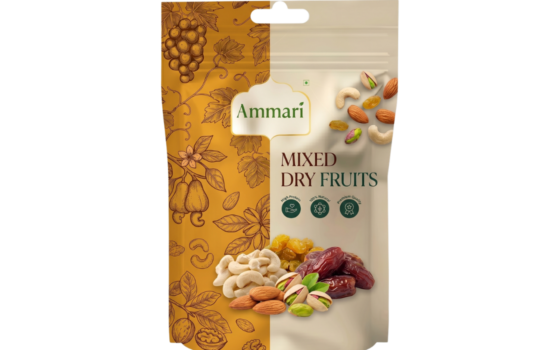
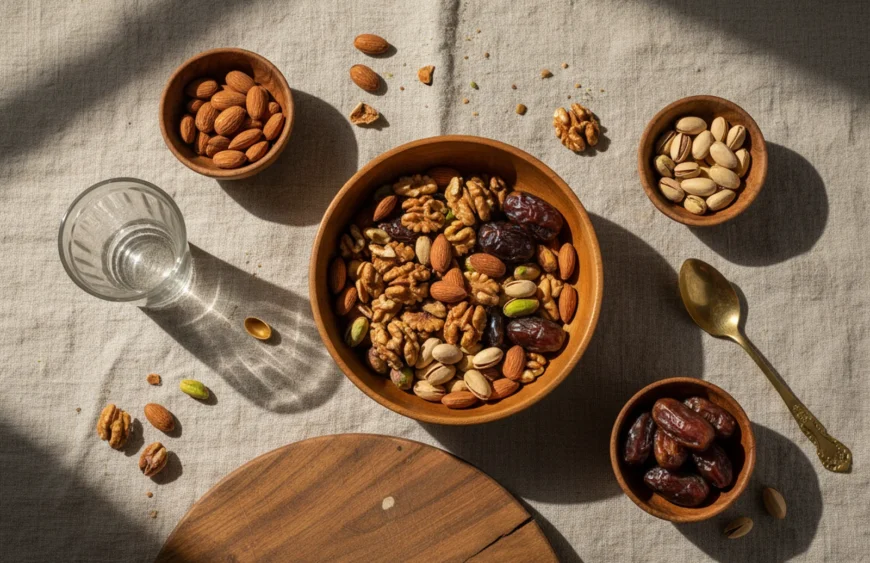
For most Indian children, 4 to 6 soaked almonds, 2 dates and a small handful of cashews or pistachios make the daily dry-fruit plate, scaled by age. The American Academy of Pediatrics flags whole nuts and large dried fruit pieces as a real choking risk under age four, so toddlers should receive nuts as nut butter, finely chopped pieces, or soaked-and-skinned kernels rather than whole. ICMR-NIN’s 2024 dietary guidelines for Indians support roughly 15 to 20 g of mixed nuts daily for school-age children as part of a balanced plate. The PREDIMED-NAVARRA work on walnuts reports cognitive benefits in older adults, and the same omega-3 pathway supports developing brains in childhood. Across the day, almonds, cashews, walnuts, pistachios, dates, raisins, anjeer, apricots, prunes and hazelnuts cover protein, iron, calcium, magnesium and plant omega-3. We pack origin-labelled batches at Ammari Foods in Jaipur.
Are dry fruits safe for kids?
Best dry fruits for kids – here is what actually matters when you choose. For Indian children above age three, dry fruits are safe and broadly recommended as a daily snack. The firm exceptions are diagnosed tree-nut or peanut allergies, which affect roughly 1 to 2 percent of Indian children and run in families. Parents with a family allergy history should introduce a new nut in a tiny supervised portion, not in a school lunchbox.
The bigger everyday worry is choking, not allergy. The American Academy of Pediatrics (AAP) and the Indian Academy of Pediatrics (IAP) both list whole nuts, whole grapes and large raisins among the top choking hazards for children under four. Whole almonds, whole cashews and whole pistachios are firm, round and the exact diameter of a small airway. Under-four toddlers should receive nuts as smooth nut butter, finely chopped or ground powder, or soaked-and-peeled kernels, never as a whole handful.
This article is general guidance for healthy Indian children, not personalised medical advice. Discuss your child’s daily plate with your paediatrician, particularly if there is a family history of nut allergy, asthma, or any developmental feeding concern.
How needs change with age
A toddler’s plate and a ten-year-old’s plate are not the same. Portion, form and variety all shift as the child grows.
- Ages 1 to 2 (introduction phase): nut paste, finely ground powder mixed into porridge, or smooth nut butter on roti. No whole nuts. Half a date, mashed, is the safer sweet introduction. Whole raisins still pose a choking risk at this age.
- Ages 3 to 5 (toddlers and pre-school): 3 to 5 soaked almonds (peel off the skin), 2 cashews, 1 to 2 dates and roughly 5 raisins daily. Soak overnight and chop, or grind into laddoo. Whole hard nuts still risky until child reliably chews and sits while eating.
- Ages 6 to 12 (school-age): 4 to 6 almonds, 4 to 5 cashews, 4 walnut halves, 8 to 10 pistachios, 2 dates and a tablespoon of raisins daily. Lunchbox-ready. Whole nuts acceptable for children who chew well.
- Ages 13 and above (teens): adult portions begin to apply, roughly 25 to 30 g of mixed nuts plus 2 to 3 pieces of dried fruit daily. Active teenagers in sports can sit at the higher end.
The 10 best dry fruits for kids, ranked
The ranking below reflects nutrient density for growth, Indian household tradition, and how often paediatricians recommend each food. The top three are the everyday core for school-age kids.
1. Almonds (badam): the daily brain-and-bone nut
Almonds top the Indian kids’ plate. A 15 g portion (roughly 12 kernels) supplies 3 g of plant protein, 75 mg of calcium, 40 mg of magnesium and 4 mg of vitamin E. Soaking overnight softens the kernel and lifts iron absorption. The Indian standard is 4 to 6 soaked, peeled almonds daily for school-age children, scaled down to 3 for ages 3 to 5. For toddlers under 4, grind into almond powder and stir into milk or porridge. See our how many almonds per day breakdown and the soaked vs raw almonds explainer.
2. Cashews (kaju): softest texture for younger children
Cashews are the friendliest nut for ages 3 to 5 because the texture is buttery rather than hard. A 15 g handful (about 10 kernels) brings 5 g of plant protein, magnesium, zinc and copper. The softer bite makes cashews easier to chew safely than almonds for younger children. Choose unsalted, plain-roasted or raw packs over masala or fried versions. Avoid honey-roasted cashews under age five, since the added sugar negates the benefit.
3. Walnuts (akhrot): the plant omega-3 source
Walnuts are the only common dry fruit rich in plant omega-3 (alpha-linolenic acid, ALA), the fat that supports developing brain tissue. The PREDIMED-NAVARRA walnut work establishes the cognitive pathway clearly. The Indian standard for school-age children is 2 to 4 walnut halves daily, soaked overnight for easier digestion. For toddlers, grind into walnut powder and add to porridge or smoothies. The shell-on whole walnut is a choking risk under age four. See our how many walnuts per day guide.
4. Dates (khajoor): natural energy without refined sugar
Dates are the gentlest sweetener for an Indian child’s plate. Two medium dates carry 35 g of natural fructose, 2 g of fibre, plus iron, potassium and magnesium. Paediatricians often recommend dates over refined-sugar biscuits for the same calorie load. For toddlers, halve the date, remove the pit and chop into small pieces; never serve whole. School-age children can eat 2 to 3 daily, ideally with a glass of milk. See our how many dates per day breakdown.
5. Pistachios
Pistachios add protein, fibre, vitamin B6 and lutein for eye development. Roughly 8 to 10 shelled pistachios (around 10 g) daily is the comfortable range for school-age children. The bright green colour and the in-shell version (for older kids only) makes pistachios a popular lunchbox pick. Avoid salted and masala pistachio packs for children; sodium intake is already high in Indian diets.
6. Raisins (kishmish): iron and a manageable sweet bite
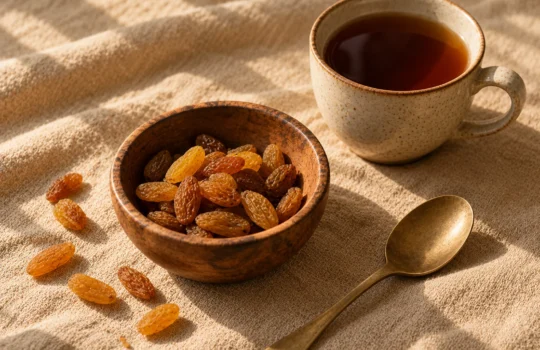
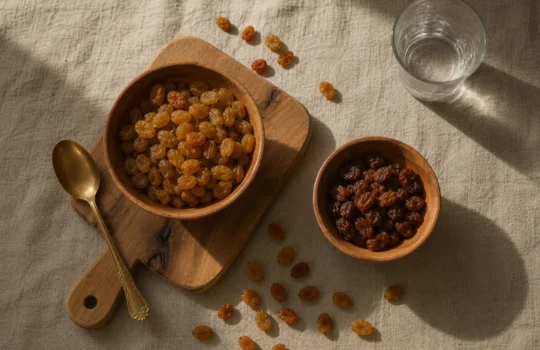
Raisins supply iron, potassium and natural sugars. A tablespoon (around 15 g, roughly 30 raisins) daily works for school-age kids. For toddlers under 4, raisins pose a choking risk and should be soaked until plump and soft, then served in small portions. Rinse with warm water before serving to remove any surface dust. Pair with a glass of milk to slow sugar absorption and reduce dental cavity risk.
7. Dried figs (anjeer): the calcium-and-fibre fruit
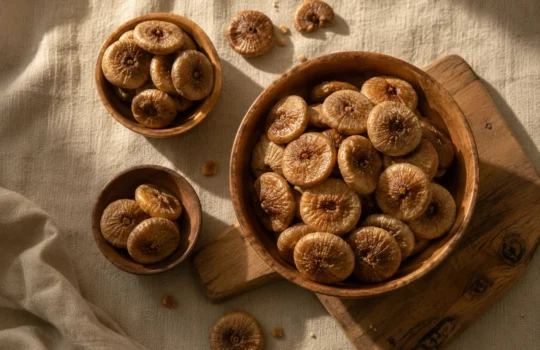
Anjeer is the Indian household calcium dried fruit. Per 100 g, dried figs supply 162 mg of calcium and 9.8 g of fibre, useful for kids who avoid dairy. Two soaked figs daily in milk help with calcium gaps and gentle digestion. Soak overnight; the softened fig is safer for chewing and easier on developing teeth. For toddlers, chop the soaked fig into small pieces.
8. Apricots (khubani): vitamin A for vision
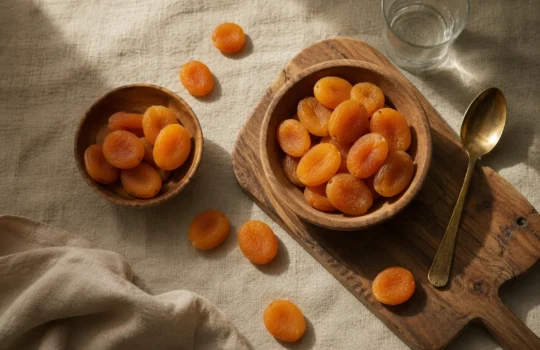
Dried apricots bring beta-carotene (vitamin A precursor), potassium and iron. Roughly 3 to 4 unsulphured apricots daily support steady iron stores and growing eyes. Pick darker brown apricots over the bright orange sulphur-treated variety, especially if your child has asthma. Chop into small pieces for under-fives.
9. Prunes (dried plums): gentle digestion
Prunes are the traditional fix for childhood constipation, supplying sorbitol and 7 g of fibre per 100 g. Two to three prunes daily, soaked overnight, helps regular bowel movements. Useful for kids transitioning to solid food at age 1 to 2, served as a thin puree. For school-age kids dealing with stop-start digestion, a prune-and-yoghurt bowl in the evening works.
10. Hazelnuts (filberts): vitamin E and a different flavour
Hazelnuts round out the plate with vitamin E, magnesium and a sweeter flavour kids often prefer. Less common in Indian kitchens, but useful for variety in lunchboxes. School-age children can eat 4 to 6 hazelnuts daily, chopped or ground. The whole hazelnut is firm and risky under age four; grind into nut butter instead.
What to limit or avoid
A few categories deserve a clear pass for kids’ plates.
- Whole nuts for under-4s. Whole almonds, cashews, pistachios, walnuts and hazelnuts are all choking hazards for toddlers. AAP guidance is firm: grind, chop or use nut butter until age four.
- Whole grapes and unsoaked raisins for under-4s. Same choking-risk category as whole nuts. Soak, halve, or skip.
- Candied or sugar-coated fruits. Glazed cherries, candied papaya and tutti-frutti packs are concentrated added sugar with little of the original micronutrient value.
- Salted, masala or fried nut packs. Children’s sodium tolerance is lower than adults’. Choose unsalted, plain-roasted or raw.
- Honey or jaggery-coated dry fruits for under-1s. Honey carries a botulism risk for infants under twelve months.
- Any nut where family allergy is strong. Particularly relevant if a parent or sibling has a confirmed tree-nut or peanut allergy. Introduce with paediatrician supervision.
Lunchbox combos that actually get eaten
The trick with kids is texture, taste and small portions. The following combinations travel well, stay safe in a 6-hour lunchbox window, and balance protein with natural sugar.
- Soaked almond and date energy bites. Grind 6 soaked almonds with 3 dates and a pinch of cardamom. Roll into small balls. Lasts 2 days refrigerated, 6 hours in a lunchbox.
- Cashew-and-raisin trail mix (school-age only). Equal parts cashews, raisins and roasted chana, in a 30 g pack. Iron, protein and a sweet bite without refined sugar.
- Anjeer and walnut milk. Two soaked figs and 2 walnut halves blended into a cup of warm milk before school. Calcium, omega-3 and protein in one glass.
- Apricot-pistachio yoghurt. Three chopped apricots and 8 pistachios stirred through 100 g unsweetened curd. A cooling Indian-summer tiffin filler.
- Prune-and-oat porridge. Three soaked prunes mashed into oatmeal. The traditional fix for constipated school-day mornings.
Soaking, grinding and how to serve
The traditional Indian habit of soaking is exactly right for kids’ plates. Soaking softens nut texture (lower choking risk), removes phytic-acid that blocks iron and zinc absorption, and improves digestibility for developing gut systems.
- Soak almonds, walnuts, raisins, figs and apricots overnight in clean drinking water. Peel almond skins before serving to under-fives.
- Grind for toddlers. A dry-grinder with 10 almonds, 10 cashews and 5 walnuts gives a week’s worth of nut powder. Store in an airtight jar; stir a teaspoon into porridge or milk.
- Nut butter for ages 1 to 3. Smooth almond or cashew butter on roti or banana is the safest format for early-introduction phases.
- Chop, do not serve whole, under age four. AAP and IAP both treat whole tree nuts as a choking hazard for this age group.
- Pair with milk or curd. The protein and fat slow sugar absorption from dates and raisins, and the calcium pairing supports growing bones.
Sourcing transparency
- Almonds (California): Central Valley, USA
- Cashews: Kerala and Goa coastal supply
- Walnuts: Indian Kashmir (thin-shell akhrot)
- Dates (Medjool): Jordan Valley
- Pistachios: small-batch origin-labelled supply
- Anjeer, apricots, prunes, raisins: unsulphured packs where flagged
- Packed at: Jaipur facility, Rajasthan
- Storage: airtight container; refrigerate during Indian summer
- No added salt, sugar, or coatings on standard packs
For the daily-intake details, see how many almonds per day and how many dates per day. For pregnant mothers building a parallel plate, see best dry fruits for pregnancy.
References & further reading
For independent reference points, the NIN-Hyderabad Dietary Guidelines for Indians is the standardised dataset we cross-check composition against. Clinical work like the USDA FoodData Central – nutrient database helps separate marketing claims from evidence.
Frequently Asked Questions
At what age can I give my child whole nuts?
Most paediatricians and the American Academy of Pediatrics suggest waiting until age four for whole tree nuts, because of choking risk. Below four, serve nuts as smooth nut butter, finely chopped pieces, or ground powder stirred into milk or porridge. After age four, introduce whole nuts gradually with the child sitting calmly and chewing properly. Children with a family history of nut allergy should have the first whole-nut serving in a paediatrician’s office or with adult supervision and access to medical care.
How many dry fruits should a 5-year-old eat per day?
For a healthy 5-year-old, the practical Indian range is 3 to 5 soaked almonds, 2 cashews, 1 to 2 walnut halves, 1 to 2 dates and a small spoon of raisins daily, totalling roughly 15 to 20 g[1]. Soak nuts overnight, peel almond skins, and chop pieces small enough to chew safely. Build variety across the week rather than serving the same handful every day. Confirm portions with your paediatrician, especially if your child is underweight, overweight, or managing any allergy.
Are dry fruits good for kids’ brain development?
Yes, particularly walnuts and almonds. Walnuts supply alpha-linolenic acid (ALA), a plant omega-3 that supports developing brain tissue; the PREDIMED-NAVARRA work shows the cognitive pathway in adults, and the same nutrients support children[2]. Almonds add vitamin E and magnesium, both linked to focus and memory. Dates and figs supply iron, which prevents the developmental delays that track with iron-deficiency anaemia. The realistic picture: dry fruits help when they replace junk-food snacking, not when they pile on top.
Can children with peanut allergy eat tree nuts?
Sometimes, but only with paediatrician oversight. Peanut allergy and tree-nut allergy are separate, but roughly 30 percent of peanut-allergic children also react to one or more tree nuts. The safest path is a clinic-supervised oral food challenge before introducing almonds, cashews, walnuts or pistachios at home. Until cleared by your paediatrician, keep all tree nuts out of the child’s lunchbox. Once cleared, introduce one new nut at a time, in a small portion, with supervision for the first hour.