TL;DR
- Per 30g, almonds have more protein (6g vs 5g), more fiber (3.5g vs 1g) and far more vitamin E than cashews, while cashews have fewer calories and more iron, magnesium and zinc.
- Almonds are the stronger everyday pick for fiber, satiety and heart-health support, since their fat is mostly monounsaturated and they carry meaningfully more fiber per serving.
- Cashews are the stronger pick for iron and zinc, both relevant for energy and immune function, and their softer, creamier texture suits cooking and blending better than almonds.
- For muscle-building or protein goals, almonds edge ahead slightly, but neither nut is a primary protein source on its own; both work best alongside dals, dairy or eggs.
- For weight management, portion control matters more than the choice between the two; a 30g serving of either fits comfortably into a daily snack routine.
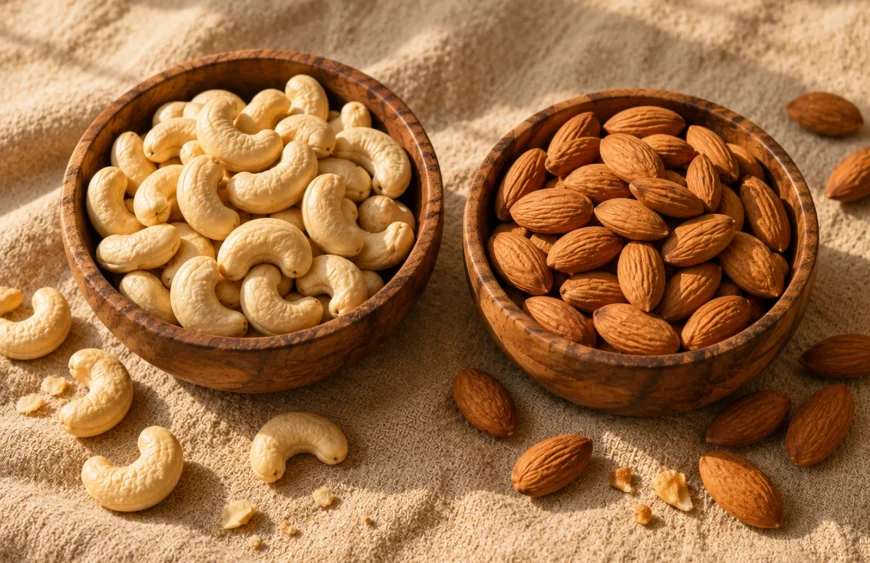
Cashews vs almonds nutrition is a genuinely close comparison, and the better choice depends on what a person is optimizing for, not on one nut being universally healthier than the other. Both are dense in healthy fats and micronutrients, but they differ meaningfully in fiber, protein and mineral content per serving. This guide compares Ammari’s Premium Whole Cashews (W240) against the Premium California Almonds on the numbers, then lays out which one makes more sense for specific goals.
Nutrition per 30g: side by side
A 30g serving is roughly a small handful, about 18 to 20 cashews or 22 to 24 almonds. Here is how that serving compares across the numbers that matter most for everyday snacking decisions.
| Nutrient (per 30g) | Cashews | Almonds |
|---|---|---|
| Calories | ~157 kcal | ~174 kcal |
| Protein | ~5.2g | ~6.4g |
| Total fat | ~12.4g | ~15g |
| Fat type | Mostly monounsaturated, some saturated | Mostly monounsaturated |
| Fiber | ~0.9g | ~3.5g |
| Carbohydrates | ~8.8g | ~6g |
| Vitamin E | Low | High, one of the richest plant sources |
| Iron | Higher | Moderate |
| Magnesium | High | High |
| Zinc | Higher | Lower |
The single biggest difference is fiber: almonds carry roughly three and a half times more fiber per 30g than cashews, mainly because almonds retain more of their skin structure while cashews are almost entirely soft kernel. That fiber gap is also why almonds tend to feel more filling gram for gram. Cashews, in turn, pull ahead on iron and zinc, two minerals more commonly under-consumed in a typical Indian diet. Ammari’s almonds nutrition per 100g guide and cashew health benefits guide both go deeper into the full nutrient profile of each.
Which one for protein and muscle goals
Almonds carry slightly more protein per 30g than cashews, about 6.4g versus 5.2g, which makes them the marginally better pick for anyone tracking daily protein intake closely. Neither nut is a meaningful standalone protein source, though; both sit well below dals, paneer, eggs or whey in protein density, and are best treated as a supporting snack alongside a protein-focused meal rather than a replacement for one. Ammari’s best dry fruits for protein guide ranks dry fruits by protein content across the full range, cashews and almonds included.
For someone actively building muscle, the more useful lever is total daily protein across meals, not the choice between these two nuts. A small daily handful of either fits into that routine without meaningfully shifting the outcome either way.
Which one for weight management
Both nuts are calorie-dense, and portion control matters more here than the choice between them. Almonds’ higher fiber content gives them a slight edge for satiety, meaning a 30g serving may keep hunger at bay a little longer than the same weight of cashews. That said, the calorie difference between the two at a 30g serving is modest, roughly 17 calories, which is not enough to be the deciding factor on its own.
A more practical rule for weight management is pre-portioning either nut into a 25 to 30g serving rather than eating from an open bag, since both are easy to overeat once started. Ammari’s dry fruits vs fresh fruits nutrition guide has more context on portioning dry fruits generally.
Which one for heart health
Almonds have a stronger evidence base for heart-health support, mainly because of their high vitamin E content and predominantly monounsaturated fat profile with very little saturated fat. Cashews are also largely unsaturated-fat foods, but carry a somewhat higher share of saturated fat than almonds, still well within a healthy range for most people, but the reason almonds are more commonly recommended in heart-focused dietary guidance.
Neither nut should be treated as a substitute for cardiovascular medication or a doctor’s dietary guidance; both are reasonable additions to a heart-conscious diet in moderate daily portions.
Which one for skin and hair
Almonds’ high vitamin E content is the clearer advantage here, since vitamin E is an antioxidant tied to skin-cell protection and is one of the more commonly cited nutrients for skin health from a whole-food source. Cashews contribute more indirectly, through zinc, which plays a role in skin repair and hair-follicle health, though at meaningfully lower levels than almonds’ vitamin E contribution.
For this goal, almonds are the stronger single choice, though a diet that includes both nuts, along with adequate protein and hydration, covers more nutritional ground than relying on either nut alone.
What Ammari recommends
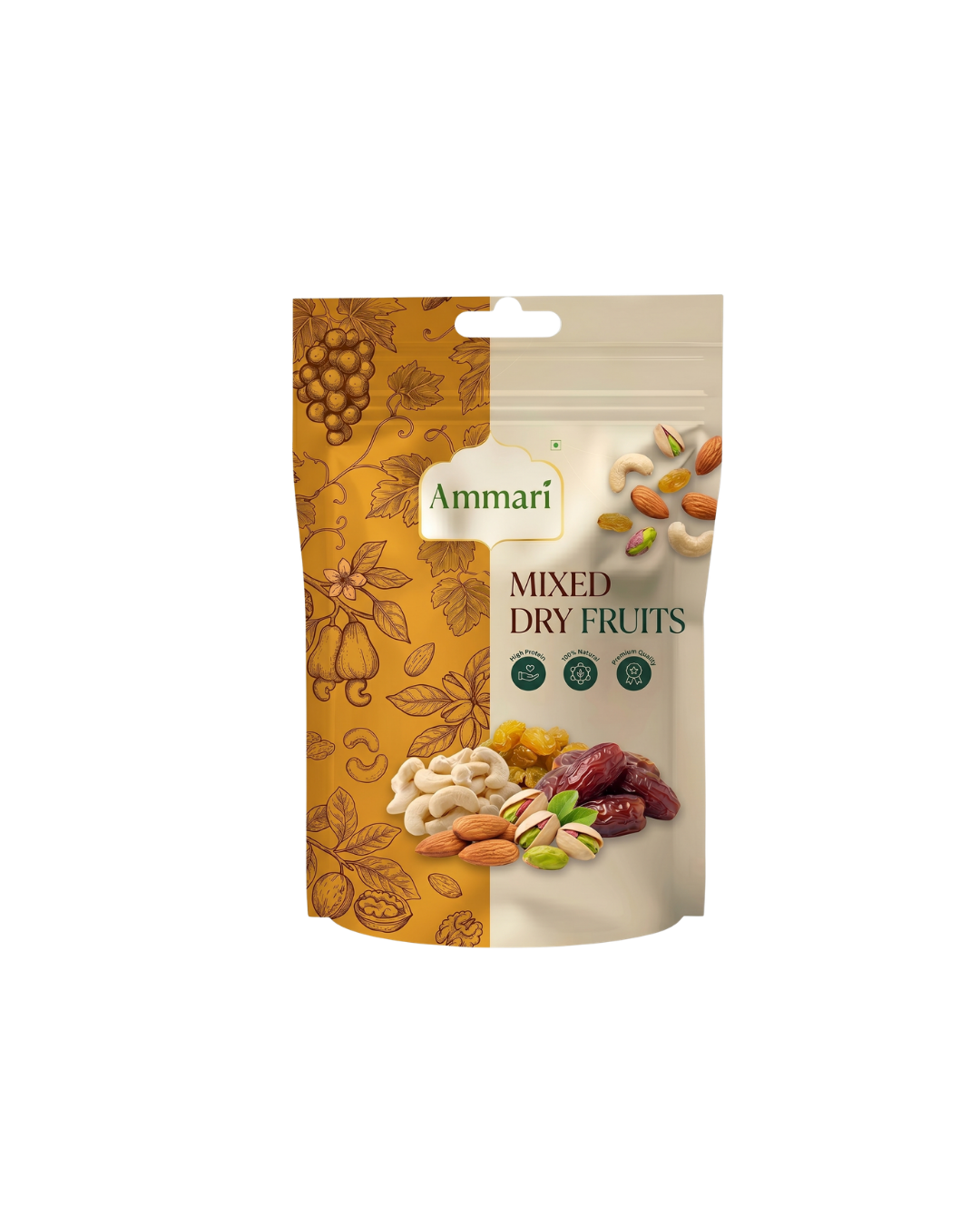
For most everyday snacking, keeping both in rotation makes more sense than picking one permanently, since they cover different nutritional ground, fiber and vitamin E from almonds, iron and zinc from cashews. A simple approach is to alternate between the Premium California Almonds and Premium Whole Cashews (W240) through the week, or combine both in Ammari’s Premium Mixed Dry Fruits Pack. Free delivery applies on orders over ₹999 where natural. For how cashews compare against a third major nut, see Ammari’s pistachios vs cashews nutrition guide.
Frequently Asked Questions
Which has more protein, cashews or almonds?
Almonds have slightly more protein per 30g serving, about 6.4g compared to roughly 5.2g in cashews. The difference is modest, and neither nut should be relied on as a primary protein source; both work best alongside protein-rich foods like dals, paneer or eggs.
Which is better for weight loss, cashews or almonds?
Almonds have a slight edge due to higher fiber content, which supports satiety, but the calorie difference between a 30g serving of each is small, around 17 calories. Portion control matters more than the choice between the two for weight management goals.
Do cashews or almonds have more healthy fat?
Both are dense in healthy fat, mostly monounsaturated. Almonds carry slightly more total fat per 30g and a marginally lower share of saturated fat than cashews, which is part of why almonds are more often recommended for heart-health-focused diets.
Can I eat cashews and almonds together every day?
Yes, alternating or combining both in a small daily handful, around 25 to 30g total, is a reasonable way to get the benefits of each: almonds’ fiber and vitamin E alongside cashews’ iron and zinc. A mixed dry fruits pack is a convenient way to combine both.
Which nut has more iron, cashews or almonds?
Cashews carry more iron per serving than almonds, making them a useful addition for anyone managing iron intake through diet, alongside other iron-rich foods. Neither nut should replace medical guidance for diagnosed iron deficiency.
Are cashews or almonds better for skin health?
Almonds have the stronger single advantage here, due to their high vitamin E content, an antioxidant linked to skin-cell protection. Cashews contribute zinc, which supports skin repair, but at a smaller nutritional impact than almonds’ vitamin E level.
Frequently Asked Questions
Which has more protein, cashews or almonds?
Almonds have slightly more protein per 30g serving, about 6.4g compared to roughly 5.2g in cashews. The difference is modest, and neither nut should be relied on as a primary protein source; both work best alongside protein-rich foods like dals, paneer or eggs.
Which is better for weight loss, cashews or almonds?
Almonds have a slight edge due to higher fiber content, which supports satiety, but the calorie difference between a 30g serving of each is small, around 17 calories. Portion control matters more than the choice between the two for weight management goals.
Do cashews or almonds have more healthy fat?
Both are dense in healthy fat, mostly monounsaturated. Almonds carry slightly more total fat per 30g and a marginally lower share of saturated fat than cashews, which is part of why almonds are more often recommended for heart-health-focused diets.
Can I eat cashews and almonds together every day?
Yes, alternating or combining both in a small daily handful, around 25 to 30g total, is a reasonable way to get the benefits of each: almonds’ fiber and vitamin E alongside cashews’ iron and zinc. A mixed dry fruits pack is a convenient way to combine both.
Which nut has more iron, cashews or almonds?
Cashews carry more iron per serving than almonds, making them a useful addition for anyone managing iron intake through diet, alongside other iron-rich foods. Neither nut should replace medical guidance for diagnosed iron deficiency.
Are cashews or almonds better for skin health?
Almonds have the stronger single advantage here, due to their high vitamin E content, an antioxidant linked to skin-cell protection. Cashews contribute zinc, which supports skin repair, but at a smaller nutritional impact than almonds’ vitamin E level.