TL;DR
- Traditional Diwali mithai is typically high in refined sugar and ghee, which makes it a genuine concern for guests managing diabetes, weight or general sugar intake during a festival with several days of continuous eating.
- Dry fruit-based alternatives, date-sweetened barfi-style bites and nut-based laddoo without refined sugar, deliver the same festive, indulgent feel using the natural sugars in dates and the fat and protein in nuts instead.
- Portions still matter with these swaps; dates concentrate natural sugar, so 2 to 3 date-based bites is a reasonable serving, similar in scale to a piece or two of traditional mithai.
- For guests with diabetes specifically, pairing a small portion with protein-rich nuts like almonds or walnuts helps moderate the blood sugar response compared to the bite alone.
- This is a health-framing guide on what to serve instead of mithai. For a full step-by-step dessert recipe, see Ammari’s dry fruit kheer recipe or dry fruit ladoo recipes guide.
Healthy Diwali sweets alternatives are dry fruit-based sweets, most commonly date-sweetened barfi-style bites and nut-based laddoo made without refined sugar, that replace some or all of the traditional mithai on a Diwali dessert table. Traditional mithai is typically high in refined sugar and ghee, and across several days of continuous festival eating, that adds up in a way that’s worth being deliberate about, particularly for guests managing diabetes, weight or general sugar intake.
This guide covers what to serve instead and why, rather than a full recipe. For step-by-step instructions, see Ammari’s dry fruit kheer recipe or the dry fruit ladoo recipes guide.
Why mithai is worth reconsidering during Diwali
A single piece of traditional mithai can carry a meaningful amount of refined sugar, and Diwali gatherings typically involve mithai served across several consecutive days rather than a single dessert. For most guests this is a manageable indulgence. For anyone managing diabetes, prediabetes or general weight goals, the cumulative sugar load across a festival week is the more relevant concern than any single serving. Dry fruit-based alternatives don’t eliminate sugar entirely, dates and dried fruit still contain natural sugars, but they generally come packaged with fiber, protein and healthy fats that slow how quickly that sugar affects blood glucose, compared to refined sugar and ghee alone.
Swap idea 1: date-sweetened barfi-style bites
Barfi-style bites made by blending Medjool dates with chopped nuts, almonds, cashews or walnuts, and a small amount of desiccated coconut or cardamom, replicate the dense, fudgy texture of traditional barfi without added refined sugar. The dates provide natural sweetness and enough binding to hold the mixture together when pressed into a tray and cut into squares. This works well as a direct visual and textural substitute on a dessert table, since it looks and serves similarly to conventional barfi.
Swap idea 2: nut-based laddoo without refined sugar
A laddoo made from roasted almonds, walnuts and a small quantity of dates as the binding agent, rolled into small balls, gives the same round, hand-held format as a traditional ladoo. Because the sweetness comes entirely from the dates rather than added sugar or jaggery syrup, the overall sugar content per piece is meaningfully lower, while the nuts contribute protein and healthy fats that traditional ladoo, often bound with sugar syrup, doesn’t offer in the same proportion.
Swap idea 3: a simple mixed dry fruit platter
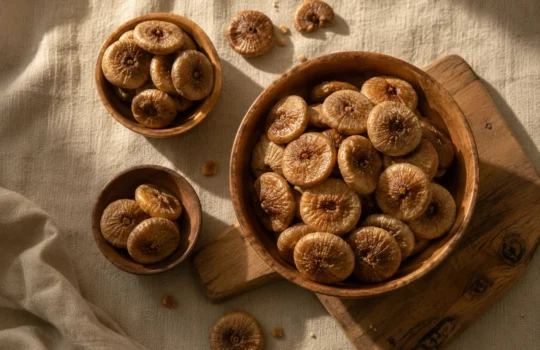
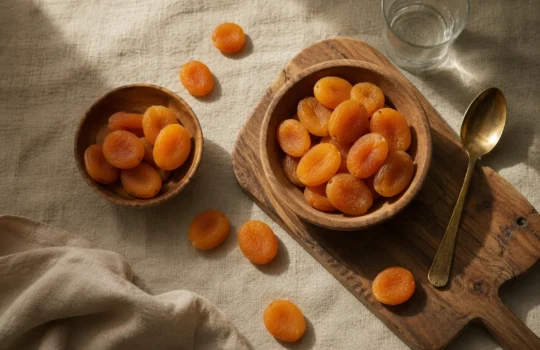
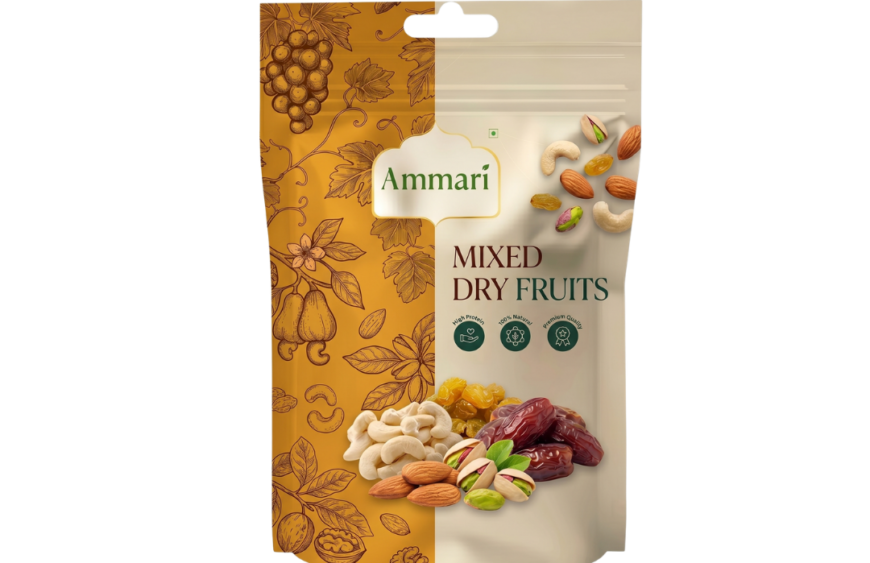
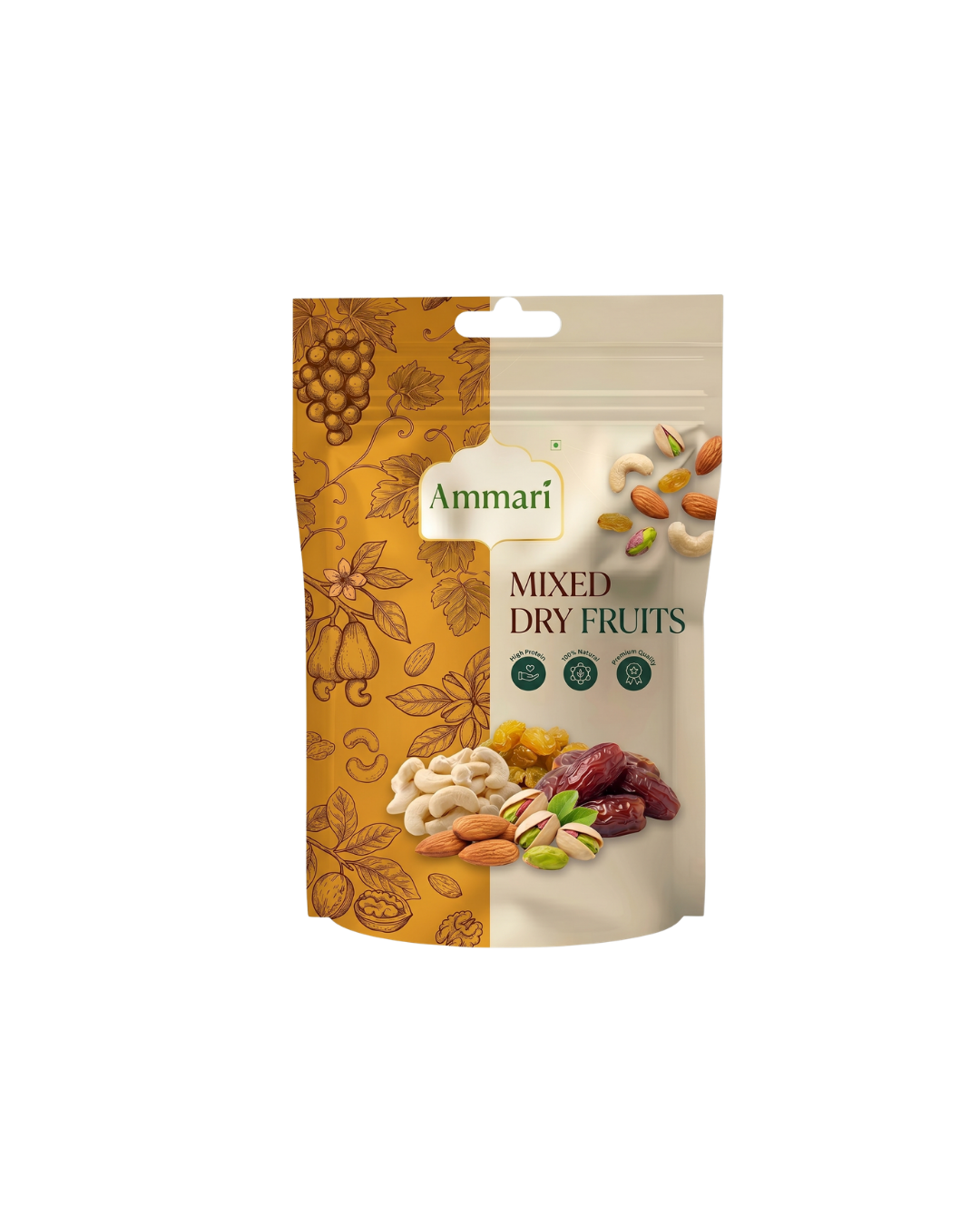
For guests who prefer not to eat anything overtly dessert-like, a platter of dried apricots, dried figs and roasted nuts, served alongside the sweeter options, gives a lower-sugar choice without singling anyone out at the table. This is often the easiest swap to make since it requires no preparation beyond arranging Ammari’s mixed dry fruits pack on a serving tray.
Portion guidance for guests managing diabetes or weight
These swaps are lower in refined sugar than traditional mithai, but portions still matter, since dates concentrate natural sugar into a small volume. Two to three date-based bites is a reasonable serving, roughly similar in scale to a piece or two of traditional mithai rather than an unlimited substitute. For guests specifically managing diabetes, pairing a small portion with a handful of plain almonds or walnuts, eaten alongside rather than after, can help moderate the blood sugar response compared to eating the sweet bite alone. This is general guidance, not medical advice, and anyone managing a specific condition should follow their own doctor’s recommendations for festival eating.
Timing matters as much as the swap itself
Diwali eating tends to be spread across several days rather than concentrated in one sitting, which is part of why the cumulative effect matters more than any single dessert choice. Serving dry fruit-based sweets earlier in a gathering, alongside tea or when guests first arrive, and saving the richer traditional mithai for later, gives everyone a lower-sugar option without it feeling like a restriction. This works particularly well at a household level across the festival week, where dry fruit-based sweets can be the everyday option and traditional mithai reserved for the main Diwali evening itself.
Stocking up before the festival
Because these swaps rely on a small set of ingredients, dates, almonds, cashews, walnuts, it’s practical to buy everything needed for the week in one order rather than restocking mid-festival. A combination of ajwa dates for religious or ceremonial servings and Medjool dates for the barfi-style bites covers most of what a household needs across Diwali, Dhanteras and Bhai Dooj without repeat trips to buy fresh dates as they run out.
What Ammari recommends
For a Diwali table with mixed dietary needs, Ammari recommends offering both traditional mithai and a dry fruit-based alternative side by side, rather than replacing dessert entirely, so guests can choose what fits their own needs without the gesture feeling restrictive. Free delivery applies on orders over ₹999 where natural, which makes it easy to stock nuts and dates ahead of the festival.
For full recipes, see Ammari’s dry fruit kheer recipe and dry fruit ladoo recipes guide, and for broader nutrition context, the dry fruits versus fresh fruits nutrition guide.
Frequently Asked Questions
Are dry fruit sweets actually lower in sugar than traditional mithai?
Generally yes. Date-sweetened bites and nut-based laddoo rely on the natural sugar in dates rather than added refined sugar or sugar syrup, and they come with fiber, protein and healthy fats that traditional mithai typically doesn’t include in the same proportion.
How many date-based sweets can a guest with diabetes eat?
Two to three date-based bites is a reasonable serving, similar in scale to a piece or two of traditional mithai. Pairing the portion with a small handful of plain almonds or walnuts can help moderate the blood sugar response, though anyone managing diabetes should follow their own doctor’s guidance.
What’s the easiest dry fruit swap for a Diwali dessert table?
A simple mixed dry fruit platter, dried apricots, dried figs and roasted nuts, requires no preparation and gives guests a lower-sugar option without singling anyone out. It works well served alongside traditional mithai rather than replacing it.
Do these alternatives taste like real mithai?
Date-sweetened barfi-style bites replicate the dense, fudgy texture of traditional barfi reasonably closely, since dates provide both sweetness and binding. The flavor is closer to caramel and nuts than to milk-based mithai, so it’s a genuine alternative rather than an identical substitute.
Should I replace mithai entirely or serve both?
Serving both side by side generally works better for a mixed group, since it gives guests with specific dietary needs a lower-sugar option without making the gesture feel restrictive for everyone else.
Where can I find full recipes for these dry fruit sweets?
Ammari’s dry fruit kheer recipe and dry fruit ladoo recipes guide both cover full step-by-step instructions, including quantities and timings, for related festival desserts made with dry fruits.
Frequently Asked Questions
Are dry fruit sweets actually lower in sugar than traditional mithai?
Generally yes. Date-sweetened bites and nut-based laddoo rely on the natural sugar in dates rather than added refined sugar or sugar syrup, and they come with fiber, protein and healthy fats that traditional mithai typically doesn’t include in the same proportion.
How many date-based sweets can a guest with diabetes eat?
Two to three date-based bites is a reasonable serving, similar in scale to a piece or two of traditional mithai. Pairing the portion with a small handful of plain almonds or walnuts can help moderate the blood sugar response, though anyone managing diabetes should follow their own doctor’s guidance.
What’s the easiest dry fruit swap for a Diwali dessert table?
A simple mixed dry fruit platter, dried apricots, dried figs and roasted nuts, requires no preparation and gives guests a lower-sugar option without singling anyone out. It works well served alongside traditional mithai rather than replacing it.
Do these alternatives taste like real mithai?
Date-sweetened barfi-style bites replicate the dense, fudgy texture of traditional barfi reasonably closely, since dates provide both sweetness and binding. The flavor is closer to caramel and nuts than to milk-based mithai, so it’s a genuine alternative rather than an identical substitute.
Should I replace mithai entirely or serve both?
Serving both side by side generally works better for a mixed group, since it gives guests with specific dietary needs a lower-sugar option without making the gesture feel restrictive for everyone else.
Where can I find full recipes for these dry fruit sweets?
Ammari’s dry fruit kheer recipe and dry fruit ladoo recipes guide both cover full step-by-step instructions, including quantities and timings, for related festival desserts made with dry fruits.