Almonds For Pregnancy India: At a glance
Last updated: 20 May 2026
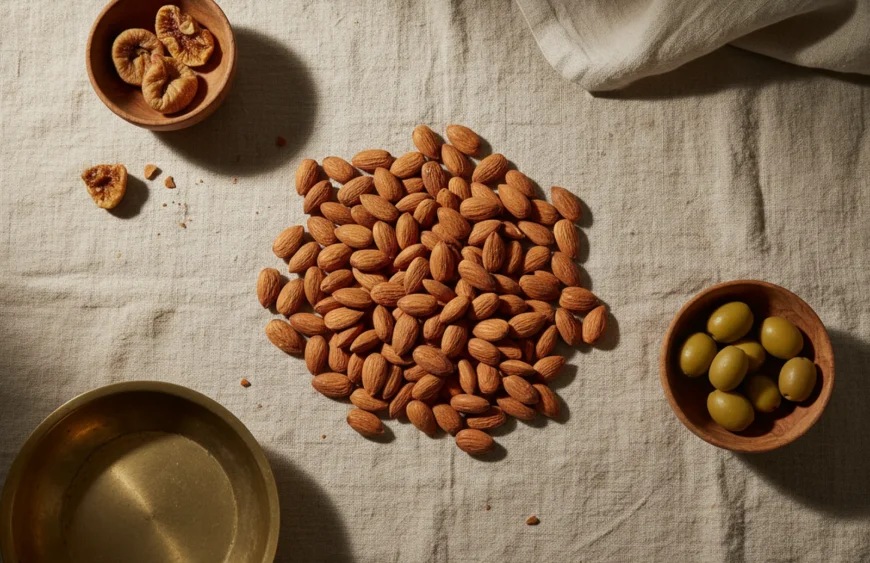
For most healthy pregnant women in India, 4 to 6 soaked almonds per day is the consensus portion, scaled by trimester and confirmed with your obstetrician first. A 30 g serving of almonds delivers roughly 15 mg magnesium, 14 micrograms folate and 7.7 mg vitamin E, alongside 6 g of plant protein and 3.5 g of fibre, per USDA FoodData Central. Generations of Indian families have given soaked, peeled badam to expecting mothers as part of garbh sanskar tradition, considered nourishing for the mother and grounding for the developing baby. ICMR-NIN dietary guidelines for India support 25 to 30 g of nuts daily as part of a balanced pregnancy plate. At Ammari Foods we stock both Central Valley California almonds and small-batch Mamra from Aleppo Province; for the full variety framework see our complete almonds buying guide.
Are almonds safe during pregnancy?
Almonds for pregnancy india – here is what actually matters when you choose. For most pregnant women, almonds are safe and actively recommended. The firm exception is a diagnosed tree-nut allergy. In that case, all almonds, almond milk and almond-flour products must be avoided through pregnancy and lactation. Women with a personal or strong family history of nut allergy should flag this to their obstetrician early in the first trimester.
Two softer caveats apply. Women with gestational diabetes can still eat almonds; the moderate fat and protein helps flatten post-meal glucose spikes. Still, portions should stay at the lower end and pair with a meal. Anyone with chronic kidney disease or a history of calcium-oxalate kidney stones should confirm portion size with their treating doctor. Almonds carry moderate phosphorus and oxalate. Severe first-trimester nausea (hyperemesis gravidarum) may make even bland foods difficult; pause almonds and return when nausea settles.
This article is general nutritional guidance for healthy Indian pregnancies, not personalised medical advice. Please discuss your daily portion with your treating obstetrician or gynaecologist before changing what you eat. This is key if you are managing any pregnancy complication.
5 Ayurvedic reasons almonds are recommended in pregnancy
Indian families have served soaked badam to expecting mothers for generations. The reasons below are traditional practice rather than clinically validated treatment.
- Garbh sanskar tradition. Ayurvedic and folk traditions across North India describe soaked almonds as a sattvic food, considered nourishing for both mother and the developing child. A small bowl of soaked, peeled badam at sunrise is a common ritual in garbh sanskar households.
- The soaking practice. Traditional preparation soaks almonds overnight and peels the brown skin in the morning. Soaking reduces phytic acid and tannins that interfere with iron and zinc absorption, and the softer nut is gentler on nausea. See our soaked vs raw almonds explainer for the mechanism.
- Gestational warmth balance. Classical Ayurveda classifies almonds as ushna or warming. Soaking and peeling softens this quality, making the nut suitable across all three trimesters. In hot summers, pair the day’s badam with cooling milk or a few raisins.
- Immunity and ojas support. Almonds, milk and ghee together are described in classical texts as ojas-building foods that strengthen the expecting mother. The modern equivalent is nutrient density: protein, healthy fats and micronutrients packed into a small portion.
- Postnatal recovery foods. Almonds carry into the first 40 days after delivery through panjeeri, gond ke laddoo and bedtime milk. They support steady-release calories and milk supply during night feeds.
5 modern-nutrition reasons almonds support pregnancy
The nutrition science is independent of tradition, and it lines up neatly with what Indian grandmothers have advised.
- Folate for neural-tube development. A 30 g serving supplies around 14 micrograms of folate. The first-trimester need is 400 to 600 micrograms daily, met mainly through a prescribed supplement. Almonds add a useful background contribution.
- Magnesium for cramps and sleep. Pregnancy magnesium needs rise to 350 to 400 mg daily. A 30 g portion delivers around 15 mg. This supports muscle function, reduces leg cramps from the second trimester onward, and aids deeper sleep.
- Vitamin E antioxidant. Almonds are one of the densest natural sources of vitamin E, with 7.7 mg per 30 g, close to the full adult daily requirement. Vitamin E supports placental health and protects cell membranes from oxidative stress.
- Healthy fats for fetal brain development. Monounsaturated fats and small amounts of plant omega-3 contribute to the lipid pool that builds the baby’s brain and nervous system. This matters most through the second and third trimesters.
- Fibre for pregnancy constipation. Iron supplements and slowed digestion make constipation a common complaint. A 30 g portion supplies 3.5 g of fibre, alongside fruit, whole grains and water.
How many almonds per day during pregnancy: 4 to 6 soaked
The Indian consensus across obstetricians, dietitians and family tradition is 4 to 6 soaked, peeled almonds per day for a low-risk healthy pregnancy. ICMR-NIN dietary guidelines support 25 to 30 g of nuts daily as part of a balanced plate. Six almonds weigh roughly 7 g, leaving comfortable headroom for a few walnut halves or pistachios alongside.
A simple trimester pattern most Indian obstetricians and family dietitians work with:
- First trimester (weeks 1 to 13): 4 soaked almonds. Smaller is gentler on morning nausea, and folate content supports neural-tube development.
- Second trimester (weeks 14 to 27): 5 to 6 soaked almonds. Energy and iron demand rise sharply as blood volume expands.
- Third trimester (weeks 28 to 40): 6 soaked almonds. Magnesium and protein support muscle function, sleep, and the building lipid pool for fetal brain growth.
- Postpartum and lactation (first 12 weeks): 6 to 8 almonds, often through panjeeri or gond ke laddoo for steady night-feed energy.
Soak overnight in plain water, peel in the morning, and eat on an empty stomach or with a glass of warm milk. The peel is where tannins concentrate, so removing it improves iron and zinc absorption. For the full portion breakdown across all life stages, see our how many almonds per day guide.
Mamra vs California almonds for pregnancy: which is better?
Both work. The differences are texture, fat profile and price, not pregnancy-specific safety, and the choice ultimately reflects budget and preference rather than nutritional necessity.
California almonds are the larger, plumper, milder almonds most Indian households recognise. The Central Valley harvest delivers steady supply across the year, and the per-kilo price is friendlier. The larger nut is also easier to soak and peel for a pregnant woman. For everyday pregnancy use across all three trimesters, California is the practical default that most Indian dietitians recommend.
Mamra almonds are smaller, denser, with higher oil content and a noticeably sweeter, buttery taste. The small-batch Aleppo Province crop is more expensive and harder to source. Still, many Indian families reserve Mamra for pregnancy and postpartum because the higher fat content reads as more nourishing in traditional Indian logic. For the full head-to-head comparison of variety, oil content and traditional reasoning, see our Mamra almonds benefits explainer.
A pragmatic household pattern many Ammari customers follow: California almonds for daily eating through most of pregnancy. A smaller, premium Mamra pack is then kept for the final trimester and the first 40 days postpartum, when nourishment matters most.
When to avoid almonds during pregnancy
A few situations call for caution or full avoidance.
- Tree-nut allergy. Full avoidance of all almonds, almond milk and almond-flour products through pregnancy and lactation.
- Weight-management instructions. If your obstetrician has flagged excess gestational weight gain, scale to 4 almonds and confirm the rest of the nut intake.
- Chronic kidney disease or kidney stones. Almonds carry moderate phosphorus and oxalate. Confirm portion size with your nephrologist.
- Severe first-trimester nausea (hyperemesis). Most women tolerate soaked almonds, but if even bland foods trigger vomiting, pause and return when nausea settles.
Pair almonds with other pregnancy-supportive foods. The dates for pregnancy post covers labour-ease evidence, and walnuts for pregnancy covers omega-3 contributions for fetal brain development.
Sourcing transparency
- Ingredient: Almonds
- Origin (california): Central Valley, USA
- Harvest: Aug–Oct
- Varieties: California , Sonora, Carmel
- Origin (mamra): Aleppo Province, Iran (and parts of eastern Afghanistan)
- Harvest: Sep–Oct
- Varieties: Mamra (small-batch)
- Note: Stony-soil cultivation, hand-cracked tradition
- Origin (gurbandi): Indian Kashmir
- Varieties: Gurbandi (Choti Giri)
Ammari Foods ships vacuum-sealed packs of premium California almonds and small-batch premium Mamra almonds across India, with free delivery on orders over ₹999. For the full sourcing framework and what to ask any almond supplier, revisit our complete almonds buying guide.
References & further reading
For independent reference points, the NIN-Hyderabad Dietary Guidelines for Indians is the standardised dataset we cross-check composition against. Clinical work like the PubMed – folate intake in pregnancy helps separate marketing claims from evidence.
Frequently Asked Questions
How many almonds should a pregnant woman eat per day?
The Indian consensus is 4 to 6 soaked, peeled almonds daily for a low-risk pregnancy. First trimester: 4, gentler on nausea. Second trimester: 5 to 6 as energy and iron demand climb. Third trimester: 6 for magnesium and protein. ICMR-NIN guidelines back roughly 25 to 30 g of nuts daily. Always confirm with your obstetrician, particularly if you have gestational diabetes or weight-management instructions from your doctor. When evaluating almonds for pregnancy india, the key is verification not branding.
Are soaked almonds better than raw during pregnancy?
Soaked, peeled almonds are the traditional Indian preparation and the preferred form during pregnancy. Overnight soaking softens the nut, peels the skin where tannins concentrate, and reduces phytic acid that interferes with iron and zinc absorption. The softer texture is gentler on first-trimester nausea and slowed pregnancy digestion. Soak 6 almonds in plain water before bed, peel in the morning, and eat on an empty stomach or with warm milk.
Can almonds cause heat during pregnancy?
Classical Ayurveda describes almonds as ushna or warming, which is the root of the traditional concern. The practical answer is that soaking and peeling softens this quality a lot. Four to six almonds a day stays within balanced limits across all trimesters. Pair the day’s badam with cooling milk, raisins, or fresh fruit during peak summer. If you notice ongoing heat symptoms, scale to 4 and confirm with your doctor.
Are Mamra almonds safe during pregnancy?
Yes. Mamra is a smaller, denser, higher-oil almond variety from Aleppo Province in Iran. It is not nutritionally different in a way that creates pregnancy-specific risk. Many Indian families reserve Mamra for pregnancy and the first 40 days postpartum because the higher fat content reads as more nourishing in traditional logic. Soak 4 to 6 overnight, peel in the morning, and eat the same way as California almonds.